

A detailed patient guide by Dr Shailesh Vadodaria, Consultant Plastic Surgeon, MACS Clinic, Watford
Introduction
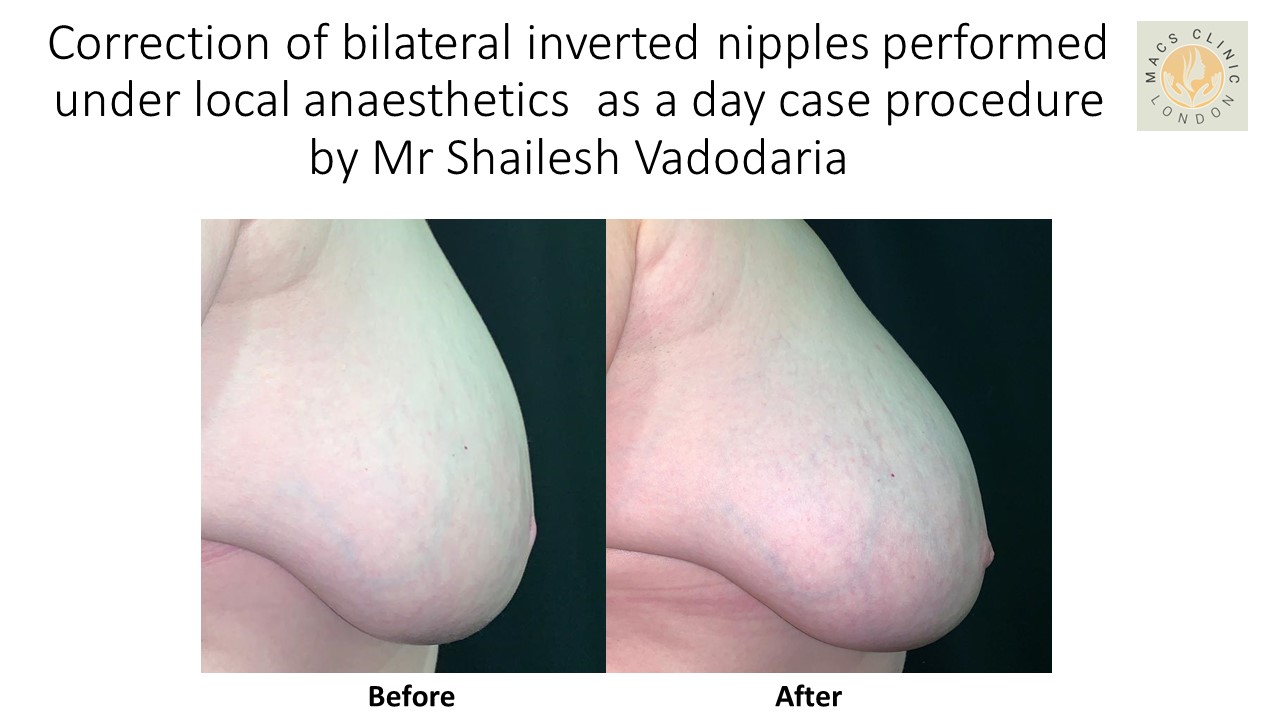
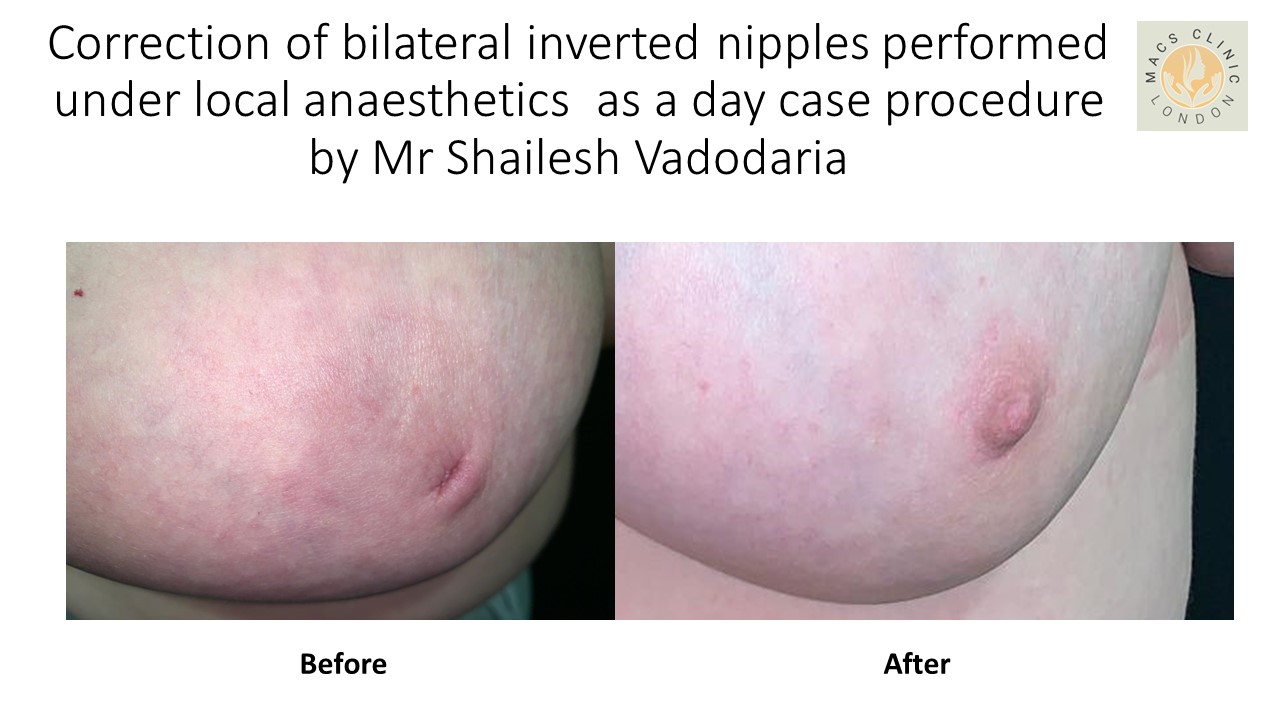
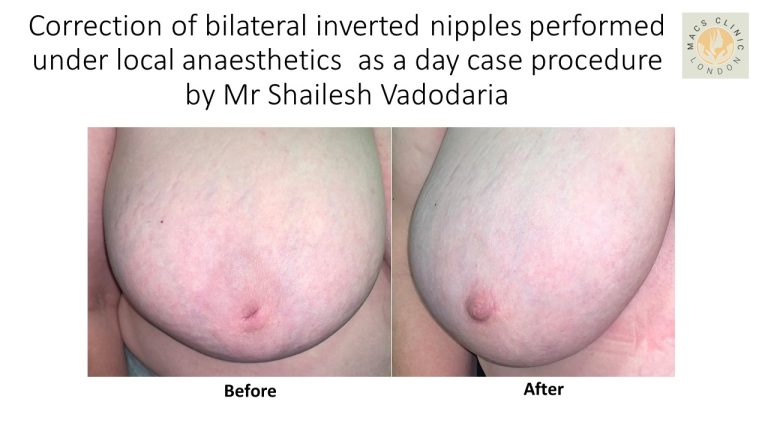
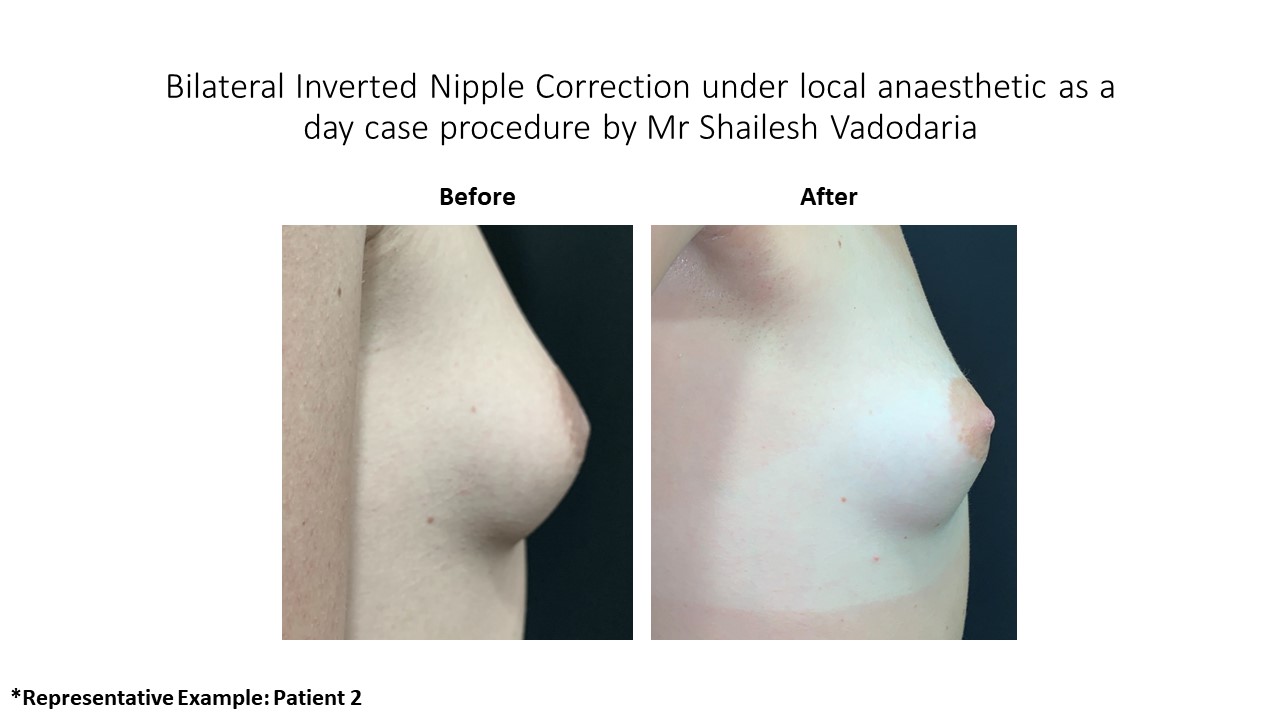
An inverted nipple points inward, or lies below the level of the surrounding areola, rather than projecting outward. It may affect one nipple or both and may have been present from childhood, become apparent during breast development, or develop later in life.
For some people, nipple inversion is simply a normal anatomical variation that causes no difficulty and requires no treatment. For others, it may create problems with hygiene, recurrent irritation, nipple stimulation, breastfeeding, clothing choices, symmetry or self-consciousness in intimate situations.
The first and most important distinction is between a nipple that has always been inverted and one that has recently changed. A new change—particularly on one side—requires appropriate medical assessment before cosmetic correction is considered.
This guide explains the causes and grades of inversion, when to seek medical advice, the principles of treatment, and the important balance between achieving correction and attempting to preserve the lactiferous (milk) ducts.
What causes a nipple to be inverted?
The nipple contains openings from the lactiferous ducts, which transport milk during breastfeeding. Beneath the nipple are ducts, connective tissue, smooth muscle, nerves and small blood vessels. If the ducts or fibrous tissue are unusually short, tight or scarred, they may tether the nipple inward.
Congenital or developmental inversion
Many inverted nipples are congenital or become apparent as the breasts develop. They may result from shortened ducts, fibrous bands beneath the nipple, or a developmental difference in the supporting tissue. Long-standing inversion on one or both sides is commonly benign.
If the nipples have always been inverted, this can be normal for that individual. Some inverted nipples project temporarily with cold, touch or stimulation; others remain tethered.
Acquired inversion
A nipple may also become inverted later because of:
* inflammation or infection;
* scarring after breast surgery or trauma;
* changes following pregnancy or breastfeeding;
* duct ectasia or other benign breast conditions;
* age-related changes in breast tissue;
* fat necrosis; or
* an underlying breast cancer or Paget’s disease of the nipple.
This list is not diagnostic. The clinical history, examination and, where indicated, imaging or specialist breast assessment are needed to establish the cause.
When should an inverted nipple be medically assessed?
A nipple that becomes newly pulled inward should be assessed by a GP or appropriate breast service, especially if the change is unilateral or persistent.
Seek medical assessment if inversion occurs with:
* a breast, chest or armpit lump;
* blood-stained or otherwise unusual nipple discharge;
* dimpling, puckering, thickening or redness of the skin;
* a change in breast size or shape;
* a persistent red, scaly, crusted or eczema-like nipple rash;
* ulceration or bleeding;
* unexplained pain or tenderness; or
* any other change that is not normal for you.
These symptoms need exclusion of breast disease including breast cancer, investigation of possible breast disease takes priority over elective surgery
How is nipple inversion graded?
Plastic surgeons commonly describe three broad grades. Grading helps communication and treatment planning, although real patients do not always fit neatly into one category.
Grade I: mild
The nipple is easily brought outward manually and may maintain projection for some time. Fibrosis is usually limited. Some patients may not require surgery, and conservative measures may occasionally help.
Grade II: moderate
The nipple can be brought outward but does not maintain projection and tends to retract. There is usually more fibrous tethering beneath the nipple.
Grade III: severe
The nipple is difficult or impossible to bring outward manually and is tightly tethered. More extensive release may be required. Severe inversion presents a greater challenge in balancing complete correction against preservation of the milk ducts, sensation and blood supply.
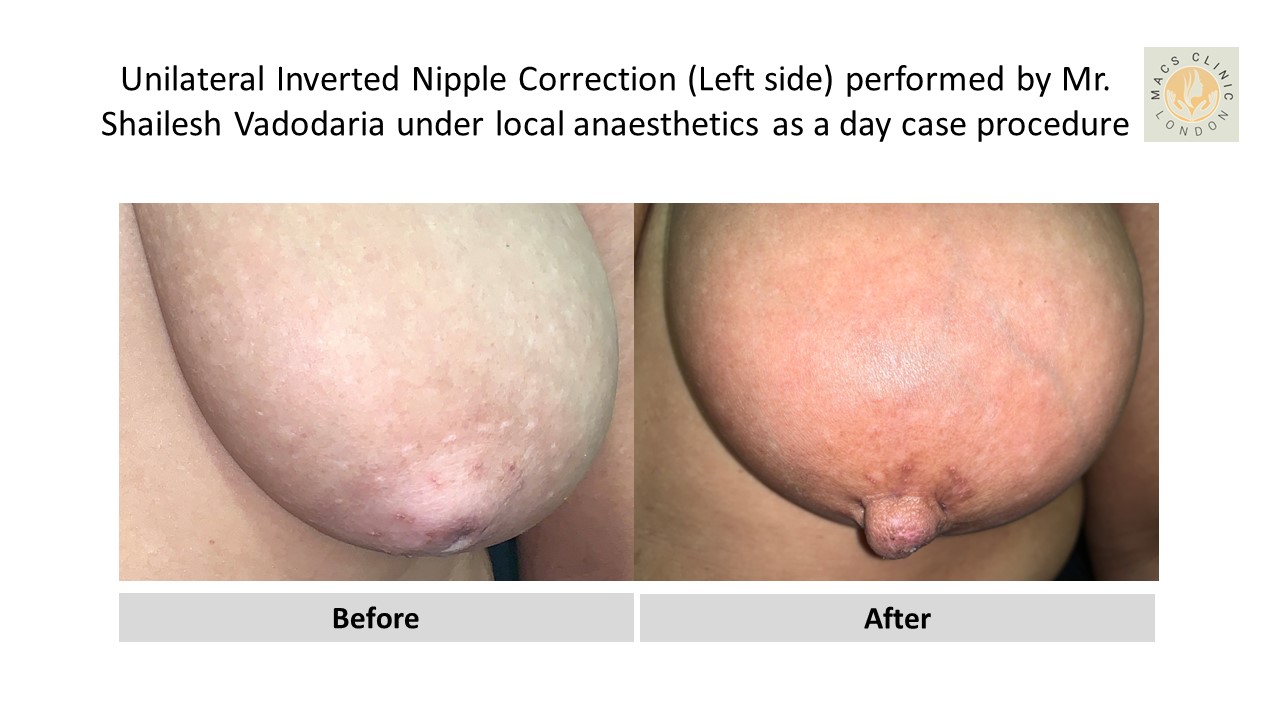
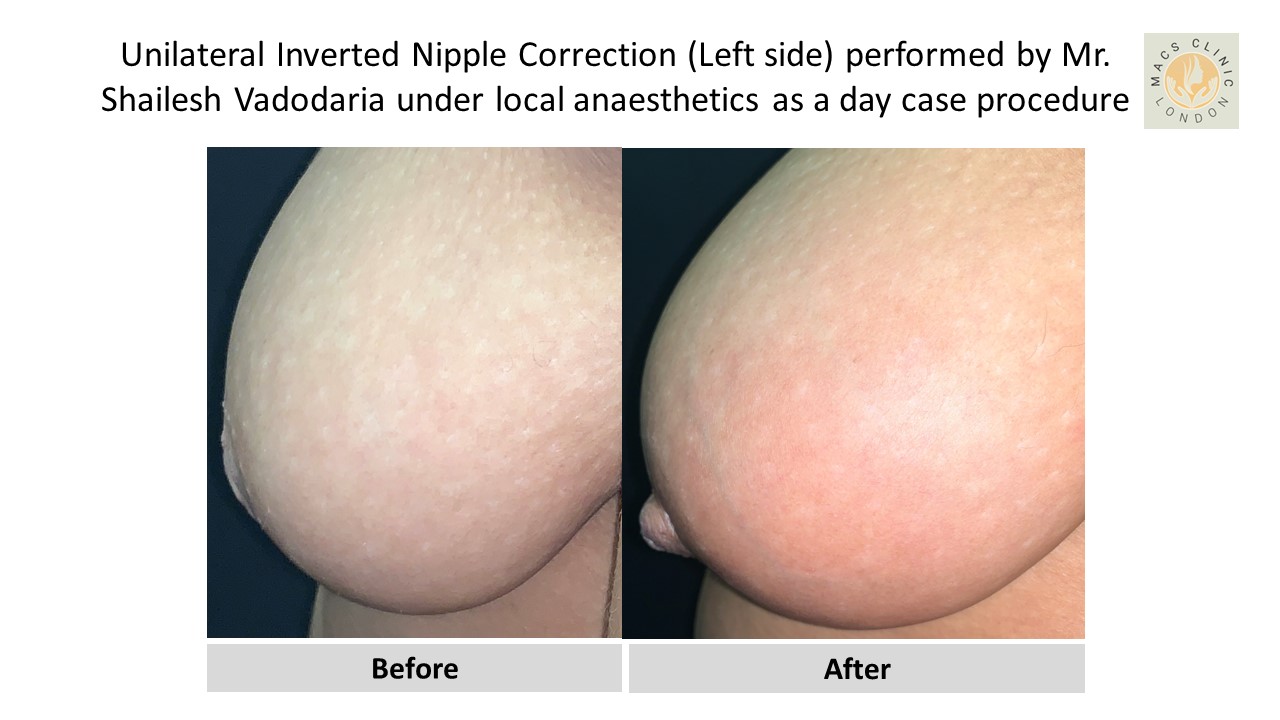
Does every inverted nipple need treatment?
No. Treatment is not medically necessary merely because a nipple is inverted. If inversion is long-standing, stable and not causing any concern, reassurance may be all that is required.
People who consider correction may report:
* difficulty cleaning the central fold;
* trapping of moisture, debris or secretions;
* recurrent irritation or inflammation;
* difficulty with nipple stimulation or erectability;
* possible breastfeeding difficulty;
* concern about asymmetry or appearance;
* restrictions in bras, garments or swimwear; or
* self-consciousness during intimate relationships.
The effect is personal. Responsible consultation should explore the patient’s own reasons without suggesting that normal anatomical variation is defective or that surgery is necessary for confidence or happiness.
Can non-surgical methods help?
For mild inversion, temporary suction devices or nipple-forming devices may draw the nipple outward. Manual stimulation can also produce temporary projection in some people. Conservative methods are less likely to give durable correction when tethering is moderate or severe.
During pregnancy or breastfeeding, advice should be obtained from an appropriate maternity, breast or lactation professional. Elective surgery is not normally undertaken during pregnancy, and the timing of treatment should consider future breastfeeding plans.
No device should delay the assessment of a newly inverted nipple or another concerning breast symptom.
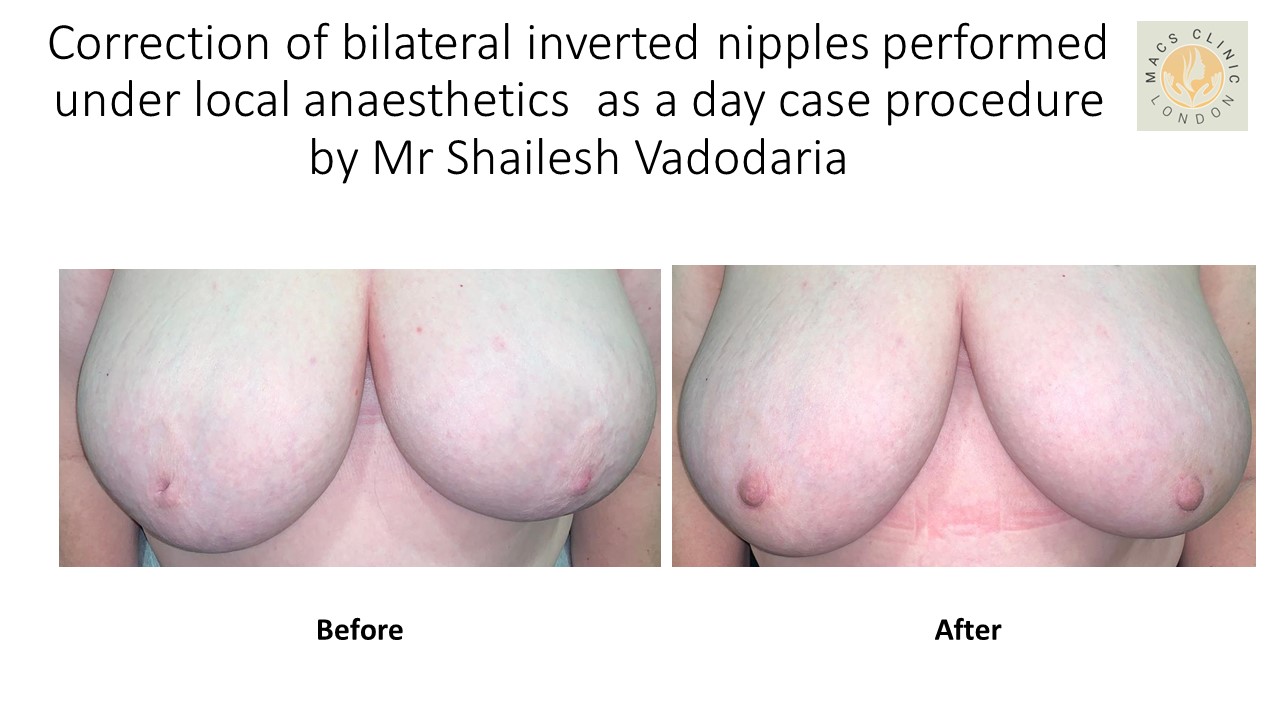
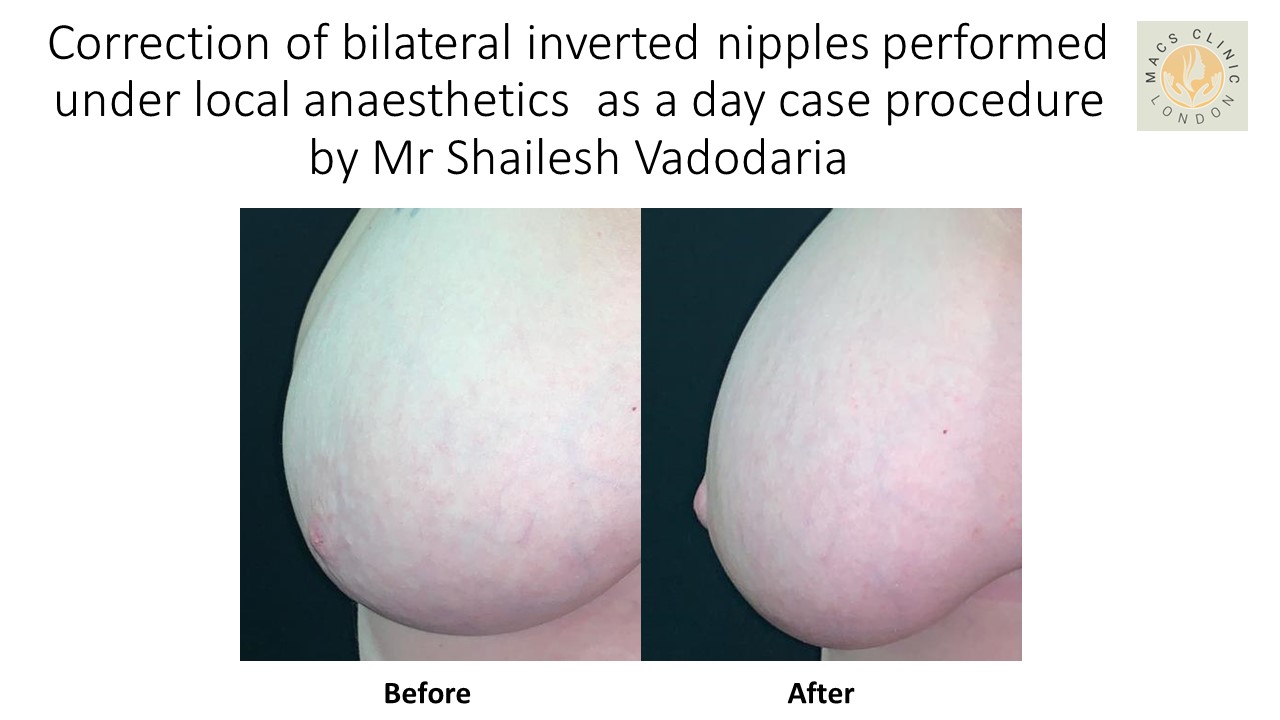
What are the principles of surgery?
There is no single universally accepted operation for every inverted nipple. Published techniques can broadly be divided into:
1. methods intended to preserve the lactiferous ducts;
2. methods that partially or completely divide tethering ducts; and
3. methods that support the corrected nipple using internal sutures, local tissue flaps or external traction.
A 2016 systematic review found considerable variation in operative methods and did not identify one universally preferred treatment. A later review of 33 studies reported satisfactory correction in 88.6% overall and a pooled recurrence rate of 3.89%, but the studies used different techniques, severity grades and follow-up periods. Individual results cannot be predicted from these pooled figures.
The balance between correction and breastfeeding
This is one of the most important parts of informed consent.
In a younger patient who may wish to have children and breastfeed, particularly where inversion is not severe, it is prudent to plan the release with the intention of preserving the lactiferous ducts as far as reasonably possible.
However, the standard limited-incision release is largely a blind technique: the surgeon cannot reliably see and identify every individual milk duct. Some ducts may themselves be fibrotic, shortened or incorporated within the tethering tissue that must be released. Even when the operation is described as “duct preserving,” neither complete anatomical preservation nor future physiological function can be guaranteed.
Breastfeeding can be unsuccessful for many reasons even in someone who has never had nipple surgery. After inverted-nipple correction, a surgeon therefore cannot promise that breastfeeding will be possible.
Where future breastfeeding is not required—for example, because the patient has completed their family or is beyond the usual childbearing years—a more complete release of restrictive tissue may sometimes be considered. This may place less emphasis on preserving every duct and more emphasis on correcting the tethering. It still does not guarantee permanent correction, and blood supply, sensation, erectability, symmetry and recurrence remain relevant.
The decision should be individual rather than based on age alone. A patient’s wishes, severity of inversion, previous surgery, breast health and understanding of the trade-offs are all important.
How Dr Vadodaria performs the procedure at MACS Clinic
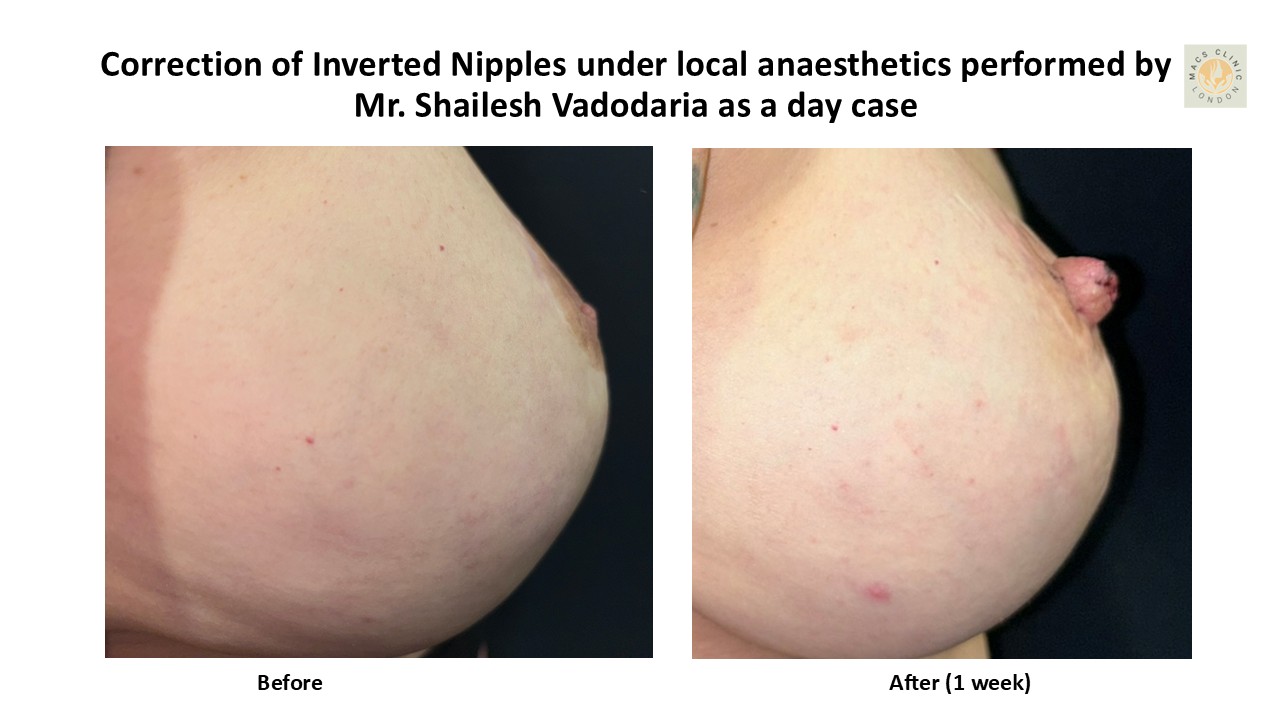
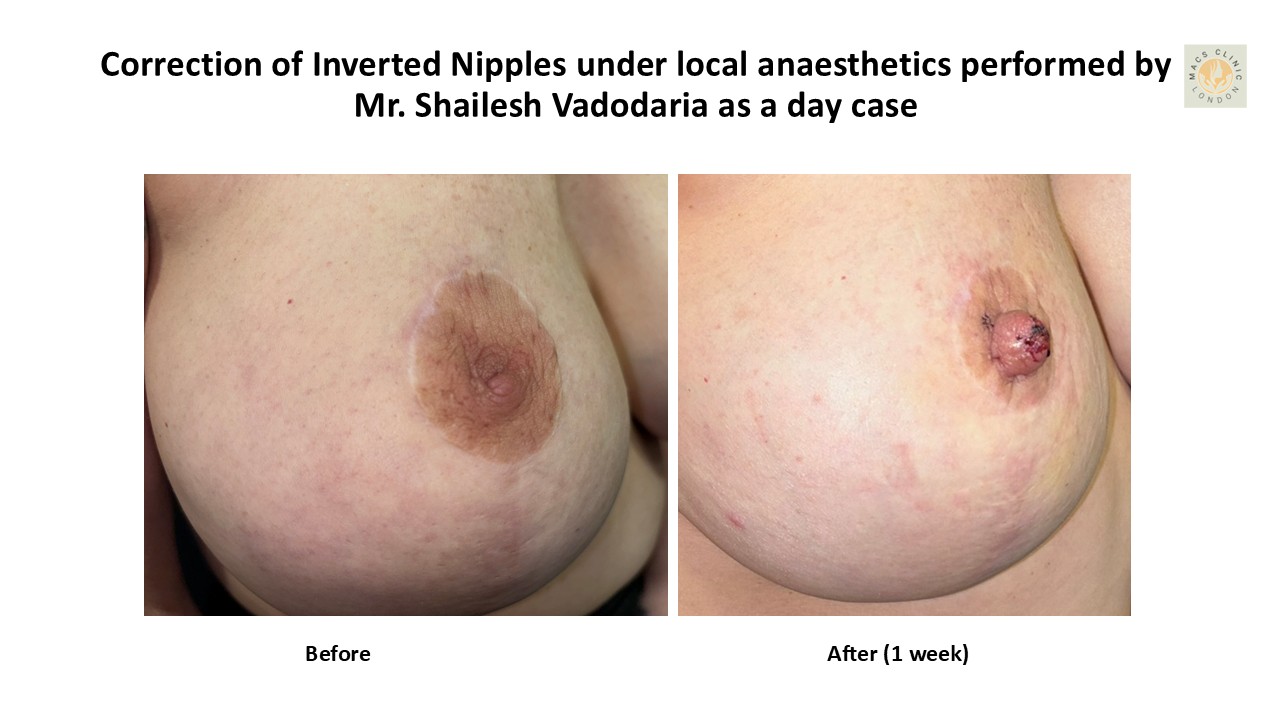
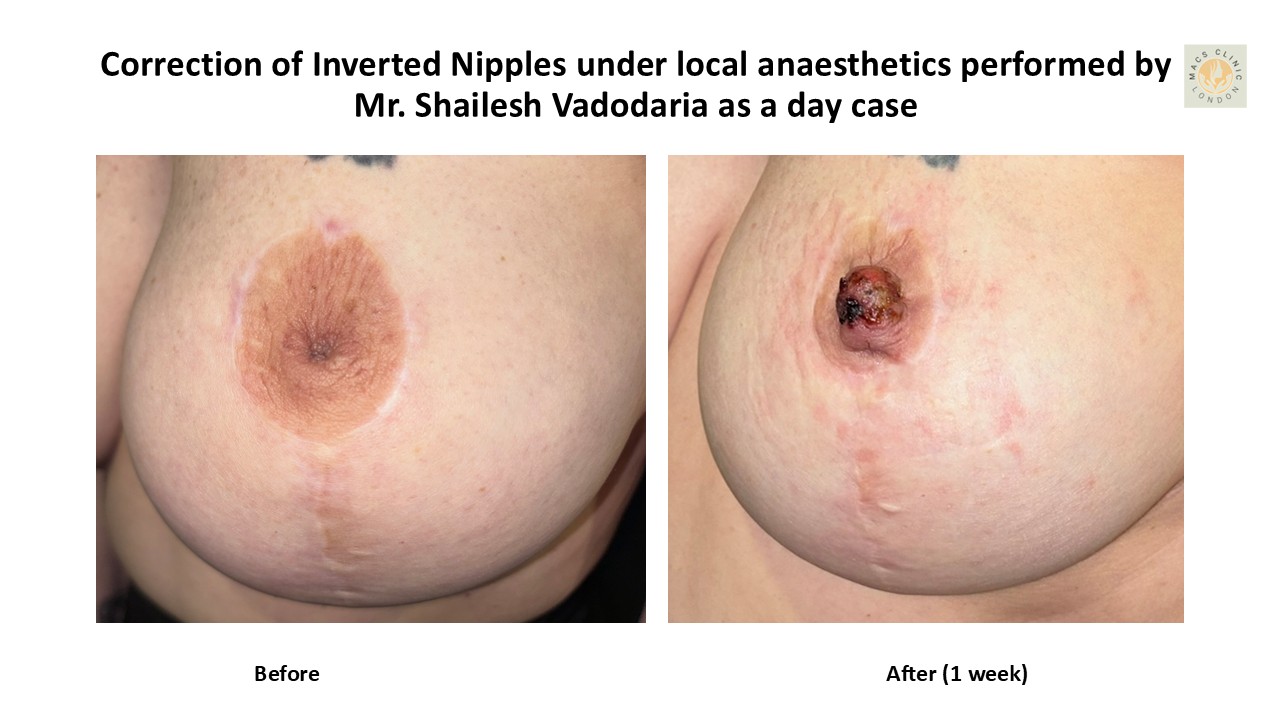
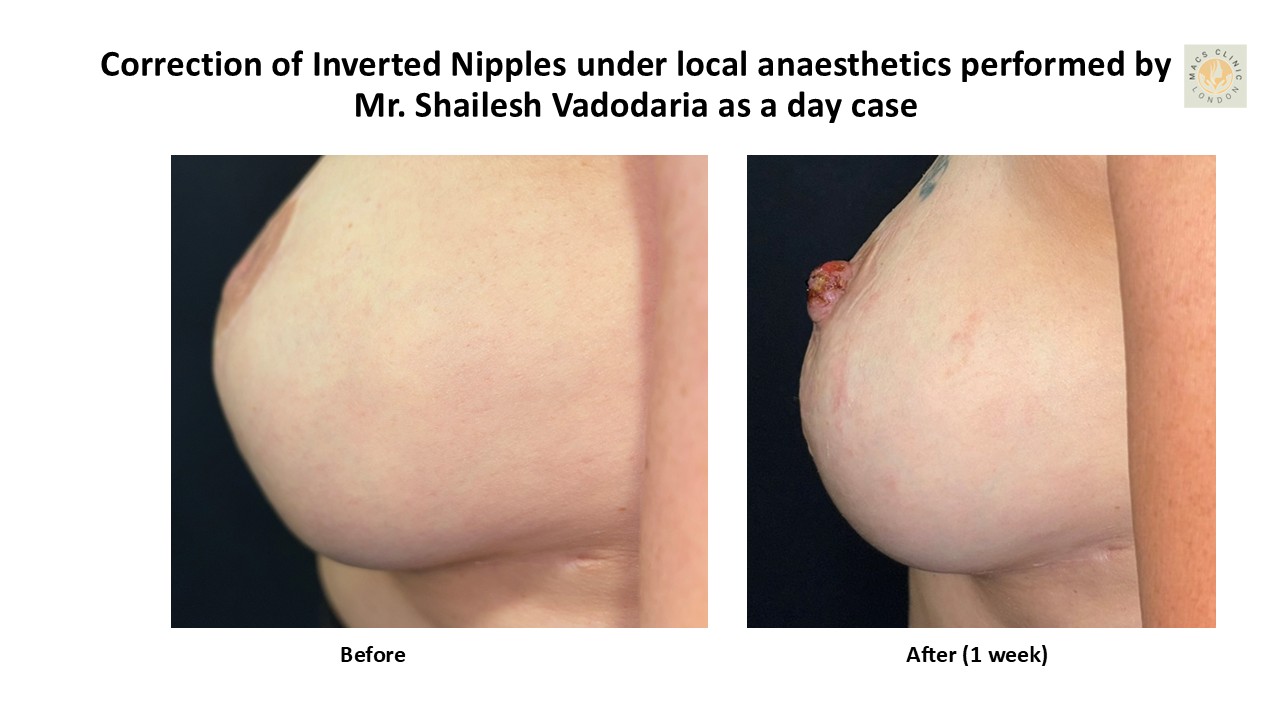
At MACS Clinic, inverted-nipple correction is normally performed under local anaesthetic as a day-case procedure. It usually takes approximately 30–45 minutes.
The essential stages are:
1. Local anaesthetic is administered and a small 4–5 mm incision is made within the areola.
2. A fine skin hook is used to bring the inverted nipple into an everted position.
3. A temporary stay suture holds the nipple outward while the tethering is released.
4. Fine scissors and a Mitchell trimmer are used to release the restrictive fibrous cords beneath the nipple. The extent of release is guided by severity and the agreed balance between correction and attempted duct preservation.
5. Once adequate release has been achieved, a long-acting dissolving purse-string suture—usually 3-0 or 4-0 PDS—is placed internally to support the corrected position.
6. The skin incision is closed with a fine, rapidly dissolving suture, usually 6-0 Vicryl Rapide.
7. Steri-Strips and micropore tape are applied.
8. A protective cylindrical splint, fashioned from a 60 ml syringe barrel, supports the nipple in an everted position. It is ideally retained for up to seven days if the patient can tolerate it.
The instrument and suture details are included here for completeness. Patients do not need to memorise them: the important principles are adequate release, internal support, protection of the blood supply, and external support during early healing.
What happens before surgery?
MACS Clinic offers a complimentary initial video or face-to-face consultation. A face-to-face examination is required before an operation can be planned.
The consultation considers:
* whether inversion is congenital, long-standing or newly acquired;
* whether one or both sides are affected;
* severity and manual reversibility;
* symptoms such as discharge, infection or irritation;
* breast lumps, skin changes or previous investigations;
* previous breast surgery, trauma, pregnancy or breastfeeding;
* future pregnancy and breastfeeding wishes;
* medical conditions, medication, smoking and wound-healing risk;
* the patient’s desired outcome and expectations; and
* understanding of alternatives, limitations and complications.
If there is any possibility of breast cancer or other significant breast pathology, appropriate assessment takes priority. Surgery may also be deferred where a medical condition should first be optimised, where expectations cannot reasonably be met, or where an effective therapeutic relationship cannot be established.
Preparation and aftercare
Patients receive personalised written instructions. Depending on individual circumstances, preparation may include preoperative bathing with Hibiscrub and obtaining prescribed antibiotics, analgesia and antibiotic ointment. Clinicept antimicrobial spray may also be recommended for home wound care.
The medicines and skin products are obtained separately from the fixed clinic procedure charge. Patients should follow the specific prescription and clinic instructions and should not start, stop or alter regular medication without appropriate medical advice.
After the operation:
* the splint is ideally retained for up to seven days if tolerated;
* dressings should remain clean, dry and protected as instructed;
* pressure or friction over the nipple should be avoided;
* medication and wound care should follow the written instructions;
* activity should be increased gradually; and
* the clinic should be contacted promptly if pain, redness, swelling, discharge, bleeding, fever, discolouration or another concern develops.
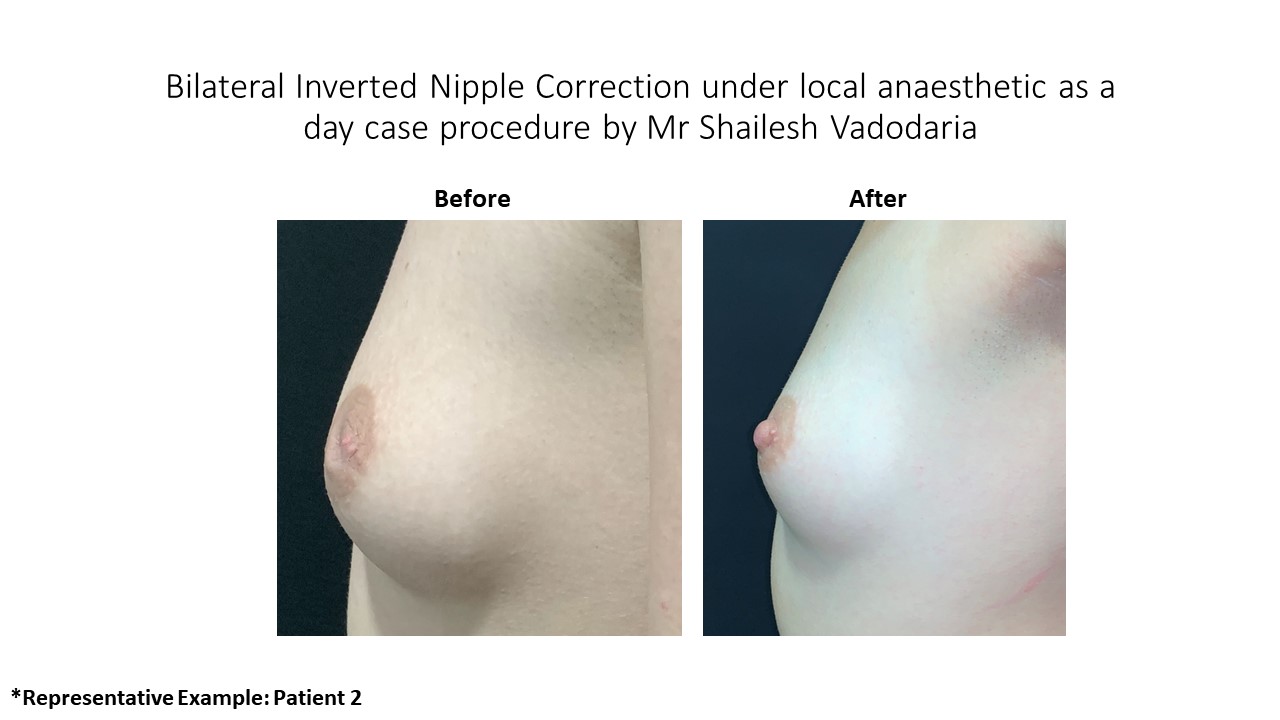
Swelling and bruising can temporarily affect appearance. Scar maturation and the final position take time, and early photographs do not represent the final result.
What are the possible complications?
No surgical procedure is risk free. Potential complications include:
* pain, bruising and swelling;
* bleeding or haematoma;
* infection;
* delayed wound healing;
* visible, widened, raised or symptomatic scars;
* asymmetry or contour irregularity;
* undercorrection or overcorrection;
* recurrent inversion;
* altered, reduced or lost sensation;
* reduced or lost nipple erectability;
* damage to lactiferous ducts and inability to breastfeed;
* compromised blood supply, causing partial or complete nipple necrosis; and
* the possible need for further treatment or revision.
Dr Vadodaria reports that recurrence has been below 5% in his personal practice. This is a personal-practice estimate rather than a guarantee or a controlled-study result. Published recurrence rates vary. A systematic review reported 3.89% overall, while a separate seven-year clinical series reported recurrence in 12.6% of patients. Differences in severity, technique, previous surgery, follow-up and definitions make direct comparison difficult.
In Dr Vadodaria’s experience, no patient has subsequently returned reporting loss of breastfeeding, nipple sensation or erectability. This observation must be interpreted cautiously: it does not establish that these outcomes never occurred, because not all patients will attempt breastfeeding or report longer-term functional changes. These risks should therefore remain part of informed consent.
Can men have inverted-nipple correction?
Yes, in principle. Nipple inversion can occur in men, and the broad surgical principles are similar. Future breastfeeding is not generally relevant, but assessment of a newly inverted nipple remains essential because male breast disease, including breast cancer, can also produce nipple inversion.
Dr Vadodaria has not yet been consulted by a man specifically requesting this correction, so the webpage should not imply personal male case experience. Suitability would be assessed individually.
What outcome is realistic?
The aim is an improved and sustained outward position, but perfect symmetry, a particular degree of projection and permanent correction cannot be guaranteed. The two sides may heal differently. Severe inversion, scar tissue and previous treatment may increase the risk of undercorrection or recurrence.
An appropriate candidate understands that surgery involves trade-offs. A technically successful correction does not guarantee improved confidence, relationships, sexual response or breastfeeding. The decision should be voluntary, well considered and based on the patient’s own priorities.
Guide prices at MACS Clinic
* Unilateral correction: approximately £1,750
* Bilateral correction: approximately £2,000
These are fixed clinic guide charges and are confirmed in writing after consultation. Prescribed antibiotics, analgesics, antibiotic ointment, Clinicept spray and Hibiscrub are obtained separately by the patient.
The initial video or face-to-face consultation is complimentary. A face-to-face clinical assessment is required before surgery.
Questions to ask your surgeon
Before making a decision, consider asking:
1. Is my nipple inversion long-standing and benign, or does it require further breast investigation?
2. How severe is the inversion on each side?
3. What non-surgical options are reasonable for me?
4. How will my future breastfeeding wishes affect the proposed technique?
5. What can and cannot be preserved or guaranteed?
6. Where will the scar be?
7. What are the risks to sensation, erectability, blood supply and nipple survival?
8. What is the chance of recurrence in a patient with my degree of inversion?
9. What does the fee include, and what will I obtain separately?
10. What support is available if I have a concern during recovery?
Summary
An inverted nipple may be a harmless long-standing anatomical variation, but a newly inverted nipple should be medically assessed before elective correction. Surgery can improve projection by releasing tethering tissue and supporting the nipple while it heals. The extent of release must be balanced against future breastfeeding wishes, particularly in younger patients.
Attempts can be made to preserve lactiferous ducts, but neither duct preservation nor future breastfeeding function can be guaranteed. Patients should also understand the risks of recurrence, altered sensation, loss of erectability, asymmetry, scarring and impaired blood supply.
At MACS Clinic, the procedure is normally performed under local anaesthetic as a day case, following a complimentary consultation and a face-to-face clinical assessment.
Contact MACS Clinic
- Phone: 020 7078 4378
- WhatsApp: 07792 648 726
- Email: enquiries@macsclinic.co.uk
- Website: www.macsclinic.co.uk
- BOOK a FREE Video Consultation: https://calendly.com/macsclinic/free-video-consultation?month=2025-01