
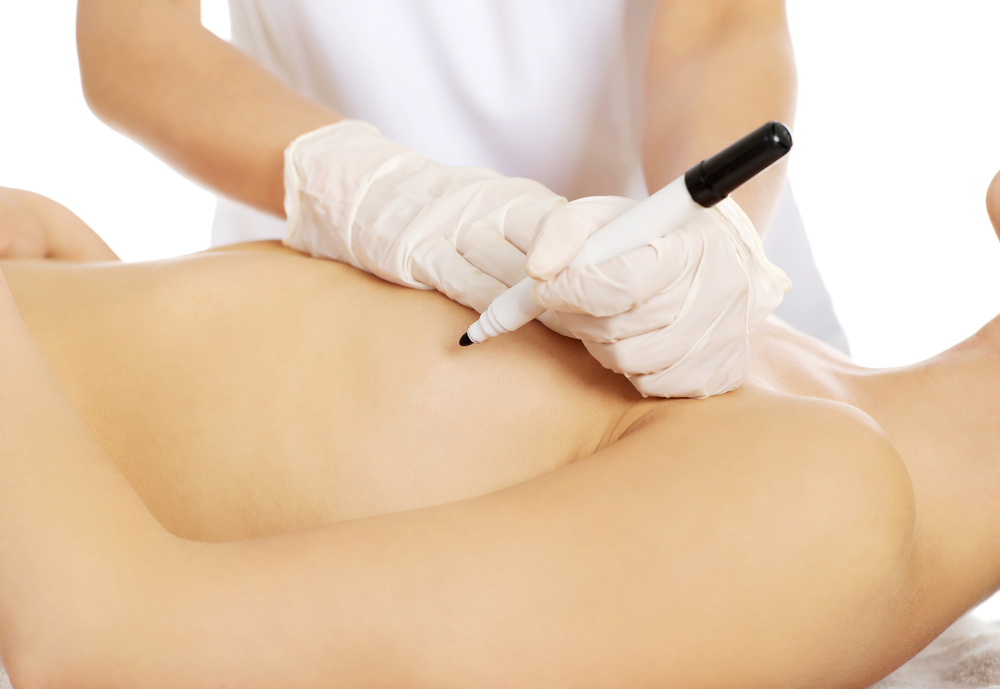
Nipples vary naturally in size, shape and projection. Some people are comfortable with a prominent nipple; others find that it shows through clothing, catches on garments or feels out of proportion to the rest of the chest. Nipple reduction is a personal choice. At MACS Clinic, we begin by understanding what bothers each patient, examining the area and discussing options of surgery, a non-surgical option or no treatment assisting patients to make an informed choice .
This article concerns reduction of the projecting nipple itself.
The surrounding pigmented area is called the areola.
Areola reduction, treatment of an inverted nipple in female patients and surgery for enlarged male breast tissue are different procedures, although a patient may wish to discuss them during the same consultation.
What do nipples do?
In women, the nipple contains the openings of the milk ducts and has an important role in breastfeeding. Nipple sensation also contributes to touch, intimacy and the hormonal responses associated with feeding. The nipple and areola can change in size, colour and sensitivity during pregnancy and breastfeeding.
Men experience changes in nipple sensation and their responses to temperature or touch . They do not ordinarily have a breastfeeding function. For people of any gender, the appearance and sensation of the nipples may be personally important.
Why someone consider nipple reduction?
Patients who enquire at MACS Clinic have described several different concerns:
* A nipple that is visible through a fitted T-shirt, shirt, bra, bikini or top.
* Repeated rubbing against clothing during running, exercise or shoulder movement, sometimes causing soreness.
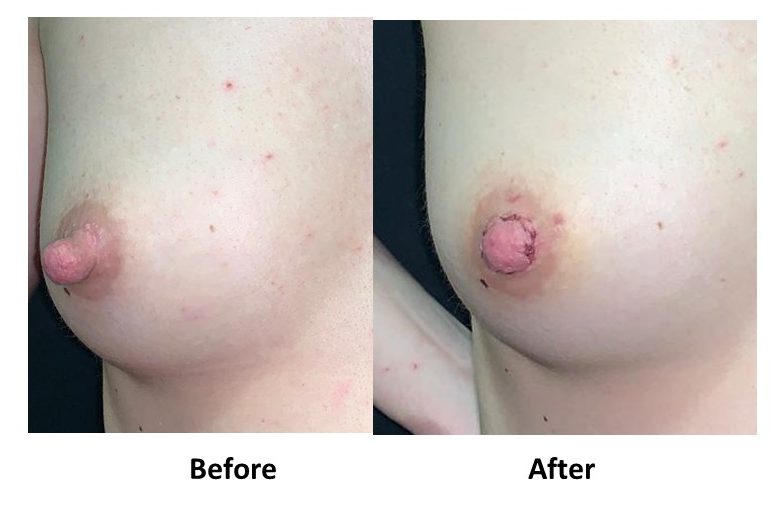
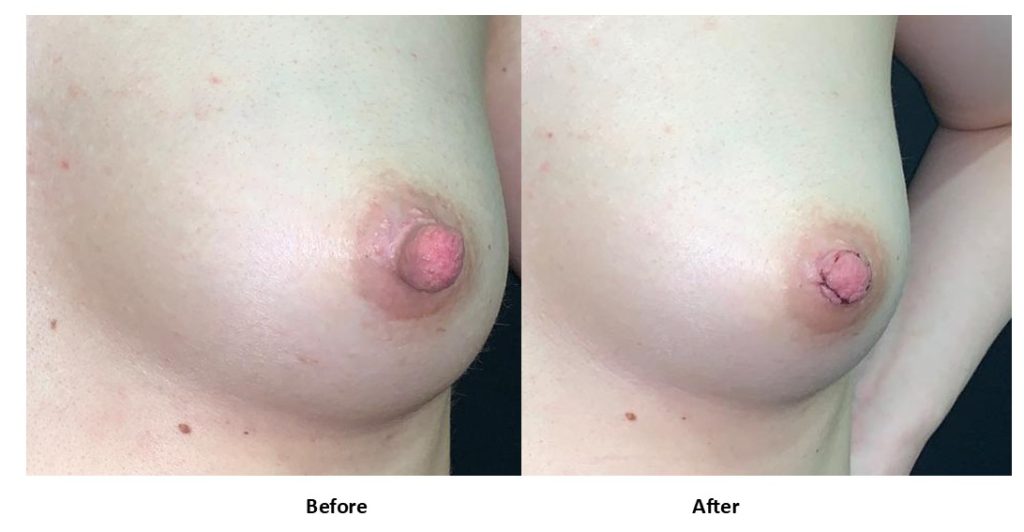
* A nipple that projects more than the patient would like, or a difference between the two sides.
* Difficulty feeling comfortable in particular clothes or social situations.
These concerns are individual. A prominent nipple is usually a normal variation, and choosing not to have an operation is entirely reasonable.
Changes after pregnancy and breastfeeding
During pregnancy, hormonal changes prepare the breasts for milk production. The nipples and areolae may enlarge, become darker or more sensitive, and change in projection. Breastfeeding, pumping and the changes in breast fullness that follow childbirth may bring further changes. Some women find that their nipples return close to their previous appearance; others notice a lasting difference. The pattern varies considerably from person to person.
A woman may seek advice because the changed appearance feels unfamiliar, because a nipple rubs on a bra or clothing, or because its outline is visible through a top. Such concerns can affect confidence or clothing choices without implying that there is anything medically wrong. We listen to the effect on the individual because of projection and size of nipple.
If you are breastfeeding, planning a pregnancy or hope to breastfeed in the future, please tell us at the first consultation. The timing and design of any operation need particular consideration.
The alternatives to surgery
Before considering an operation, we discuss whether the concern can be managed in another way. Depending on the reason for the enquiry, options may include different clothing or bra fabrics, nipple covers or other discreet camouflage products, adjustments to exercise clothing, or simply leaving the nipples as they are. These approaches cannot permanently change nipple size, but they may adequately address visibility or friction for some patients.
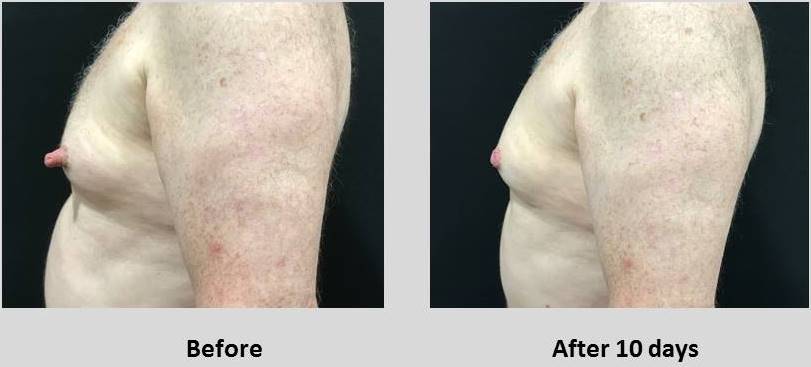
Your assessment at MACS Clinic
When you contact us, our team can send a comprehensive information pack. We offer a complimentary video consultation to understand your goals, medical history and questions. If you wish to explore surgery further, this is followed by a face-to-face consultation and physical examination.
During the examination, we assess nipple height and width, the areola, symmetry, skin quality and any breast or chest concern relevant to your request. We discuss what change is realistically achievable, where a scar may lie, the possibility of altered sensation, and your preferences about future breastfeeding. If a new nipple change, discharge, lump or other symptom needs investigation, that assessment takes priority over cosmetic surgery.
If surgery is appropriate, you receive a written treatment plan and information about preparation, consent, recovery, follow-up and costs. A pre-anaesthetic assessment is arranged as appropriate for the planned procedure and your health.
How does nipple reduction differ for women and men?
The operation is tailored to the nipple and the patient’s goals; there is no single technique for everyone.
For women, we plan the reduction with particular attention to preserving the central milk ducts and their openings when future breastfeeding matters. This influences which tissue can be removed and how the nipple is reshaped. A duct-preserving approach aims to protect breastfeeding potential, but it cannot guarantee that breastfeeding ability or nipple sensation will be unchanged. The amount of reduction that can safely be achieved may therefore be limited.
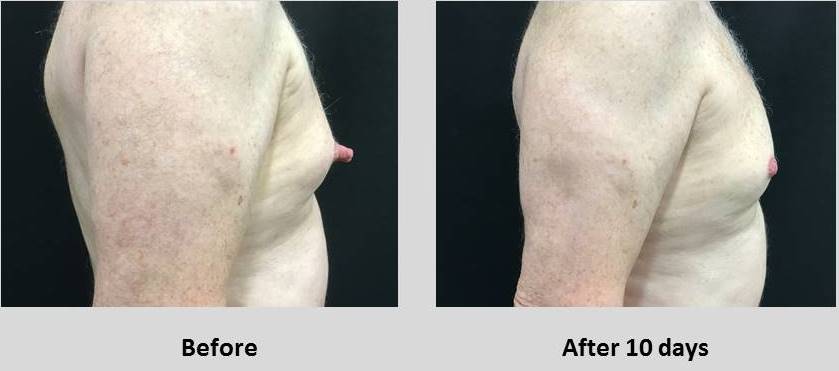
For men, preserving milk ducts for breastfeeding is generally not a consideration, so a different pattern of tissue reduction may be suitable. We still take care to preserve blood supply, achieve an appropriate shape and minimise scarring and changes in sensation.
During consultation, we explain the proposed technique for your anatomy rather than promising that the same approach or result will suit every patient. MACS Clinic’s existing procedure information also describes these differences and illustrates representative examples.
What happens on the day of surgery?
Nipple reduction is generally performed at MACS Clinic as a day case under local anaesthetic. After the completion of consent process and detailed discussion, planning of the procedure and preoperative photos. Local anaesthetic numbs the nipple; you may feel touch or pressure, but you should tell the team if you feel pain.
The surgeon removes or reshapes the planned amount of tissue and closes the wound, usually with dissolving sutures. A small protective dressing is applied. You should understand the aftercare , and ensure that contact details of the clinic is obtained before going home.
Recovery and aftercare
Some tenderness, swelling, bruising or a small amount of spotting on the dressing can occur early in healing. Follow the specific instructions provided after your operation, including when to change the dressing, wash the area and resume activities. Protect the nipples from pressure and rubbing while they heal. Avoid strenuous exercise and heavy lifting until your surgeon advises that it is safe to restart; return to running only when the wounds are healed and friction is comfortable.
Dissolving sutures usually do not need routine removal. Follow-ups are essential to check wound healing progress. Swelling settles gradually, and scars continue to mature over subsequent months. MACS Clinic’s existing aftercare guidance advises patients to avoid pressure on the treated nipples and describes follow-up during the first week and again around four to six weeks, according to individual’s needs.
Risks and limitations:
Every operation involves uncertainty. Please ensure to ask further questions if you are in doubt about following possibilities
* Bleeding, bruising, swelling, infection, wound drainage or delayed healing.
* A visible, raised, widened or uneven scar.
* Temporary or lasting changes in nipple sensation, including numbness or increased sensitivity.
* Differences in size, shape or projection between the two sides; undercorrection or overcorrection.
* A change in nipple colour or impaired blood supply leading to necrosis ( loss of tissue) which may require urgent assessment.
* Possible effects on breastfeeding after surgery in women, even when the technique aims to preserve the ducts.
Nipple reduction changes the nipple’s dimensions; it does not necessarily correct an enlarged areola, breast shape or underlying chest tissue. Pregnancy, breastfeeding, ageing or changes in tissue over time may alter the appearance later. A further procedure may occasionally be required. Any revision would require a fresh examination and discussion of its likely benefit, risks and costs. No precise appearance, symmetry, preservation of sensation or future breastfeeding outcome can be guaranteed. NHS and plastic surgery patient guidance recognise changes in nipple sensation, wound complications and potential effects on breastfeeding as relevant risks in breast and nipple surgery.
When should you seek help?
Contact MACS Clinic promptly if you develop increasing redness, swelling or pain; pus-like or unpleasant-smelling discharge ; persistent bleeding; fever or feeling generally unwell; or a nipple that becomes unusually pale, blue or very dark. A sudden colour change or significant bleeding needs urgent assessment.
If you cannot reach the clinic and the problem is urgent, seek medical help through NHS 111 or your nearest A&E department as appropriate. For a life-threatening emergency, call 999. Do not wait for a reply to a routine message when urgent treatment is needed.
Arrange a consultation
If nipple prominence or repeated irritation is troubling you, we would be pleased to discuss various options for you to consider and make an informed decision .
Contact MACS Clinic
- Phone: 020 7078 4378
- WhatsApp: 07792 648 726
- Email: enquiries@macsclinic.co.uk
- Website: www.macsclinic.co.uk
- BOOK a FREE Video Consultation: https://calendly.com/macsclinic/free-video-consultation?month=2025-01