Monday - Friday: 9.30 am to 6.00 pm,
Saturday - By Prior Appointment
Unit 3, Wilmington Cl, Watford WD18 0AF

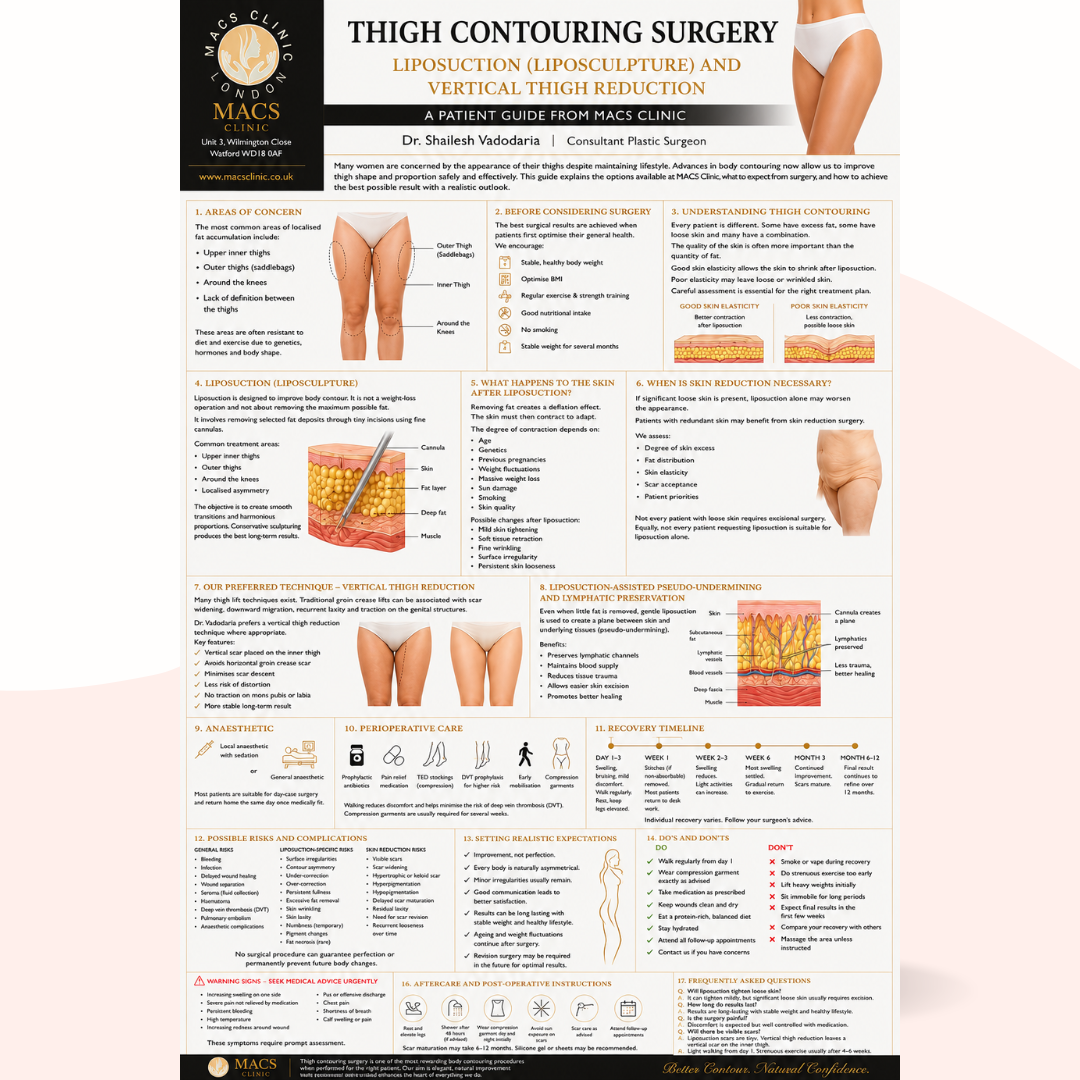
Thigh Contouring Surgery Liposuction and Vertical Thigh Reduction

Posted on: 12 Jul 2026

A Patient Guide from MACS Clinic

By Dr. Shailesh Vadodaria
Consultant Plastic Surgeon
MACS Clinic, Unit 3, Wilmington Close, Watford WD18 0AF

Introduction

Many women are troubled by the appearance of their thighs despite maintaining a healthy weight and leading an active lifestyle. Localised fat deposits around the inner thighs, outer thighs and knees often persist despite dieting and regular exercise. Others may notice loose, sagging skin following pregnancy, the natural ageing process or significant weight loss.

At MACS Clinic, we understand that every patient is unique. Our philosophy is to create natural, harmonious body proportions rather than simply remove as much fat as possible. Successful thigh contouring depends on careful assessment of both the underlying fat and the quality of the overlying skin.

This guide explains the causes of thigh contour concerns, the available treatment options, the recovery process and the potential risks and benefits of surgery.

Why Do Fat Deposits Develop Around the Thighs?

The distribution of body fat is influenced by several factors, including:

  • Genetics
  • Hormonal changes
  • Ageing
  • Pregnancy
  • Lifestyle
  • Weight fluctuations
  • Massive weight loss

Even patients with an excellent Body Mass Index (BMI) may develop stubborn fat deposits that do not respond to exercise.

The most common areas include:

  • Upper inner thighs
  • Outer thighs (“saddlebags”)
  • Medial aspect of the knees
  • Circumferential fullness of the thighs

These areas often remain resistant despite considerable effort through diet and exercise.

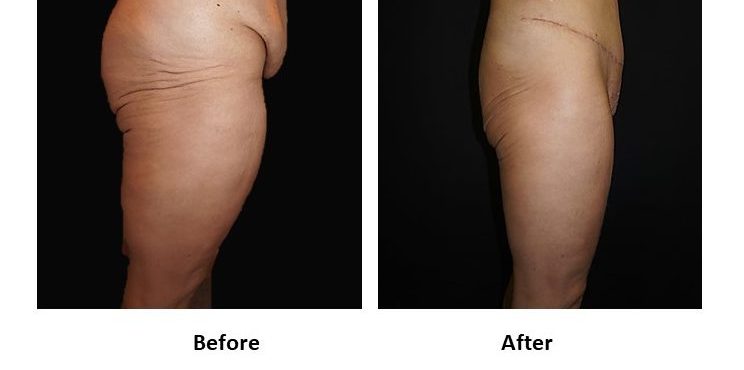
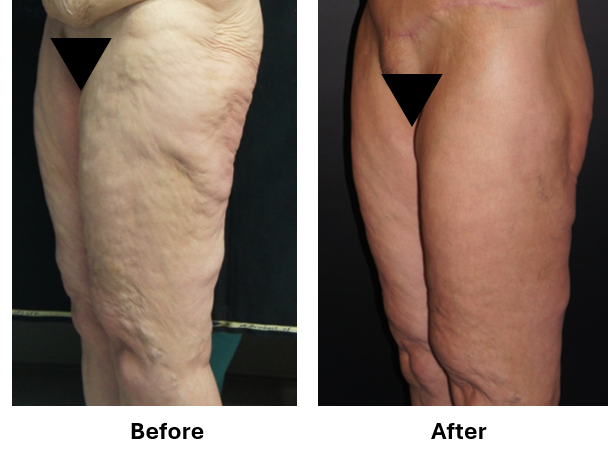
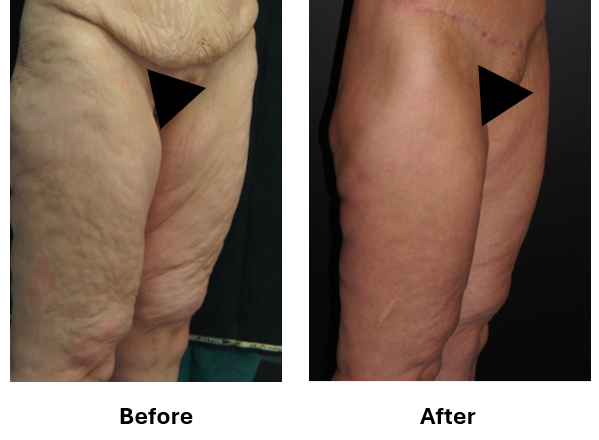
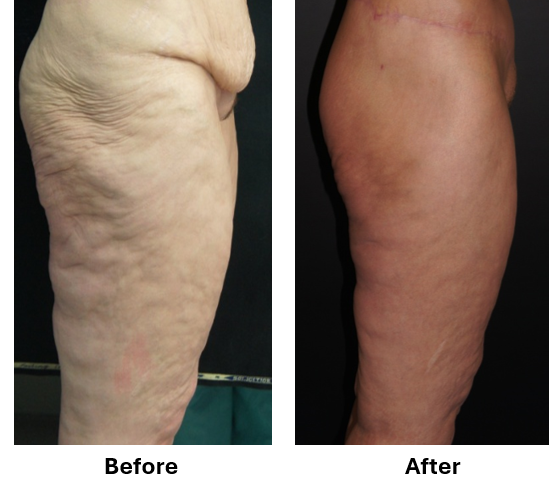
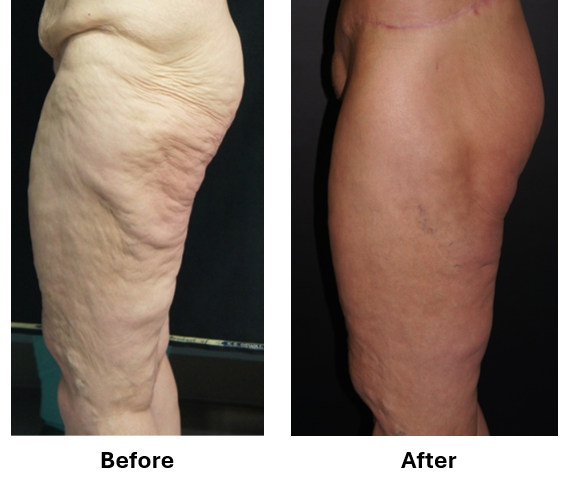
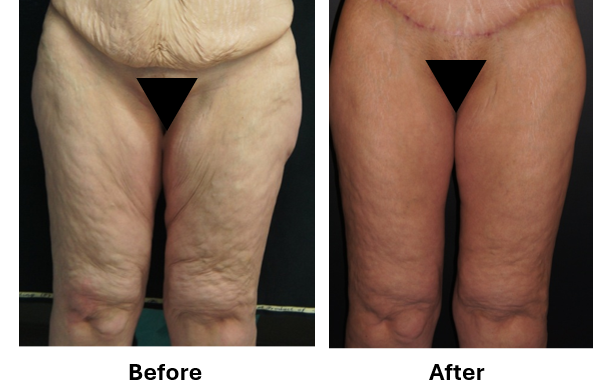
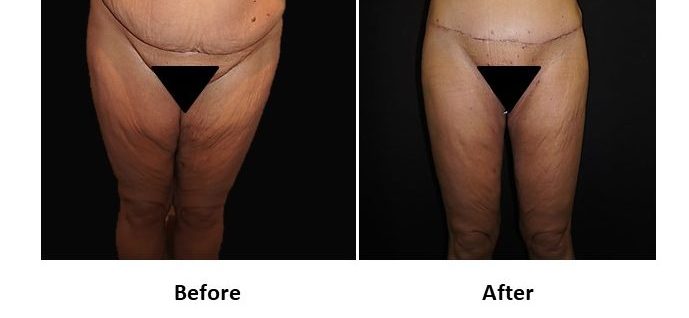
Abdominoplasty and thigh reduction performed under general anaesthetics by Mr. Shailesh Vadodaria

The Importance of Healthy Lifestyle

Before considering surgery, we encourage all patients to optimise their general health.

The best results are achieved when patients:

  • Reach a stable and healthy body weight.
  • Maintain a sensible BMI.
  • Exercise regularly.
  • Perform resistance or weight-training exercises to improve muscle tone.
  • Follow a balanced, protein-rich diet.
  • Stop smoking well before surgery.

Surgery should enhance the results of a healthy lifestyle rather than replace it.

Liposuction Is Body Sculpting – Not Weight-Loss Surgery

One of the most common misconceptions is that liposuction is designed to remove as much fat as possible.

This is not the case.

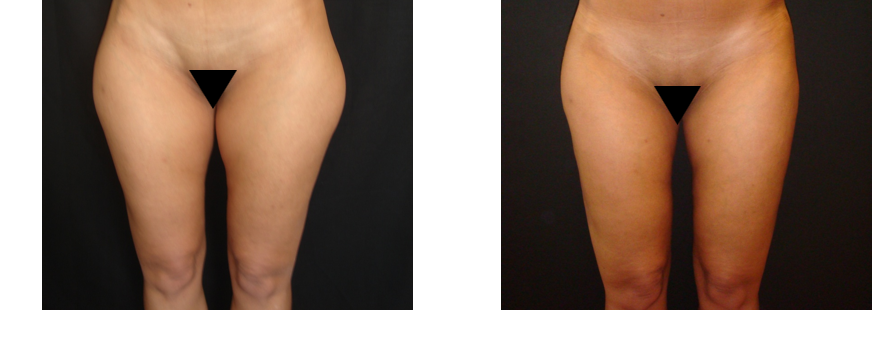
Liposuction, also known as lipoplasty or liposculpture, is a body contouring procedure. The objective is to improve shape, proportion and balance while preserving natural contours.

Removing excessive amounts of fat may increase the risk of contour irregularities, skin laxity and an unnatural appearance.

At MACS Clinic, we believe that less is often more. Conservative sculpting usually provides a more elegant and longer-lasting result than aggressive fat removal.

The Importance of Skin Quality

The quality of the skin is often more important than the amount of fat present.

Following liposuction, the skin contracts to adapt to the new contour.

Patients with good skin elasticity often experience excellent skin retraction.

However, if the skin has been weakened by ageing, genetics, pregnancy or significant weight loss, the skin may not contract sufficiently.

Possible consequences include:

  • Wrinkling
  • Residual skin looseness
  • Surface irregularities
  • Mild asymmetry
  • Persistent laxity

These changes are often related to skin quality.

For this reason, every consultation includes a careful assessment of skin elasticity.

When Is Liposuction Alone Appropriate?

Liposuction is generally most suitable for patients who have:

  • Localised fat deposits.
  • Good skin elasticity.
  • Stable body weight.
  • Realistic expectations.
  • Good general health.

Common treatment areas include:

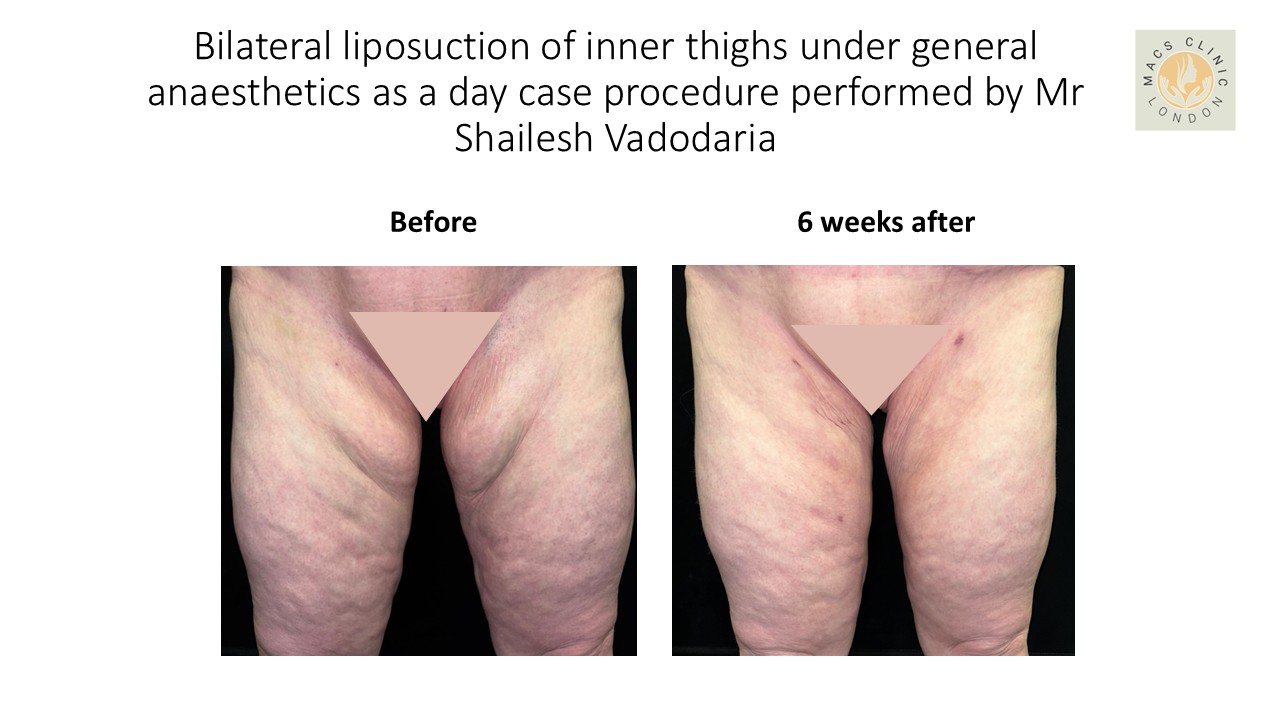
  • Inner thighs
  • Outer thighs
  • Around the knees

Small incisions are used to introduce fine cannulas that gently remove selected fat while preserving smooth contours.

When Is Skin Reduction Necessary?

Some patients have relatively little fat but significant loose skin.

In these cases, liposuction alone may actually worsen the appearance by further deflating the tissues.

Patients with excess skin may benefit from skin reduction surgery.

The decision depends upon:

  • Amount of skin excess
  • Skin quality
  • Fat distribution
  • Previous weight loss
  • Individual anatomy
  • Patient goals

Every treatment plan is personalised.

Our Surgical Philosophy

Many techniques have been described for thigh lift surgery.

Traditional groin-based thigh lifts can be effective in carefully selected patients but may be associated with scar migration, scar widening and tension across the groin.

For selected patients requiring skin reduction, Dr. Vadodaria generally prefers a vertical thigh reduction, which allows more direct removal of excess skin while avoiding excessive tension across the groin crease.

A distinctive aspect of his technique is liposuction-assisted pseudo-undermining. Gentle liposuction is performed beneath the planned skin excision, even when only minimal fat removal is required. This creates a plane that facilitates skin excision while helping to preserve important lymphatic channels and blood supply, reducing tissue trauma and supporting healing.

Anaesthetic

Thigh contouring surgery may be performed under:

  • Local anaesthetic with sedation.
  • General anaesthetic.

Most procedures are carried out as day-case surgery, allowing patients to return home the same day.

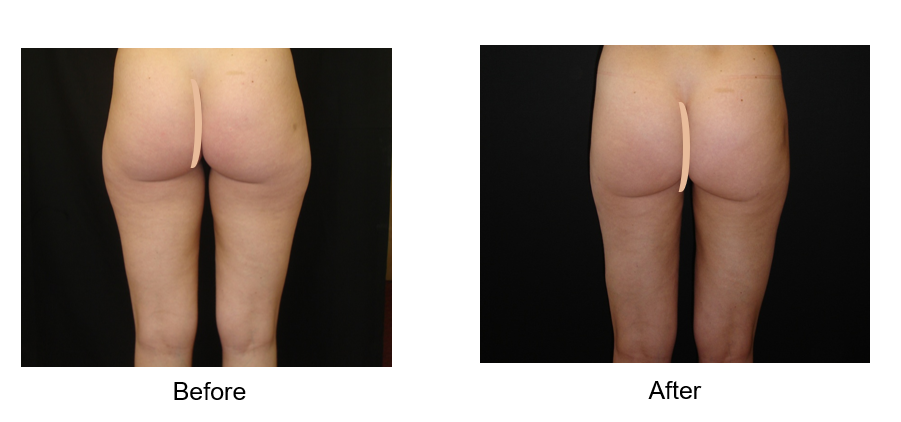
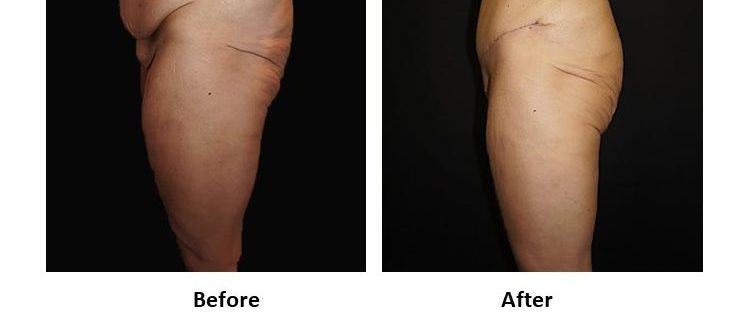
Liposuction assisted total lower body lift, thigh reduction and brachioplasty following massive weight loss

Recovery

Recovery varies between individuals and according to the extent of surgery.

Patients are encouraged to walk on the day of surgery to promote circulation and reduce the risk of deep vein thrombosis.

Compression garments are normally worn for several weeks to minimise swelling and support the healing tissues.

Patients are usually prescribed:

  • Prophylactic antibiotics.
  • Pain relief medication.
  • Anti-inflammatory medication where appropriate.
  • Compression stockings.
  • DVT prophylaxis for patients at increased risk.

Swelling gradually improves over several weeks, while the final contour continues to mature over many months.

Possible Risks and Complications

Although thigh contouring is generally safe when performed by an experienced plastic surgeon, all operations carry potential risks.

These include:

  • Bleeding
  • Infection
  • Delayed wound healing
  • Wound breakdown
  • Seroma (fluid collection)
  • Haematoma (blood collection)
  • Deep vein thrombosis
  • Pulmonary embolism
  • Temporary numbness
  • Persistent swelling
  • Contour irregularities
    • Under-correction
    • Over-correction
    • Skin wrinkling
    • Residual skin laxity
    • Asymmetry
    • Hypertrophic scarring
    • Keloid scarring in susceptible individuals
    • Hyperpigmentation or altered skin colour
    • Unsightly scars
    • Need for revision surgery
    • Neurovascular injury

Fortunately, serious complications are uncommon when surgery is carefully planned and appropriate post-operative instructions are followed.

Looking After Yourself After Surgery

Do

  • Wear your compression garment as advised.
  • Walk regularly from the first day after surgery.
  • Keep well hydrated.
  • Take all prescribed medications.
  • Attend your follow-up appointments.
  • Eat a healthy, protein-rich diet.
  • Contact the clinic if you have any concerns.

Don’t

  • Smoke or vape during recovery.
  • Lift heavy weights until advised.
  • Undertake strenuous exercise too early.
  • Remain inactive for prolonged periods.
  • Judge your final result during the early weeks of healing.

When Should You Contact the Clinic?

Please seek urgent medical advice if you develop:

  • Increasing redness around the wounds.
  • Persistent bleeding.
  • Fever or feeling generally unwell.
  • Increasing pain despite medication.
  • Calf pain or swelling.
  • Sudden shortness of breath.
  • Chest pain.
  • Excessive wound discharge.

Early assessment helps prevent more serious complications.

Realistic Expectations

Perhaps the most important part of your consultation is understanding what surgery can realistically achieve.

No operation can produce perfection or complete symmetry.

The aim of thigh contouring is to improve body proportions, create smoother contours and enhance confidence while maintaining a natural appearance.

Careful patient selection, meticulous surgical technique and close attention to post-operative care are essential for achieving the best possible outcome.

Conclusion

Thigh contouring can be a highly rewarding procedure for carefully selected patients. Whether treatment involves liposuction alone or a combination of liposuction and skin reduction, the objective is always the same: to restore natural, balanced body proportions while preserving healthy tissues and respecting the quality of the skin.

During your consultation at MACS Clinic, we will undertake a detailed assessment, discuss your concerns and expectations, explain the available treatment options, and recommend the approach that is most appropriate for your individual anatomy and goals.

Our commitment is to provide safe, ethical and personalised care, managing their realistic expectations and long-term satisfaction.
Contact MACS Clinic

FREE VIDEO/FACE TO FACE CONSULTATION

WITH CONSULTANT PLASTIC SURGEON