
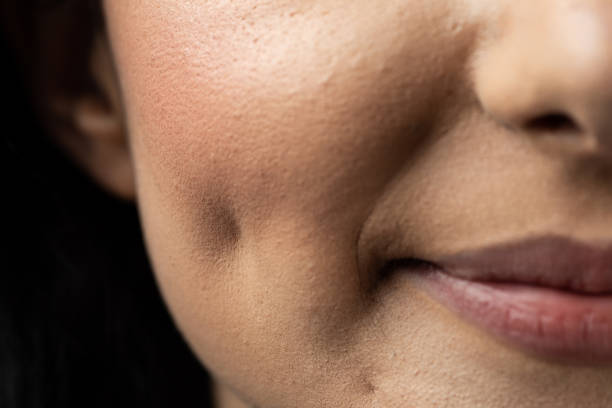
A Patient Guide by Dr. Shailesh Vadodaria, Consultant Plastic Surgeon
MACS Clinic, Watford & London
www.macsclinic.co.uk | www.dimplecreations.co.uk
Introduction
Dimples are often considered an attractive facial feature, and for this reason many people seek dimple creation surgery. However, beauty is personal and individual. Over the years, some patients have approached us for the exact opposite reason: they would like an existing dimple reduced, softened, or removed.
A dimple may be present from birth (congenital), created surgically (dimpleplasty), or develop following trauma, scarring, infection, or previous surgery. While creating a dimple is a relatively common aesthetic procedure, the release of an unwanted dimple is far less frequently discussed.
At MACS Clinic, we believe that aesthetic surgery should be guided by the patient’s wishes, realistic expectations, and a thorough understanding of facial anatomy. This article explains why dimples occur, how they may be reversed, and what patients should realistically expect from treatment.
What Causes a Dimple?
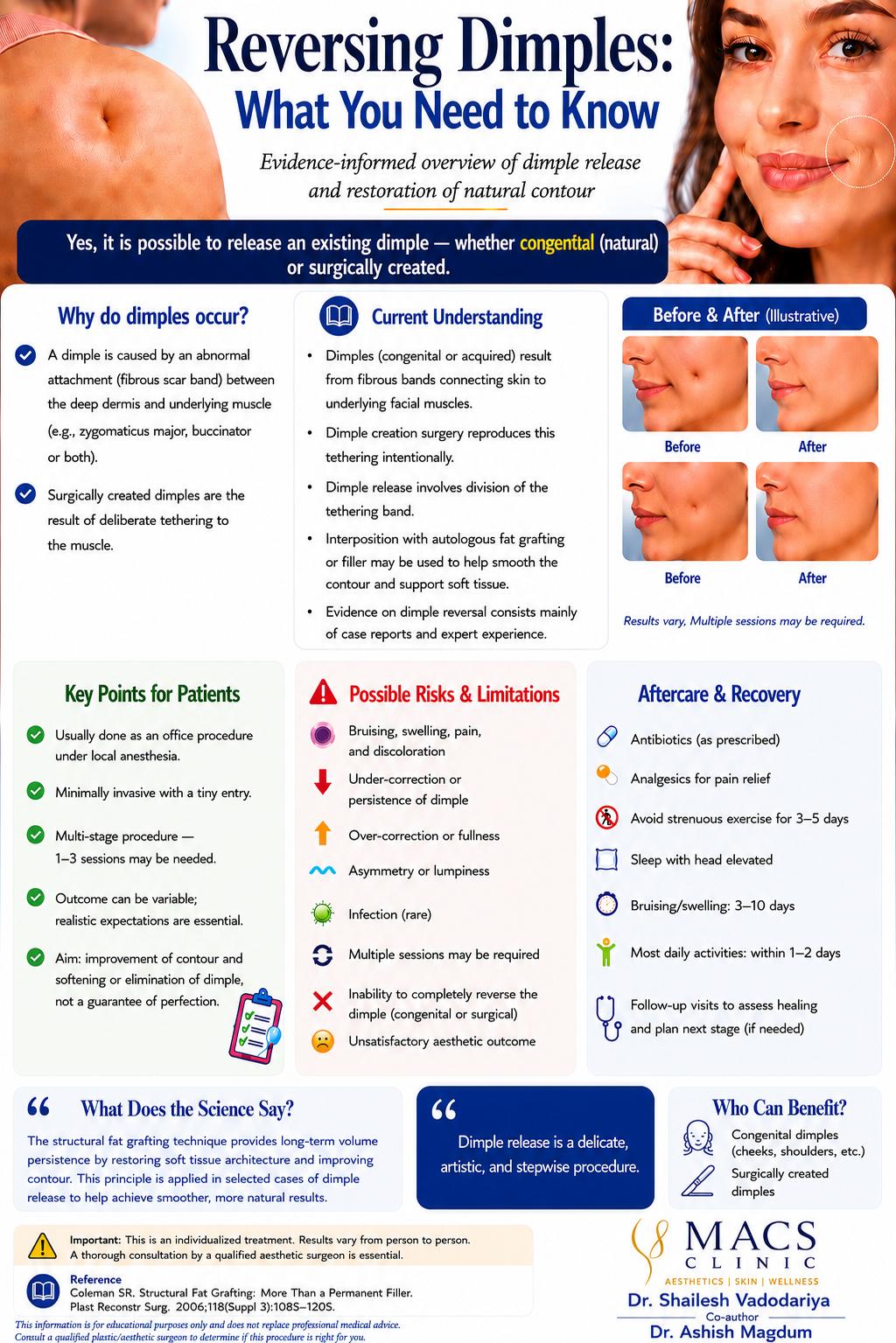
A facial dimple is usually caused by an attachment between the skin of the cheek and the underlying facial muscles.
In many individuals with natural dimples, there is a variation in the insertion of the zygomaticus major or buccinator muscle, resulting in the skin being tethered inward during facial expression. Other dimples are caused by fibrous bands or scar tissue that connect the deeper tissues to the skin surface.
Surgically created dimples are produced using a similar principle. An attachment is created between the cheek muscle and the inner surface of the skin, resulting in a depression that becomes visible when smiling.
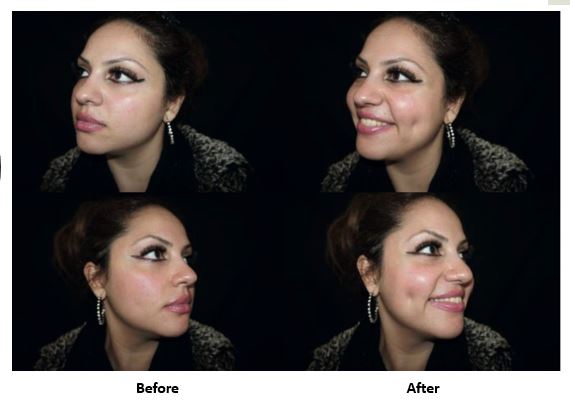
Why Would Someone Want a Dimple Reversed?
Patients request dimple release for many different reasons:
* A surgically created dimple no longer suits the patient’s aesthetic preference.
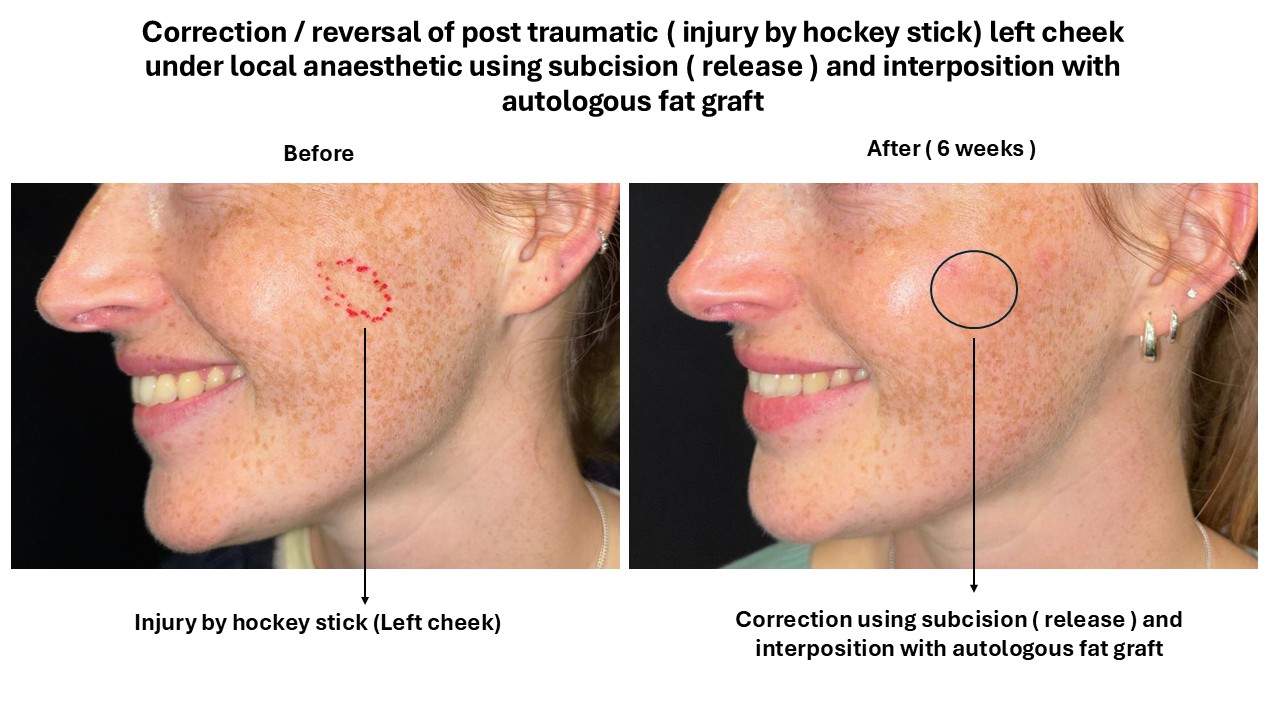
* A post-traumatic dimple has developed following injury or scarring.
* Facial asymmetry has become more apparent over time.
There is no “right” or “wrong” reason. Aesthetic surgery should always respect individual preferences and personal goals.
Is It Possible to Reverse a Dimple?
In many cases, yes.
However, it is important to understand that dimple reversal is often more complex and less predictable than dimple creation.
The objective is usually to:
* Release the tethering scar or fibrous attachment.
* Reduce or eliminate the visible depression.
Complete removal of a dimple cannot always be guaranteed, particularly when the dimple is congenital and related to the underlying muscle anatomy. Patients should therefore view treatment as an improvement procedure rather than a promise of perfection.
How Is Dimple Release Performed?
The treatment approach depends on the cause of the dimple.
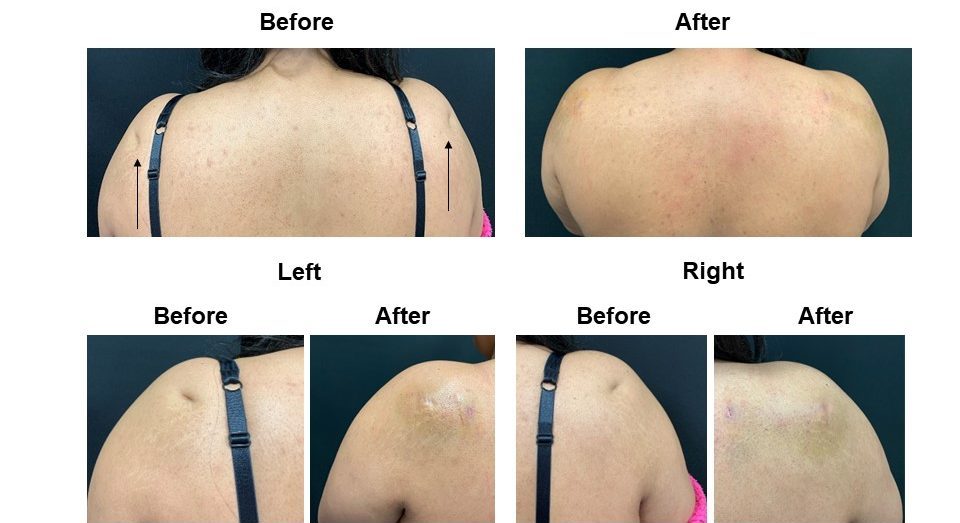
- Release of Fibrous Scar Tissue (Subcision)
The most common technique involves carefully releasing the scar tissue or fibrous attachment beneath the skin.
This is usually performed under local anaesthesia through a very small access point.
The aim is to separate the skin from the underlying muscle and allow the tissues to move independently once again.
This technique is often referred to as subcision and is commonly used for tethered scars and contour deformities.
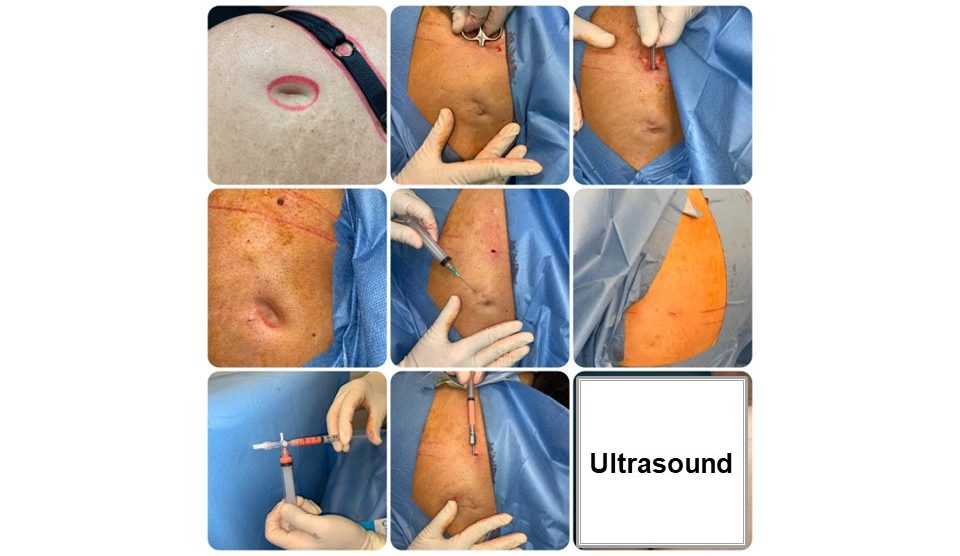
- Fat
Following release, a small amount of the patient’s own fat may be transferred into the area to:
* Reduce recurrence of tethering
Fat grafting has become a well-established technique for the correction of contour irregularities throughout the body and face.
- Dermal Fillers
Selected patients may benefit from injectable fillers.
These can help elevate the depression and improve contour without surgery.
However, fillers are temporary and may require maintenance treatments.
They are generally more suitable for mild contour irregularities than for severe tethering. Dermal filler is a synthetic material . Hence there is a possibility of granuloma formation .
- Multi-Stage Treatment
Reversal of dimple should be considered multistage procedure
Who Can Benefit from Dimple Release?
Suitable candidates may include:
* Individuals with congenital cheek dimples.
* Patients with surgically created dimples.
* Patients with post-traumatic dimples.
* Individuals with scar-related facial depressions.
* Patients who feel their existing dimple no longer reflects their aesthetic preference.
A detailed consultation is essential to determine whether treatment is likely to achieve the desired outcome.
What Are the Limitations?
One of the most important parts of consultation is discussing limitations.
Patients should understand that:
* Complete reversal may not be possible.
* Some dimples may partially recur.
* Multiple sessions may be required.
* Minor asymmetry can persist.
* Scar tissue can reform.
* Results vary between individuals.
At MACS Clinic, we place great emphasis on realistic expectations and informed decision-making.
Recovery Following Dimple Release
Most procedures can be performed under local anaesthesia as a day-case treatment.
Typical recovery includes:
First 48 Hours
* Mild swelling.
* Mild discomfort.
* Occasional bruising.
First Week
* Most patients return to normal activities.
* Swelling gradually improves.
Two to Six Weeks
* Tissue softening occurs.
* Contour continues to settle.
Long-Term
* Final results often continue to evolve for 6 to 18 months as scar tissue matures and facial tissues remodel.
Potential Risks
As with any aesthetic procedure, risks exist.
These may include:
* Bruising.
* Swelling.
* Infection.
* Temporary numbness.
* Under-correction.
* Over-correction.
* Irregular contour.
* Asymmetry.
* Need for further treatment.
Fat graft absorption
Fortunately, significant complications are uncommon when treatment is performed by an experienced surgeon with a detailed understanding of facial anatomy.
The MACS Clinic Philosophy
At MACS Clinic, our philosophy:
Some patients desire a dimple because they perceive it as attractive. Others wish to reverse a dimple because they feel it draws unwanted attention or no longer suits their appearance.
Both viewpoints are valid.
Every consultation is therefore focused on:
* Understanding the patient’s concerns.
* Exploring realistic options.
* Providing honest advice.
* Prioritising safety over intervention.
Frequently Asked Questions
Can a congenital dimple be completely removed?
Sometimes, but not always. Congenital dimples may be related to underlying muscle anatomy and therefore complete removal cannot be guaranteed.
Can a surgically created dimple be reversed?
In many cases, yes. However, the degree of improvement varies between individuals.
Will I need fat grafting?
Mr Vadodaria prefers fat graft interposition instead of dermal filler .
Is the procedure painful?
Most patients tolerate the procedure very well under local anaesthesia.
Can the dimple come back?
There is a possibility that some tethering may recur as tissues heal.
Final Thoughts
Dimple release is a highly specialised procedure that combines science, anatomy, and aesthetic judgement. Whether a dimple is congenital, surgically created, or post-traumatic, treatment should be tailored to the individual patient.
The procedure is often delicate, artistic, and stepwise. The aim is to improve contour and facial harmony while maintaining realistic expectations and respecting the natural anatomy of the face.
If you would like to discuss dimple creation, dimple reversal, or any aspect of facial aesthetic surgery, we would be pleased to arrange a consultation.
Contact MACS Clinic
- Phone: 020 7078 4378
- WhatsApp: 07792 648 726
- Email: enquiries@macsclinic.co.uk
- Website: www.macsclinic.co.uk
- BOOK a FREE Video Consultation: https://calendly.com/macsclinic/free-video-consultation?month=2025-01