
A comprehensive recovery guide following upper-lip, lower-lip or combined lip-reduction surgery
YOUR SURGEON’S INSTRUCTIONS TAKE PRIORITY
This guide supports—but does not replace—the individual advice, prescription and follow-up plan given by your treating surgeon. If anything in your personal discharge instructions differs from this guide, follow the personal instructions and contact the clinic if unsure.
Your recovery at a glance
- Swelling, tightness, bruising, tenderness and temporary altered sensation are expected. Swelling commonly becomes most noticeable during the first 48–72 hours before gradually settling.
- A small amount of blood-stained saliva or minor ooze may occur initially. Active or persistent bleeding is not normal and requires advice.
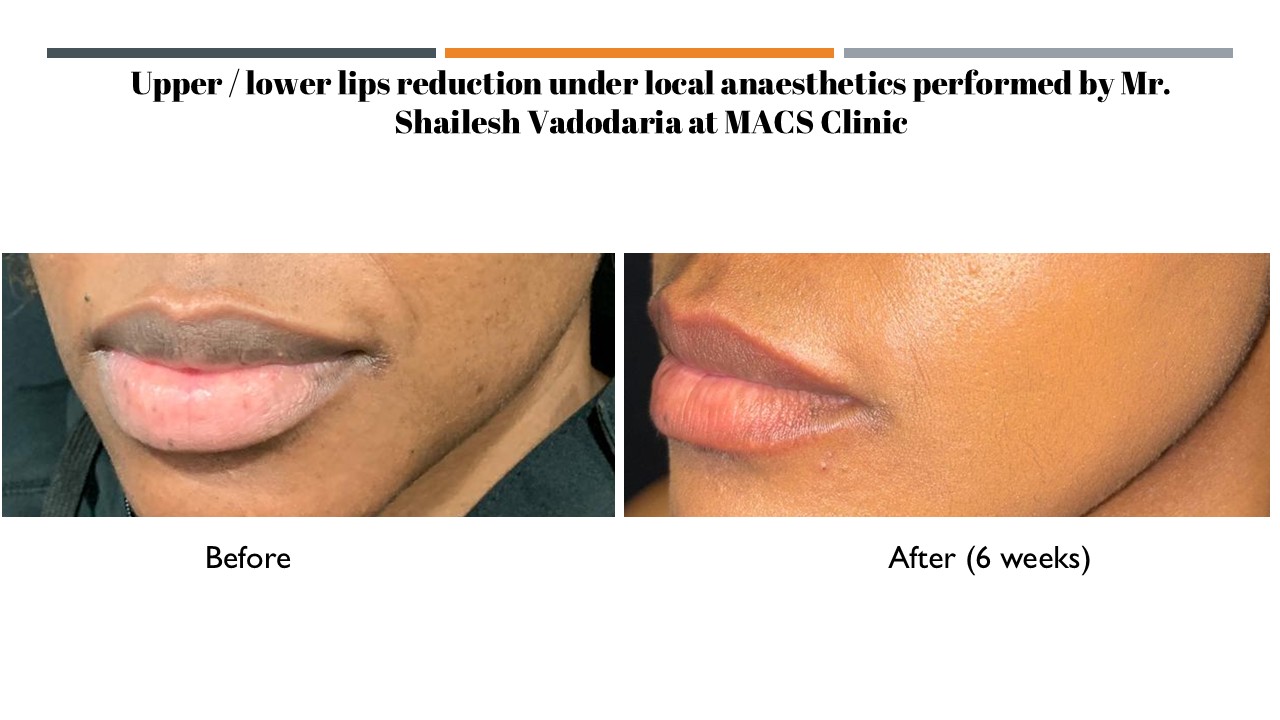
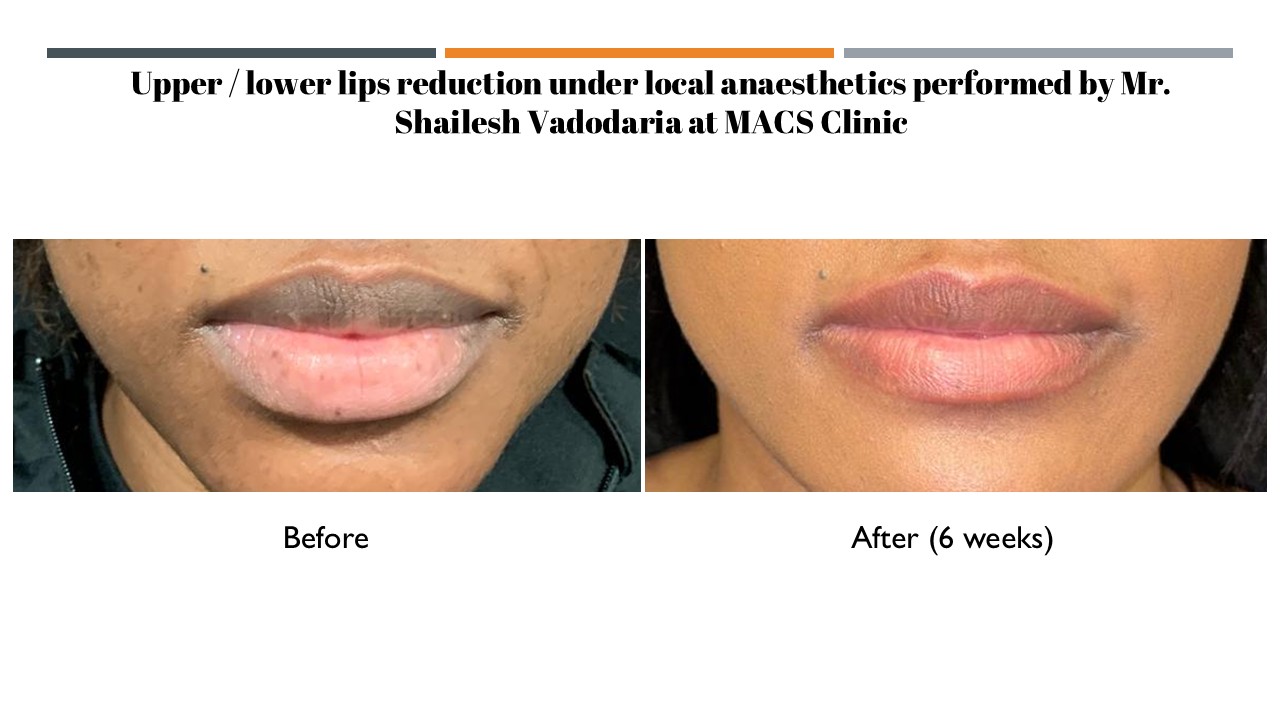
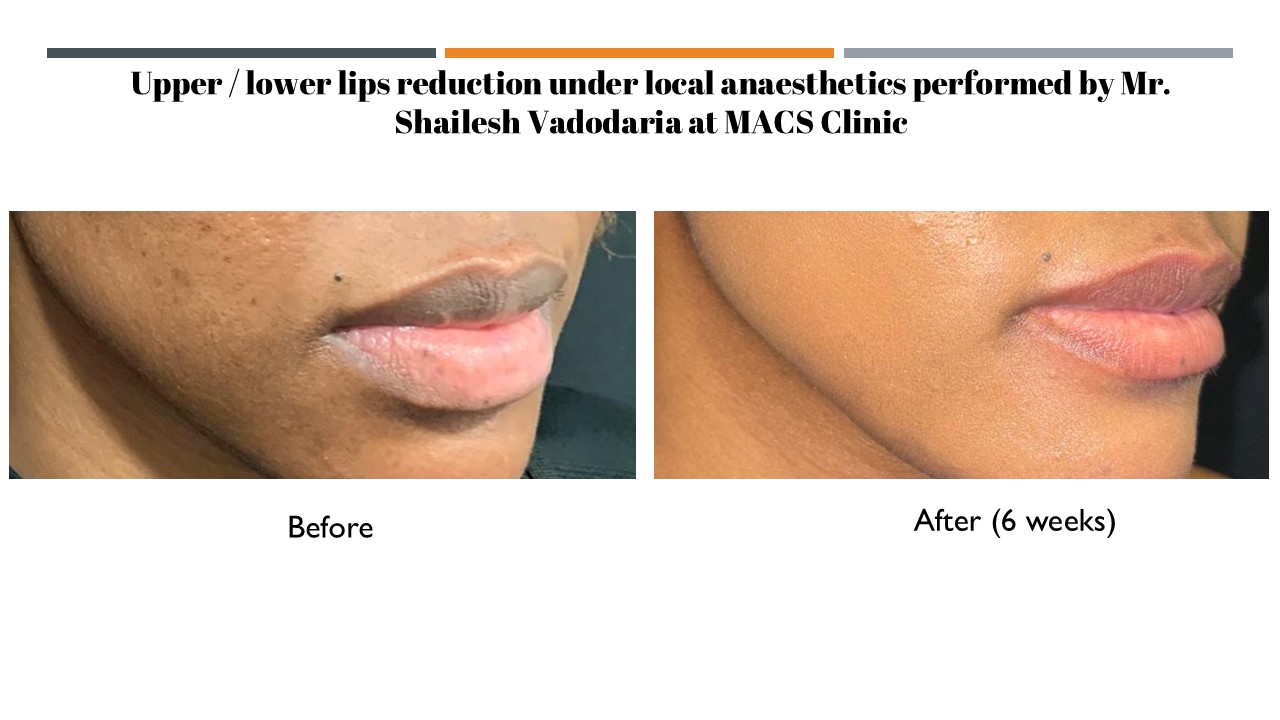
- The lips may look uneven while swelling settles. Final shape cannot be judged in the early healing period; scar maturation takes several months.
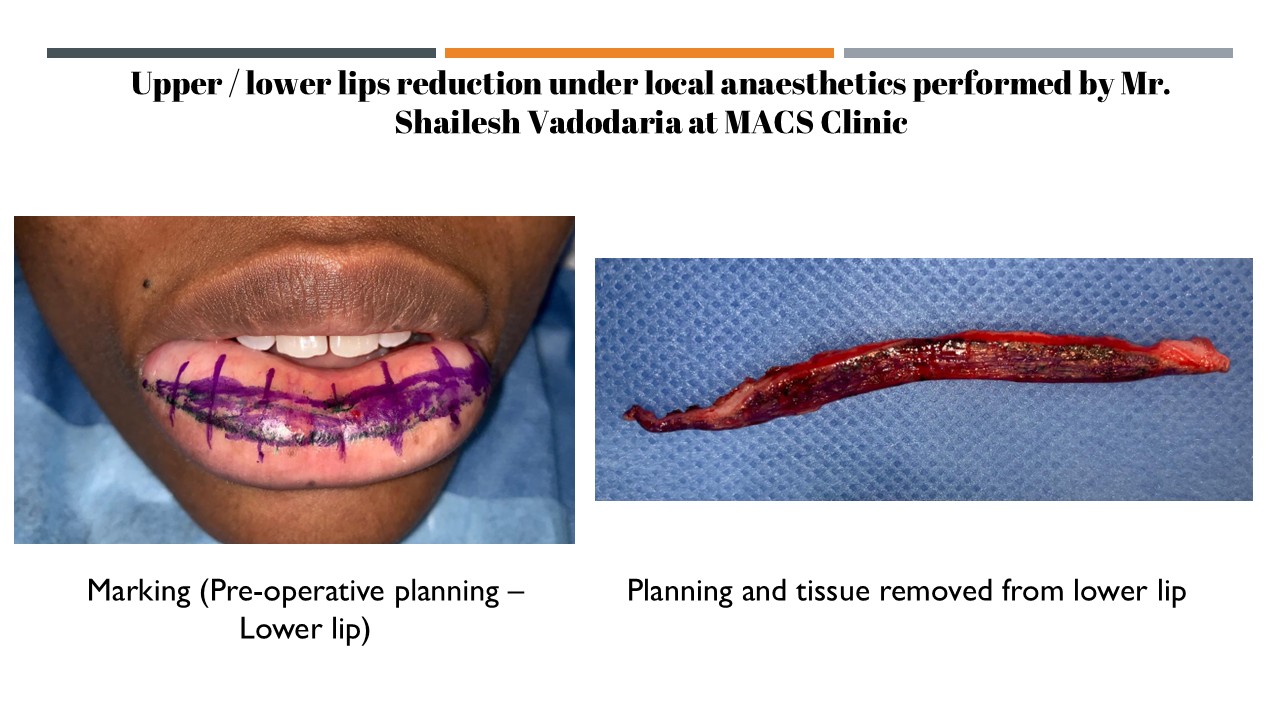
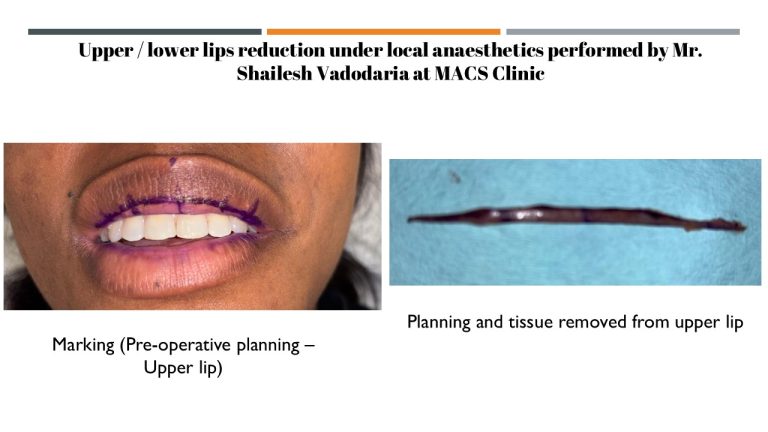
The first 24–48 hours
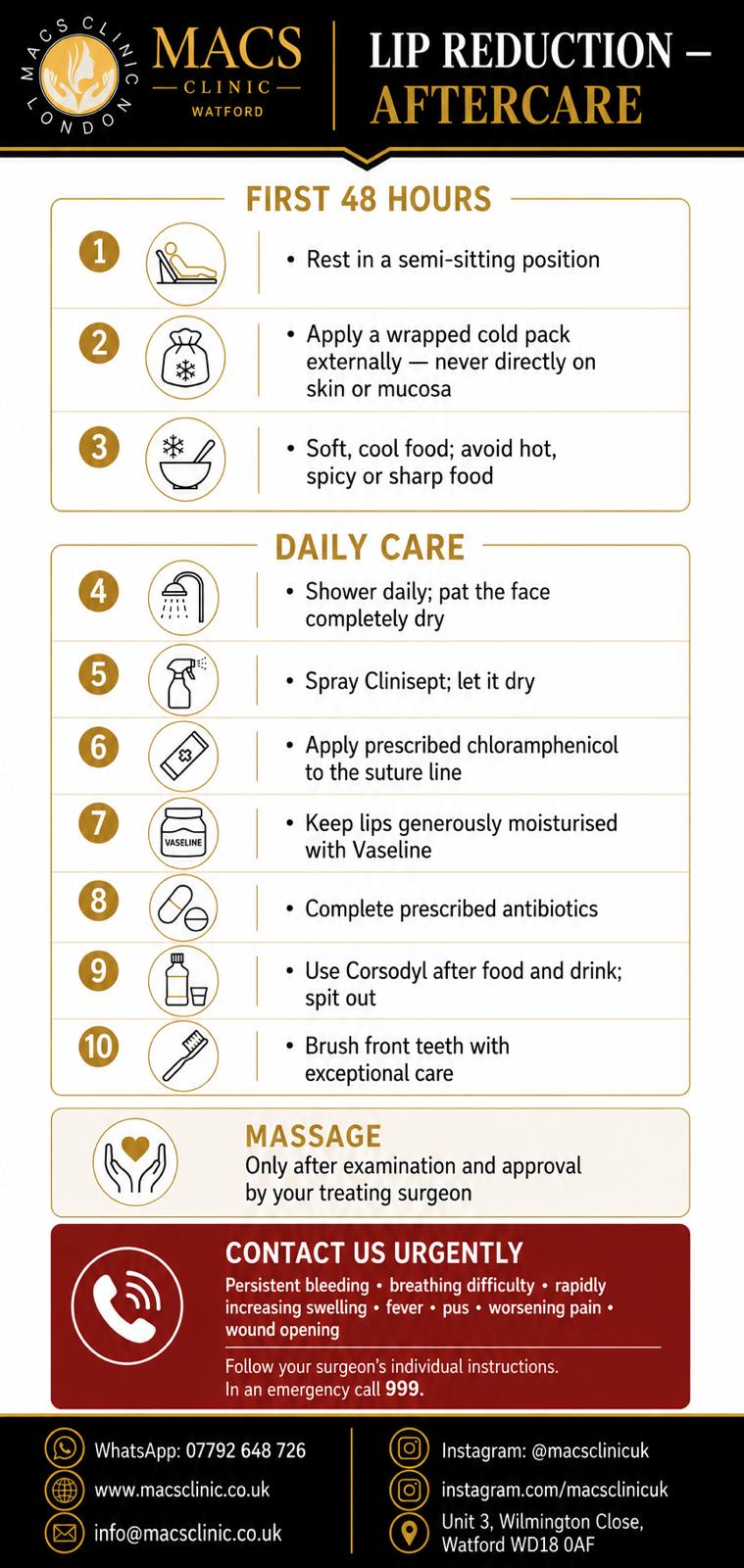
1. Position and rest
Rest in a semi-sitting or semi-upright position, including during sleep. Use two or three pillows or a supportive backrest. Keeping the head above heart level helps limit swelling and throbbing. Avoid bending, straining and unnecessary talking or exaggerated facial movements.
2. Cold-pack application
Apply a cool pack externally over the lip area for short, comfortable intervals during the first 24–48 hours, as advised by your surgeon. Always wrap it in a clean soft cloth. Never place ice or another frozen source directly against the skin or oral mucosa, and never allow the tissue to become painfully cold, numb, pale or blotchy. Do not press or rub the operated lip.
3. Pain relief and medicines
Take prescribed or recommended pain relief exactly as directed. Do not exceed the labelled dose and do not combine products containing the same ingredient. Avoid aspirin unless it is medically prescribed for you; if you take anticoagulant or antiplatelet medication, follow the agreed peri-operative plan and do not stop or restart it without medical advice.
4. Bleeding
Minor staining may occur. If fresh bleeding develops, sit upright and apply gentle, steady pressure with clean gauze for 20–30 minutes without repeatedly checking. Do not suck, spit forcefully or rinse vigorously. If bleeding continues, becomes heavy, or blood is collecting rapidly in the mouth, contact the clinic urgently; call 999 for severe bleeding, faintness or breathing difficulty.
Daily wound and mouth care
Showering and drying
You may shower daily unless your surgeon has told you otherwise. Avoid very hot water, steam and a strong shower jet directly on the face. Allow water to run gently, do not scrub the wound, and pat the face dry with a fresh clean towel or gauze. The area must be completely dry before applying the next product.
Clinisept spray
Once the face and suture area are completely dry, apply Clinisept®/Clinicept spray as instructed. Do not rub the wound. Allow the spray to air-dry fully before applying ointment. Use only the product and frequency recommended by your treating team.
Chloramphenicol ointment
After the Clinisept has dried, apply a thin layer of the prescribed chloramphenicol ointment along the suture line, using clean hands or a clean applicator as directed. Use it only for the duration and on the areas specified by your surgeon. Stop and seek medical advice if you develop a rash, marked irritation, unexpected bruising, unusual tiredness or another suspected reaction. Do not share the tube.
Vaseline
Keep the lip surface generously coated with plain petroleum jelly (Vaseline) so it remains soft and does not become dry, cracked or scaly. Reapply with clean hands or a clean disposable applicator, particularly after mouth care and meals. Do not pull away crusts or scabs.
Antibiotics
If oral antibiotics have been prescribed, take them at the stated times and complete the course unless a clinician tells you to stop. Seek advice for troublesome diarrhoea, vomiting or a rash. Call 999 for facial/throat swelling, wheeze, breathing difficulty, collapse or another severe allergic reaction.
Corsodyl mouthwash
Use chlorhexidine mouthwash (Corsodyl®) exactly as directed, usually after food and drink. Rinse gently and spit it out—do not swallow. Avoid vigorous gargling in the early period. Toothpaste can reduce chlorhexidine activity, so use it at a different time or rinse thoroughly and leave at least 5 minutes after brushing. Do not eat or drink for 30 minutes afterwards. Temporary taste disturbance and reversible staining of the teeth or tongue may occur.
Brushing the teeth
Maintain oral hygiene, but be extraordinarily careful around the upper and lower front teeth and the lip sutures. Use a small, soft toothbrush; make slow controlled movements and avoid stretching, catching or striking the wound. Do not use an electric toothbrush near the front surgical area until your surgeon agrees.
Food, drink and habits
- For the first several days choose cool or lukewarm, soft foods requiring minimal chewing: yoghurt, smooth soup that is not hot, mashed food, scrambled egg, soft rice or pasta, and smoothies taken from a cup.
- Take small mouthfuls. Use a spoon carefully and avoid over-opening the mouth. Do not bite directly into firm food with the front teeth.
- Avoid very hot, spicy, acidic, salty, sharp-edged, crunchy or sticky food until the wound is comfortable and your surgeon permits it.
- Drink from a cup. Avoid straws initially because suction and pursing may strain the repair.
- Avoid smoking, vaping and nicotine products because they impair healing and increase wound and infection risk. Avoid alcohol while taking antibiotics or strong pain relief, and until the surgeon says it is safe.
- Keep well hydrated. Wipe rather than rub the lips after eating, then perform the prescribed mouth and wound care.
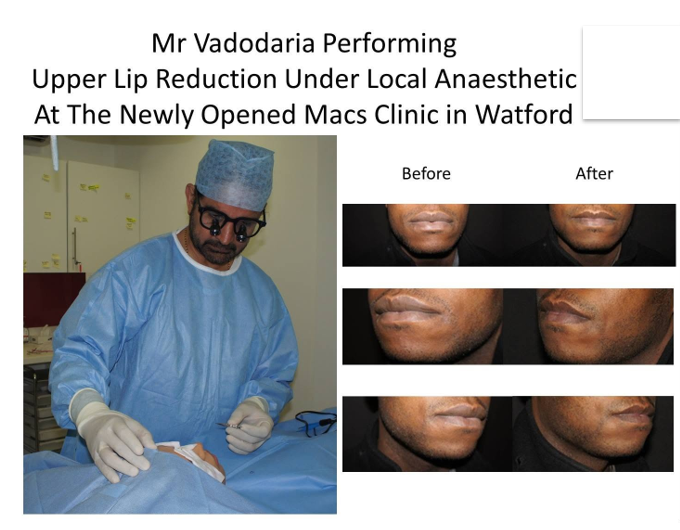
Activity, facial movement and appearance
- Rest on the day of surgery. Gentle walking is encouraged, but avoid strenuous exercise, heavy lifting, bending, swimming and contact sport until cleared by your surgeon.
- Avoid pressure, rubbing or accidental knocks to the lips. Do not manipulate the sutures, stretch the lips to inspect the wound, whistle forcefully, use wind instruments, or undertake vigorous kissing or oral sexual activity until cleared.
- Avoid makeup, lipstick, fragranced products and non-prescribed creams on or next to the incision until the wound has sealed and your surgeon agrees.
- Protect healing scars from strong sunlight. Once the wound is fully closed and your surgeon approves, use high-factor lip sun protection.
Massage and scar care
DO NOT START MASSAGE ON YOUR OWN
Massage may be helpful later for selected patients, but it must begin only after a physical examination and a discussion with the treating surgeon. Starting too early, using excessive pressure or massaging a wound that has not fully healed may cause bleeding, inflammation, wound separation or distortion. At review, your surgeon will advise whether massage is appropriate, when to start, the direction and pressure, frequency, duration, and whether a scar product should be used.
Follow-up and sutures
- Attend every planned review, even if recovery appears straightforward. The surgeon will assess wound healing, swelling, symmetry, sensation and the timing of normal activity.
- Some sutures dissolve; others need removal. Never cut or pull a suture yourself. Contact the clinic if a stitch loosens, becomes embedded, is persistently painful or the wound edges separate.
When to seek help
Contact MACS Clinic or your treating team urgently if you develop:
Bleeding: Fresh bleeding that does not stop after 20–30 minutes of steady pressure, or recurrent/heavy bleeding.
Swelling: Rapidly increasing or one-sided swelling, a tense expanding lip, or sudden worsening after initial improvement.
Infection: Increasing redness, heat, pus, offensive taste or smell, fever, chills, or pain that is worsening rather than settling.
Wound concerns: Wound opening, tissue becoming unusually pale/dusky/black, blistering from cold exposure, or a significant new asymmetry.
Hydration or medicines: Persistent vomiting, inability to drink, signs of dehydration, or an important medicine reaction.
Sensation or movement: New severe numbness, weakness of lip movement, or any symptom that worries you.
CALL 999 IMMEDIATELY
for difficulty breathing, rapidly progressing swelling of the mouth/tongue/throat, severe uncontrolled bleeding, collapse, chest pain or signs of a severe allergic reaction.
Practical recovery checklist
☐ Semi-upright rest and sleep
☐ Wrapped cool pack only; never direct cold contact
☐ Daily gentle shower; pat completely dry
☐ Clinisept/Clinicept spray; allow to dry
☐ Prescribed chloramphenicol on the suture line
☐ Generous plain Vaseline to prevent dryness and scaling
☐ Complete prescribed antibiotic course
☐ Gentle Corsodyl rinse after food/drink; spit out
☐ Exceptional care brushing the front teeth
☐ Soft, cool diet and good hydration
☐ No smoking/vaping, strenuous activity or lip manipulation
☐ Attend follow-up; massage only after examination and approval
Contact MACS Clinic
- Phone: 020 7078 4378
- WhatsApp: 07792 648 726
- Email: enquiries@macsclinic.co.uk
- Website: www.macsclinic.co.uk
- BOOK a FREE Video Consultation: https://calendly.com/macsclinic/free-video-consultation?month=2025-01