Monday - Friday: 9.30 am to 6.00 pm, Saturday - By Prior AppointmentUnit 3, Wilmington Cl, Watford WD18 0AF
Home » News » Post-Operative Instructions: Eyelid Surgery (Blepharoplasty)
Post-Operative Instructions: Eyelid Surgery (Blepharoplasty)
Posted on: 15 Apr 2026
Immediate Priorities (First 48–72 Hours)
Positioning & Swelling Control
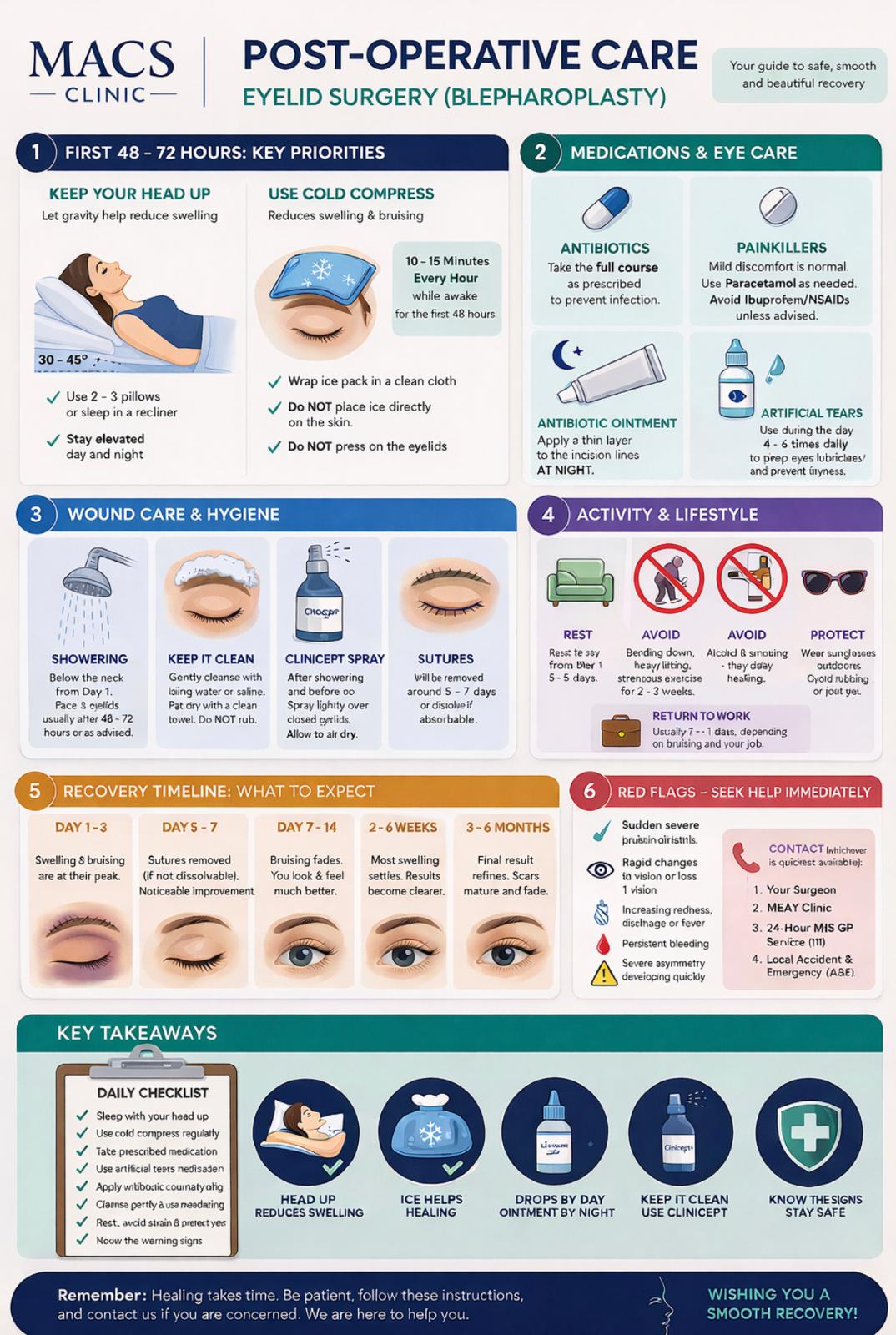
Maintain head elevation (30–45°) at all times, including during sleep → Use 2–3 pillows or a recliner chair → Reduces oedema via gravitational drainage
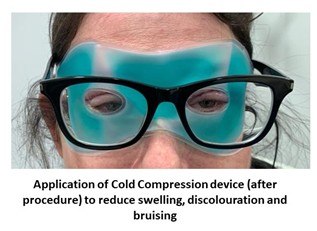
Apply cold compress / ice packs:
10–15 minutes every hour while awake (first 48 hours)
Wrap ice in clean cloth (avoid direct skin contact)
Avoid excessive pressure on eyelids
Medications
Antibiotics (if prescribed): Complete full course to reduce infection risk
Analgesia:
Usually mild discomfort only
Paracetamol preferred
Avoid NSAIDs (e.g., ibuprofen) in early phase if bleeding risk
Topical antibiotic ointment:
Apply gently to incision lines at night
Avoid excessive quantity
Lubrication (very important):
Artificial tear drops during the day (4–6 times daily)
Prevents exposure keratopathy / dry eye syndrome
Particularly critical in patients with lagophthalmos no
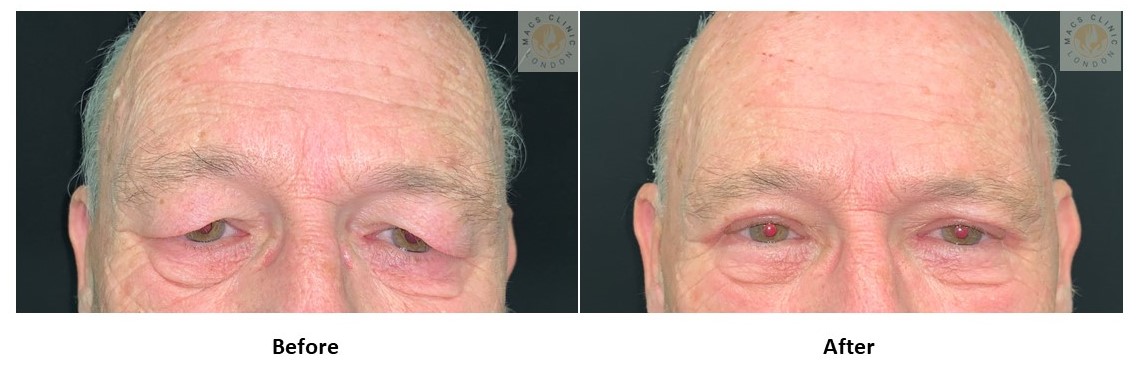
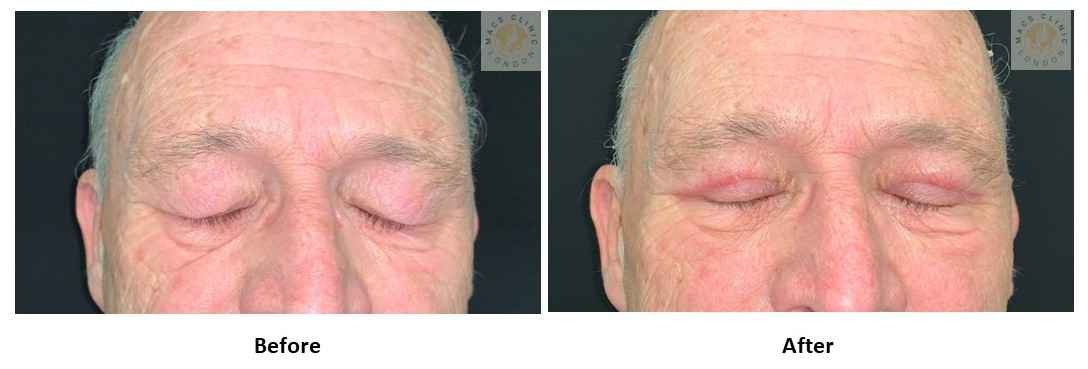
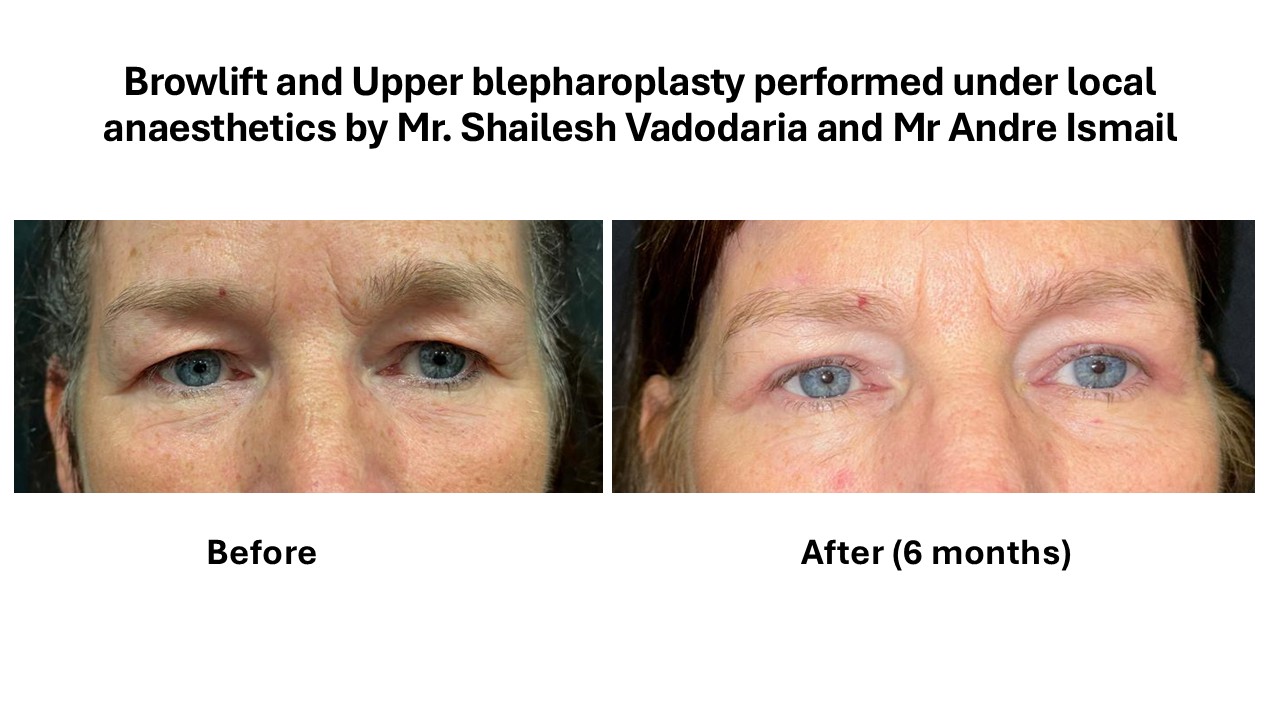
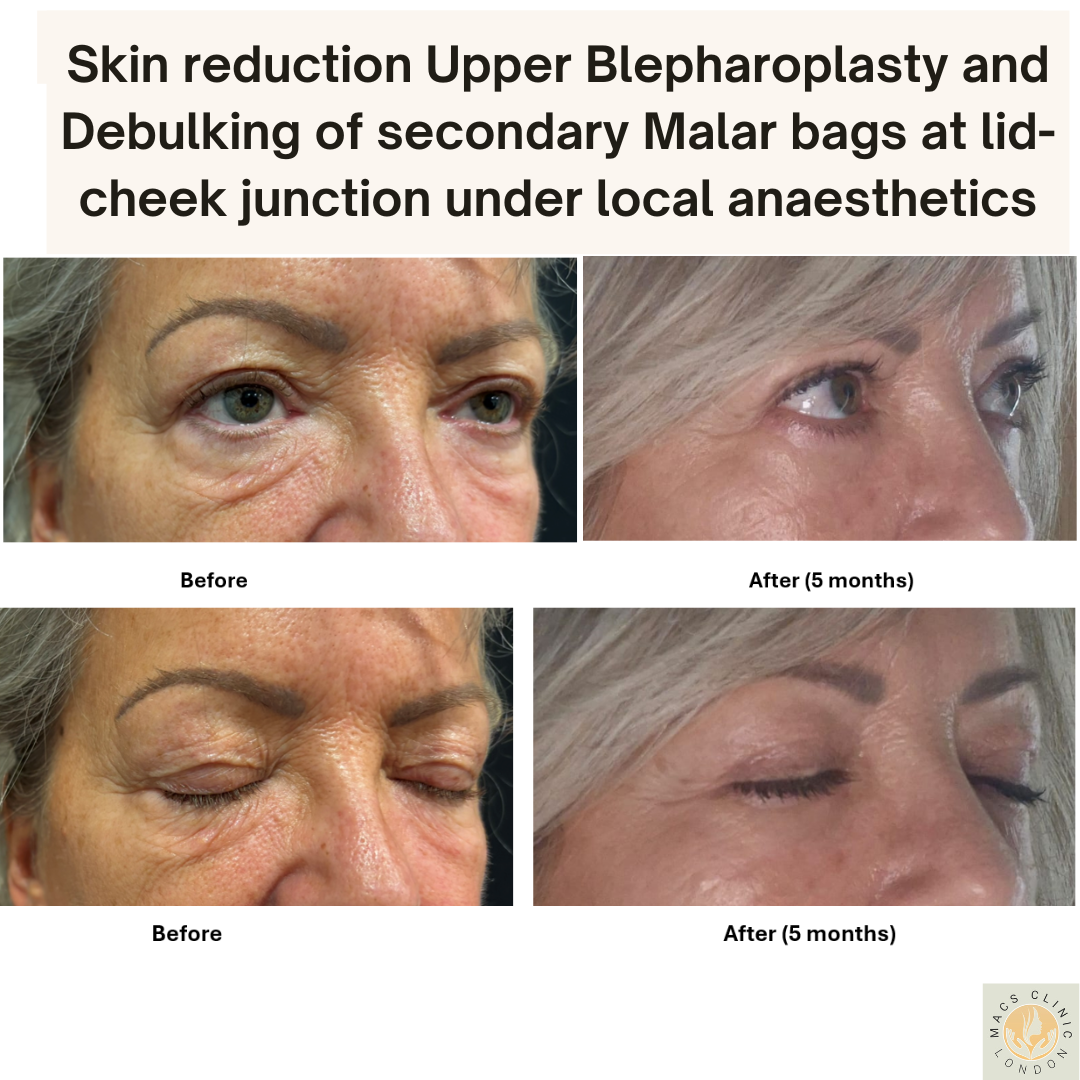
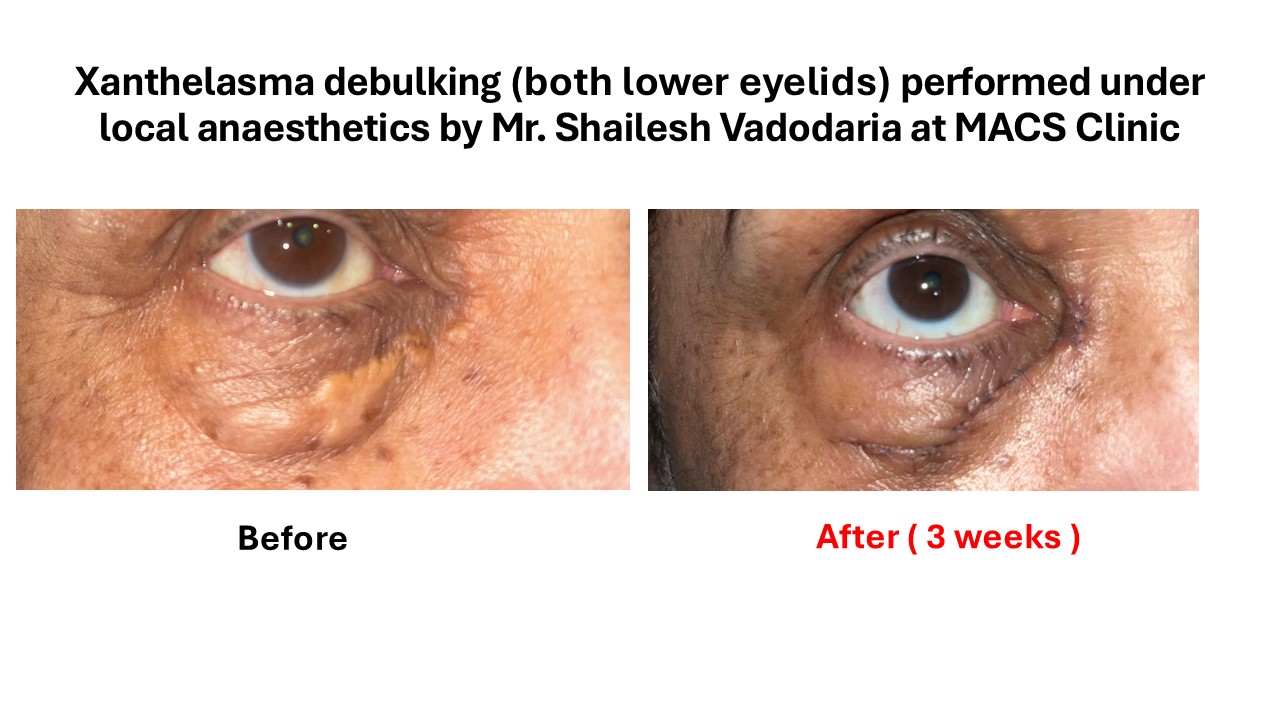
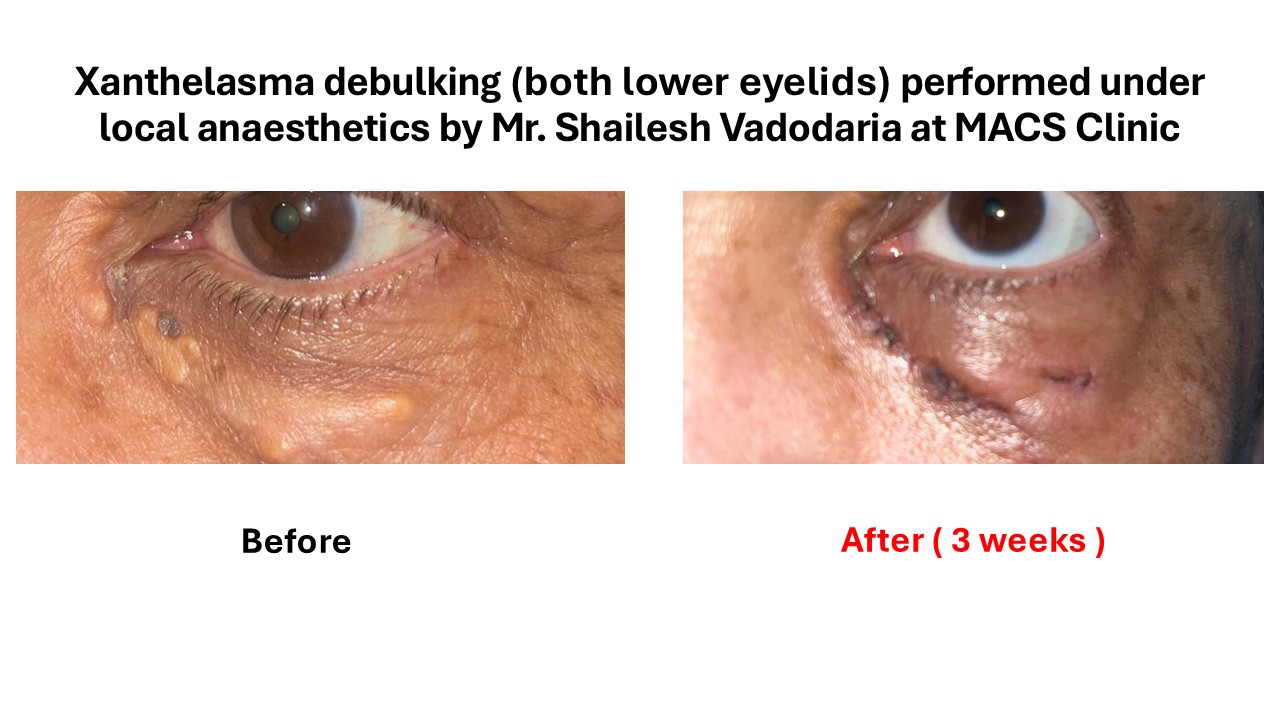
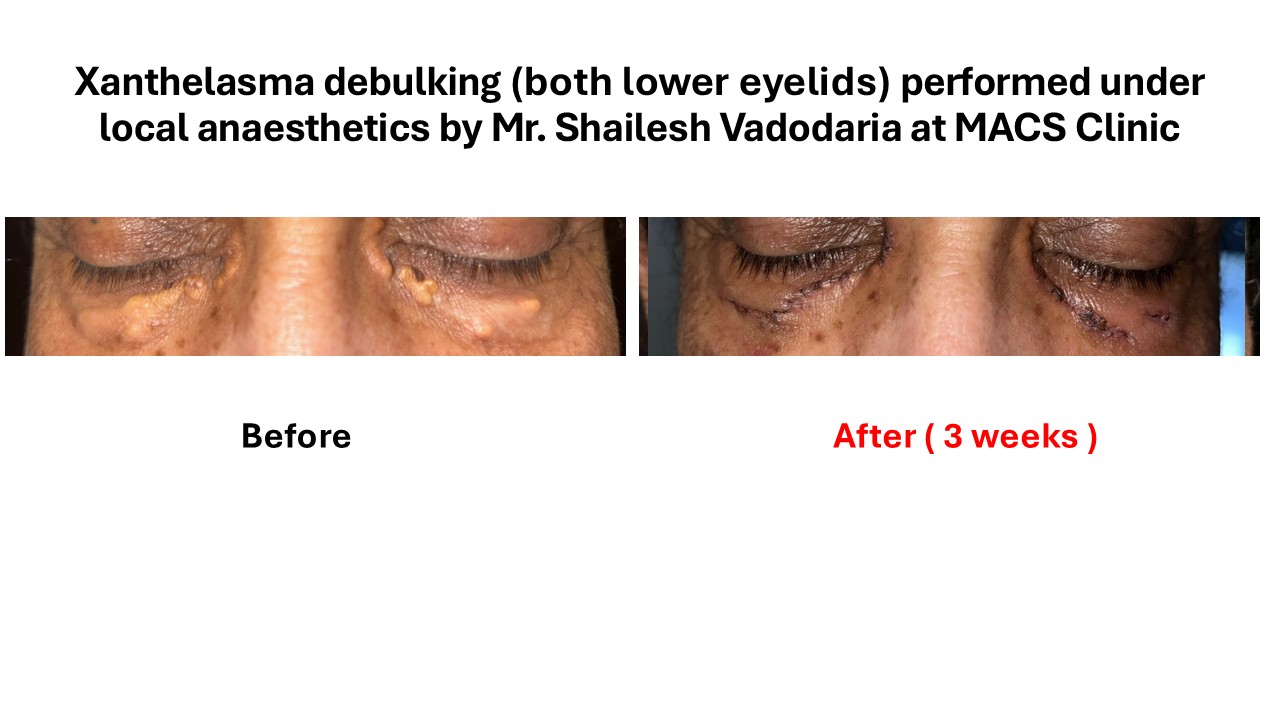
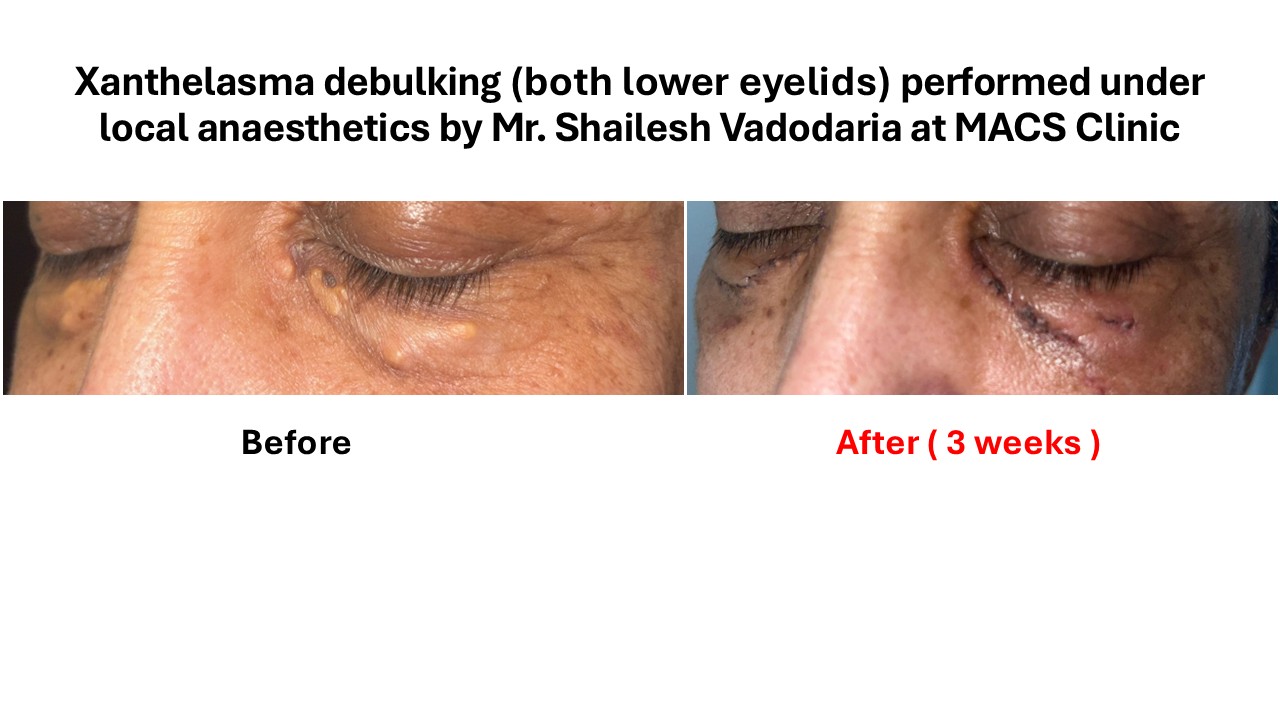
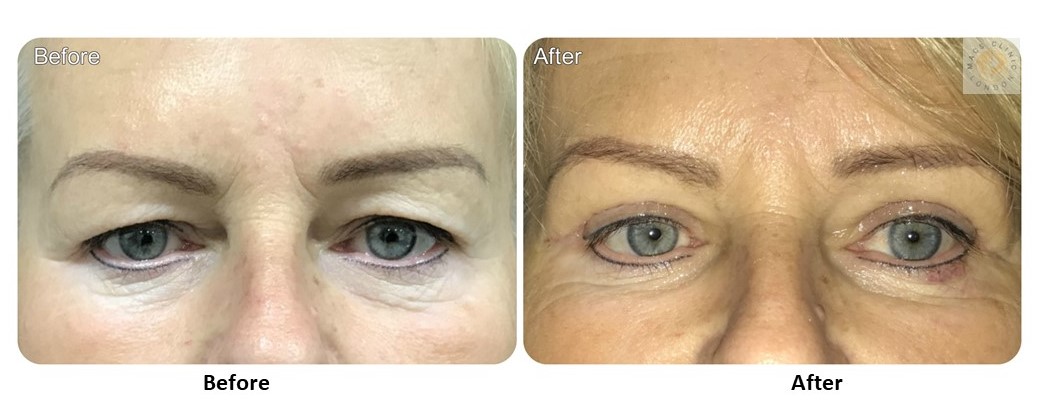
Patient 1: Upper eyelid correction performed under local anaesthetics by Mr. Shailesh Vadodaria
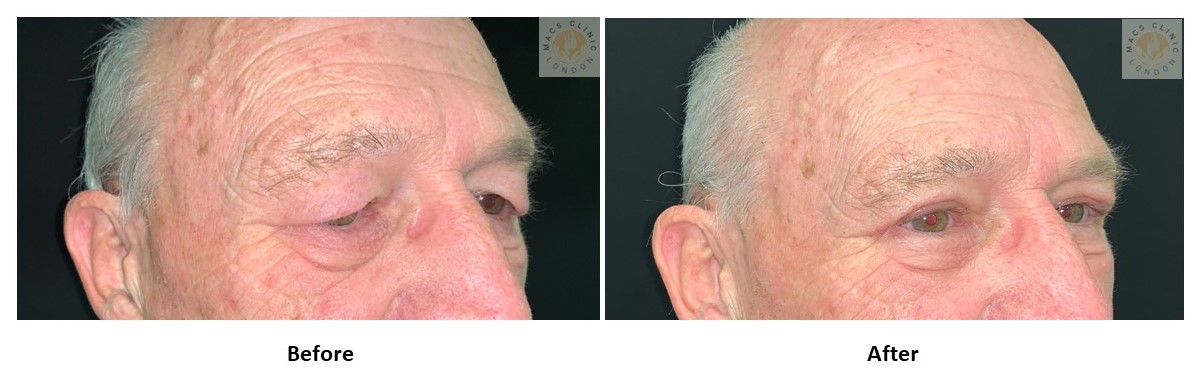
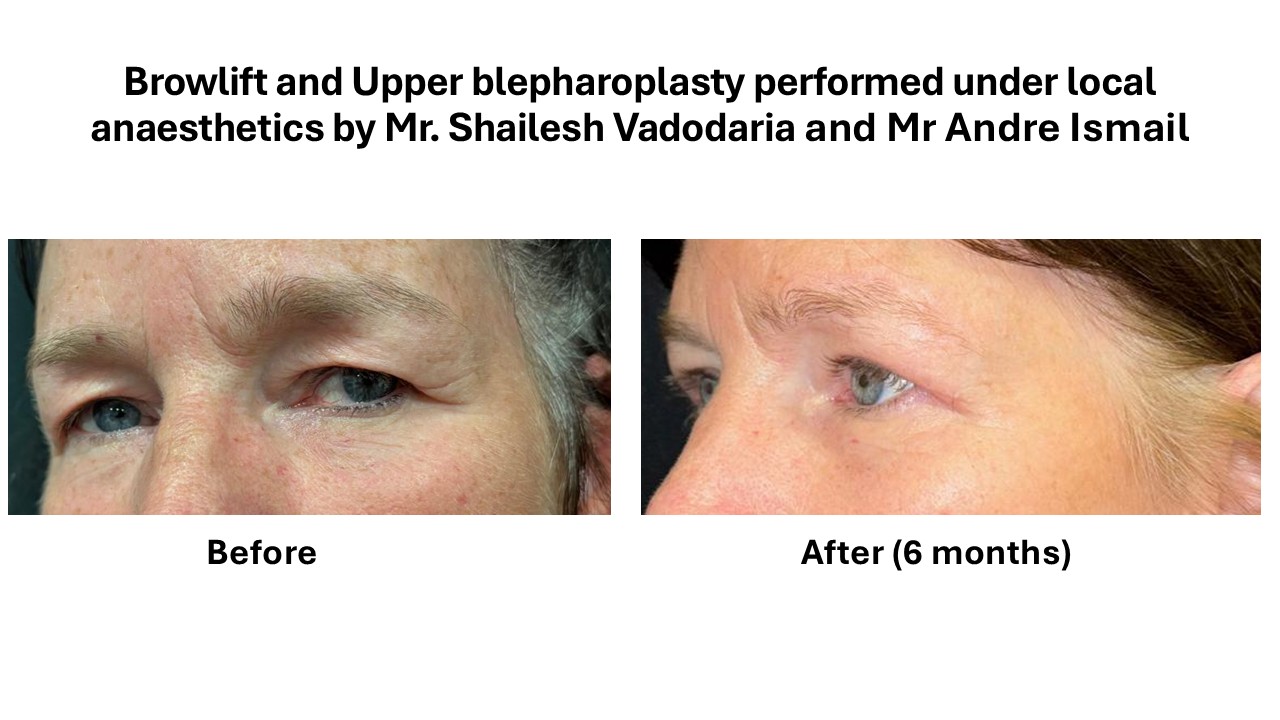
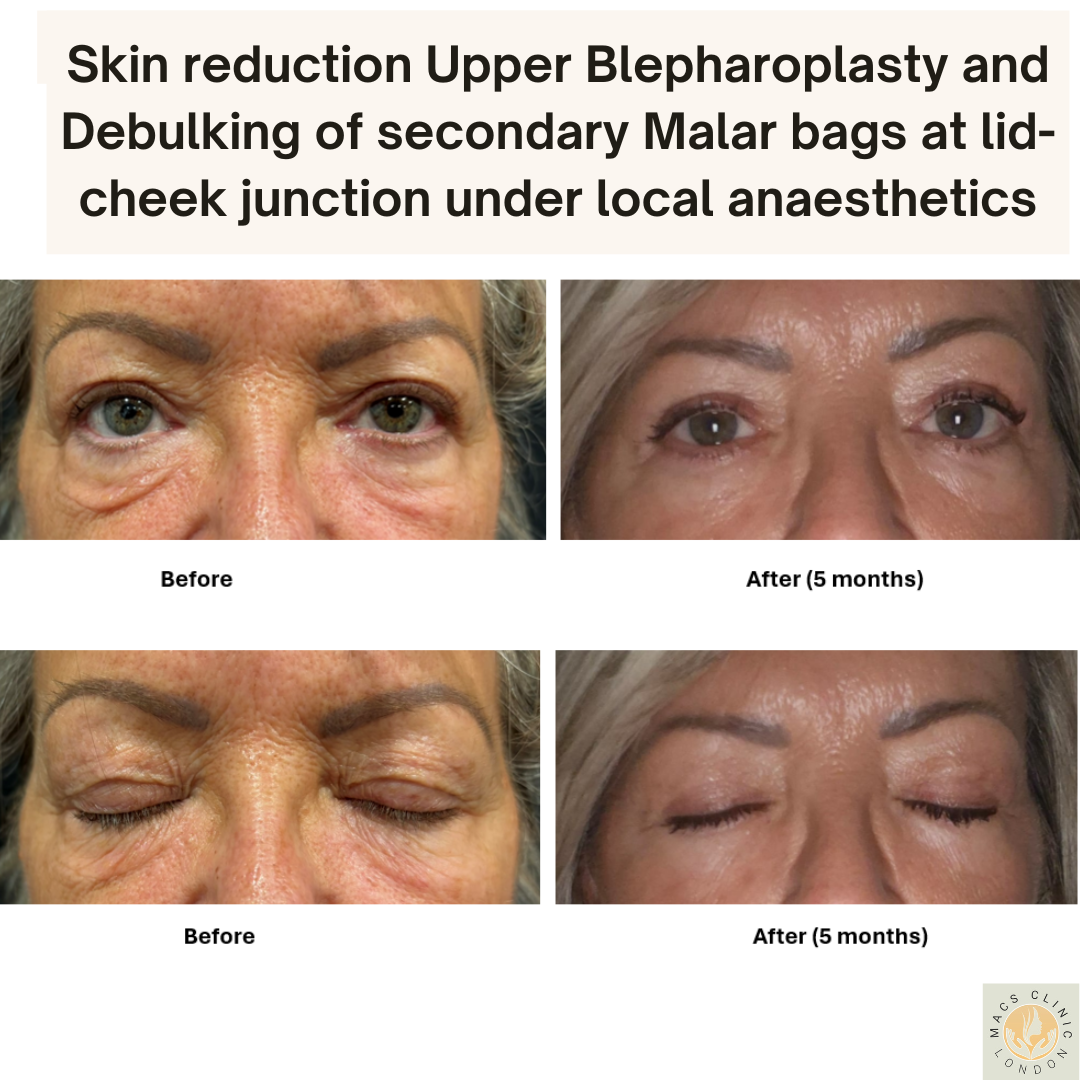
Patient 1: Upper eyelid correction performed under local anaesthetics by Mr. Shailesh Vadodaria
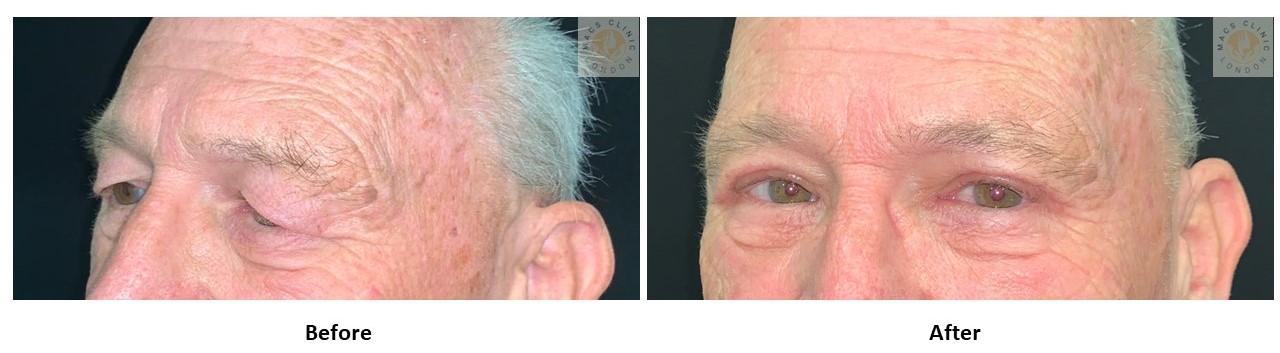
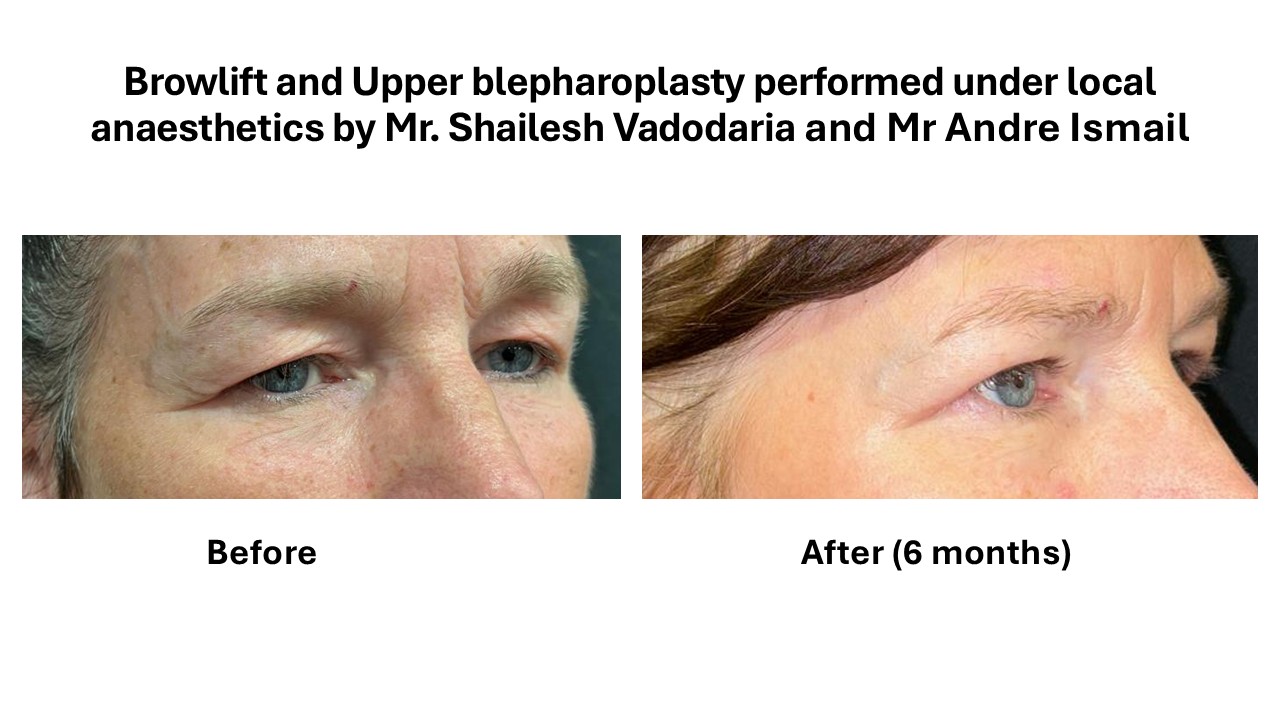
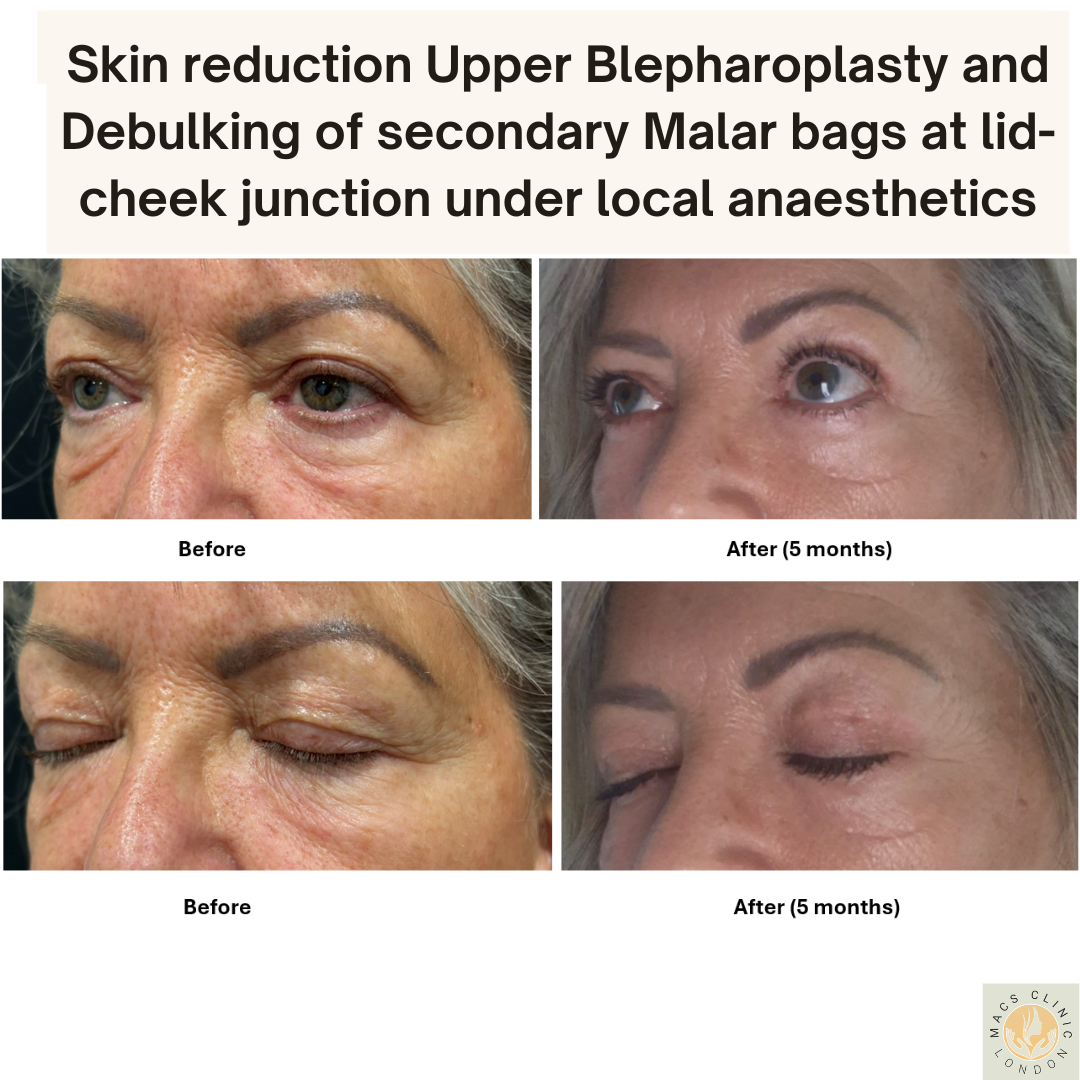
Patient 1: Upper eyelid correction performed under local anaesthetics by Mr. Shailesh Vadodaria
Patient 1: Upper eyelid correction performed under local anaesthetics by Mr. Shailesh Vadodaria
Eye Care & Protection
Ocular Surface Management
Expect:
Mild dryness
Watering
Light sensitivity
Avoid:
Rubbing eyes
Contact lenses (usually 2 weeks minimum, or as advised)
Use sunglasses outdoors
Wound Care & Hygiene
Showering:
Below neck: from Day 1
Face/eyelids: as advised (typically after 48–72 hrs)
Cleaning:
Gently cleanse with clean water or saline
Pat dry (no rubbing)
Clinicept antimicrobial spray:
After shower
Before bedtime
Allow to air dry (no wiping)
Sutures:
Usually fine non-absorbable (removed ~5–7 days) OR absorbable
Keep clean and dry
Activity & Lifestyle
Rest for first 3–5 days
Avoid:
Bending forward
Heavy lifting
Strenuous exercise (2–3 weeks)
Alcohol & smoking (impairs healing)
Return to work:
Typically 7–10 days depending on bruising
Expected Recovery Timeline
Normal Healing Pattern
Day 1–3: Swelling + bruising peak
Day 5–7: Sutures removal (if applicable)
Day 7–14: Visible improvement
2–6 weeks: Majority of swelling settles
3–6 months: Final refinement
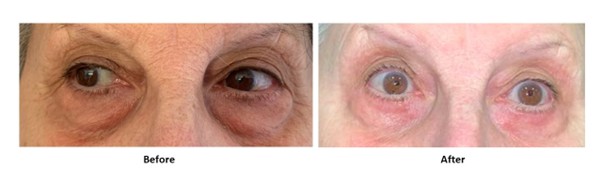
Lower Blepharoplasty performed by Mr. Shailesh Vadodaria under general anaesthetics
Red Flags (Medical Emergency)
Contact immediately if:
Sudden severe pain or tight swelling
Rapid vision changes or loss of vision
Increasing redness, discharge, or fever
Persistent bleeding
Severe asymmetry developing rapidly
Emergency Contact Pathway
Patients should contact (whichever is fastest available):
Operating Surgeon
MACS Clinic
24-hour NHS GP service
Local Accident & Emergency (A&E) via National Health Service