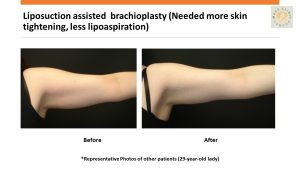
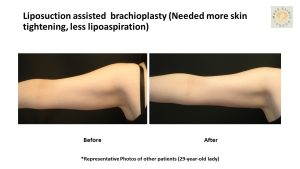
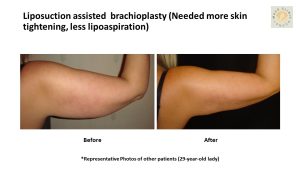
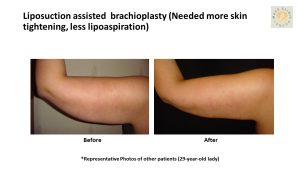
Including Liposuction-Assisted Brachioplasty and Upper Arm Liposuction
Dr. Shailesh Vadodaria Consultant Plastic Surgeon
Congratulations
Thank you for choosing MACS Clinic for your surgery.
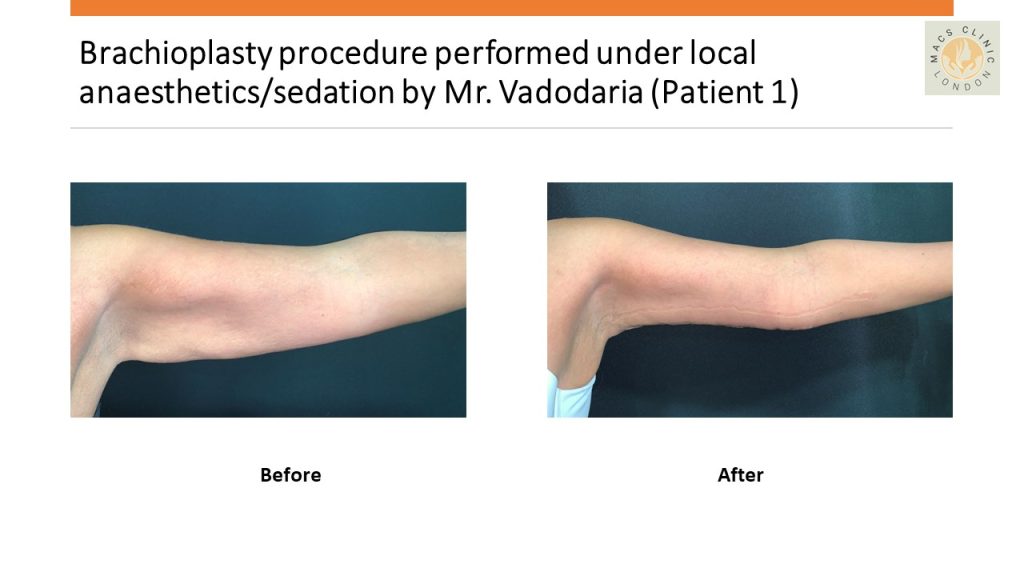
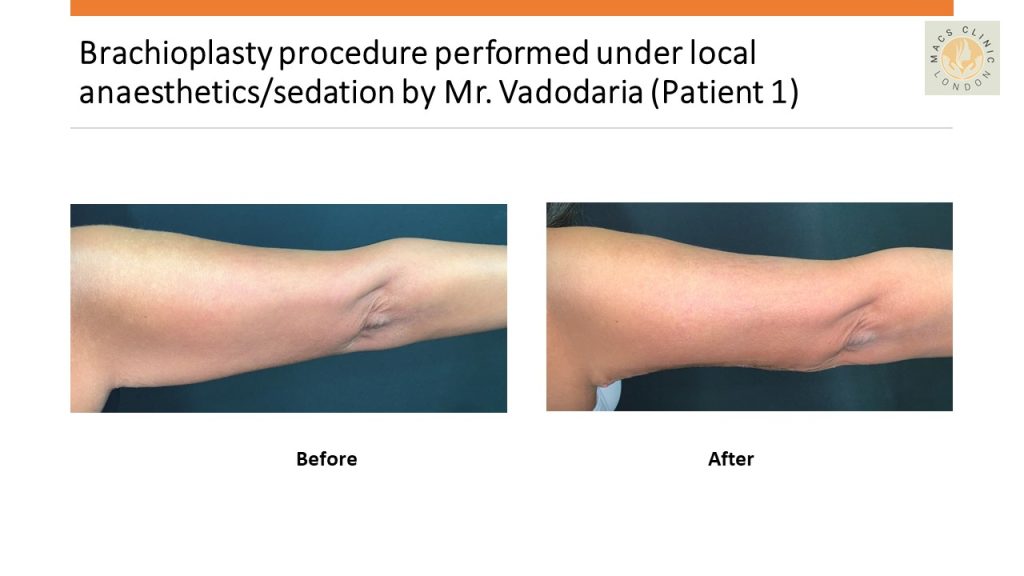
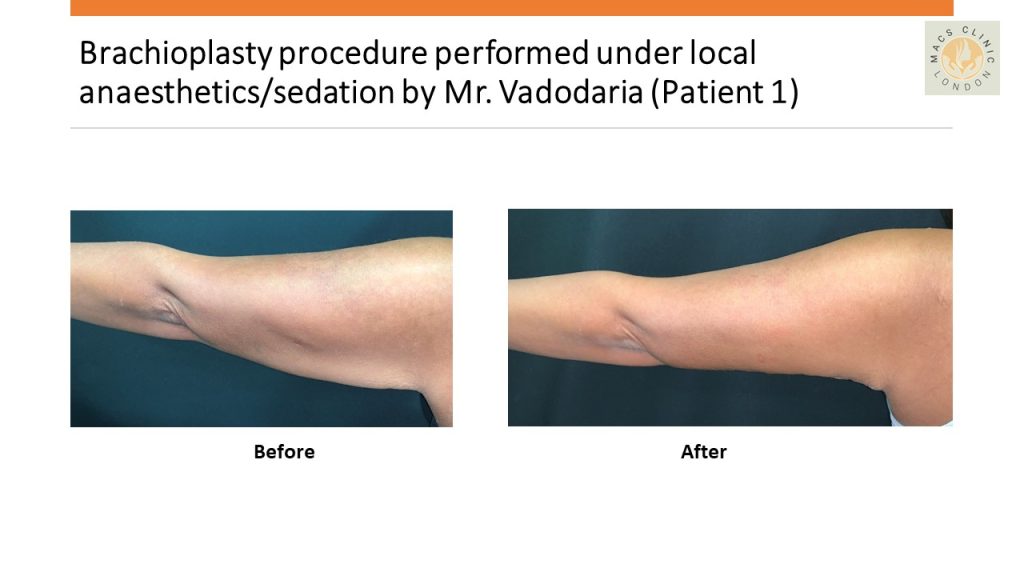
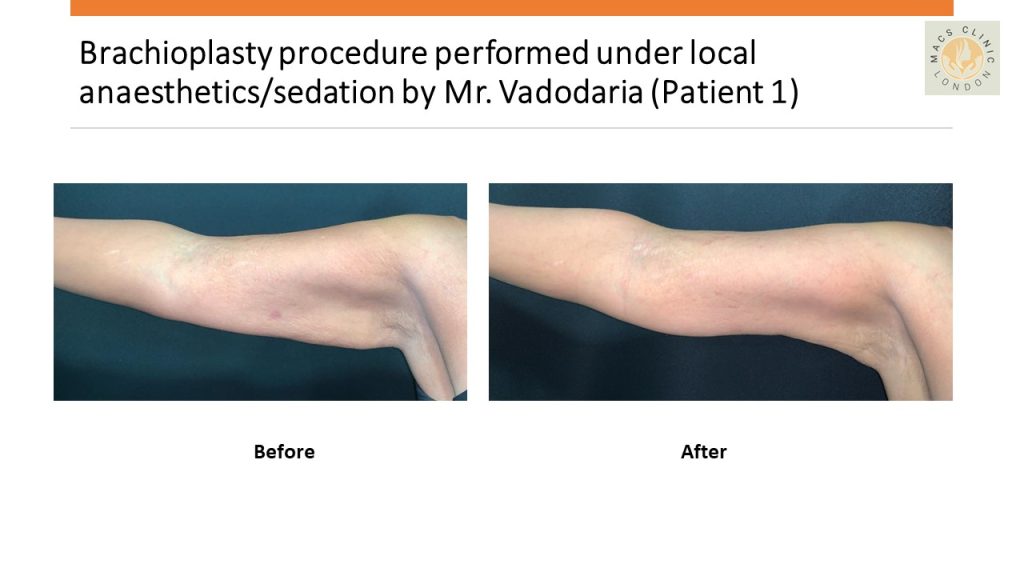
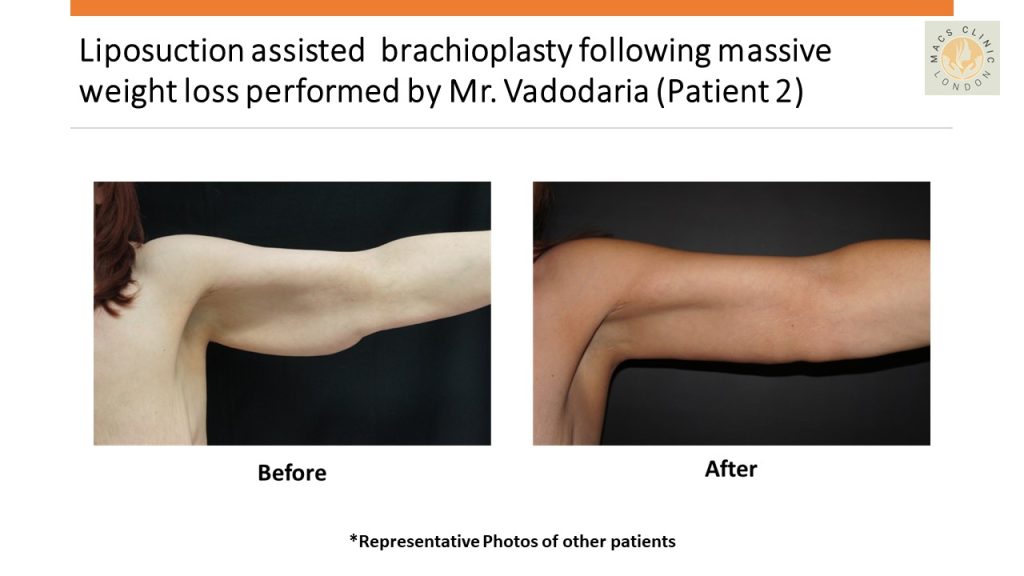
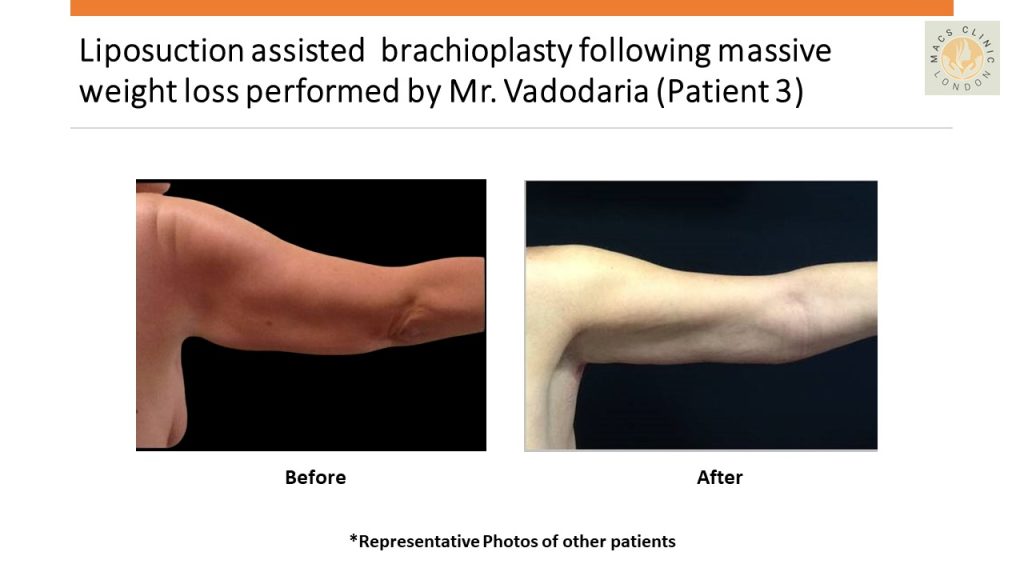
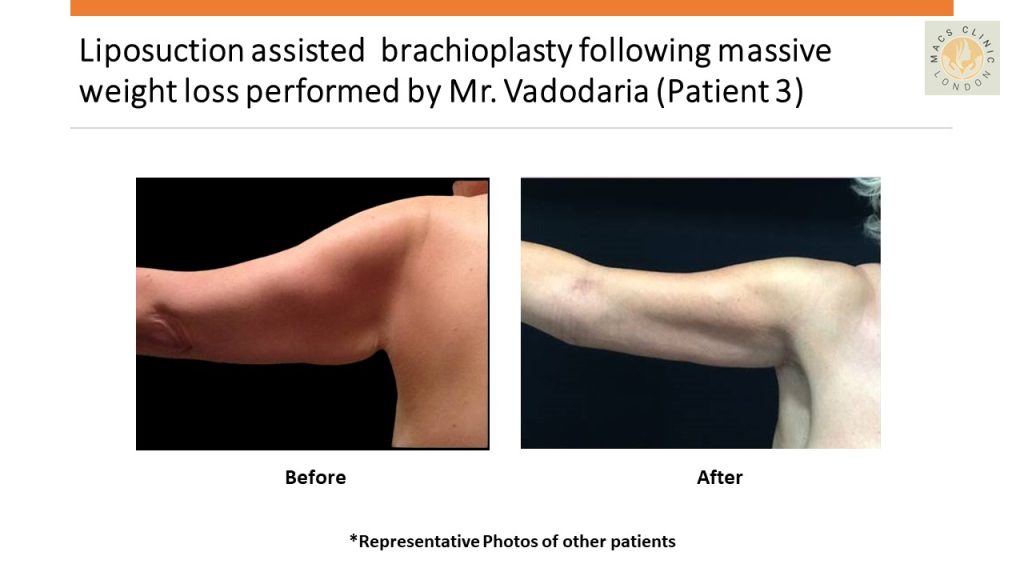
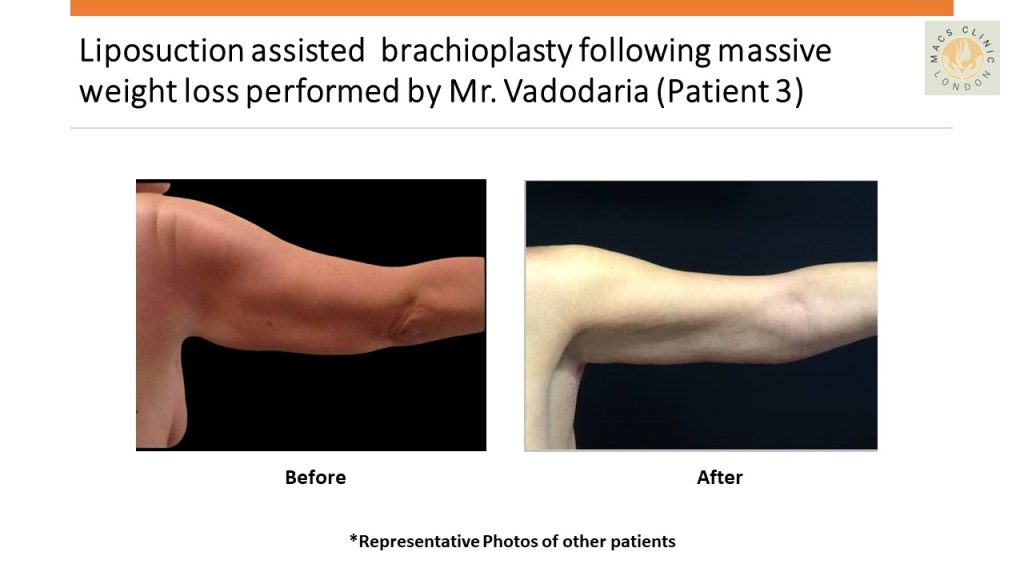
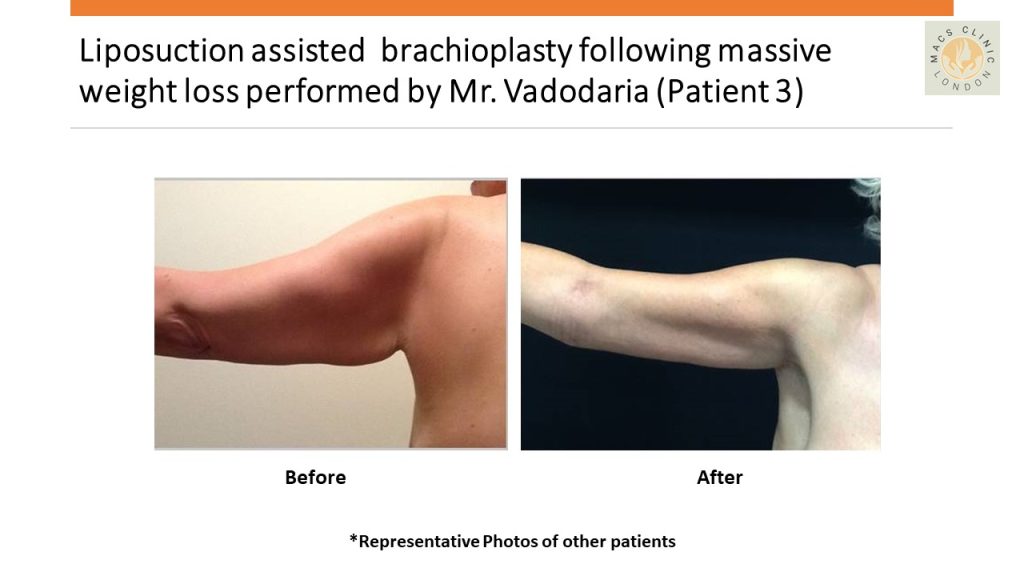
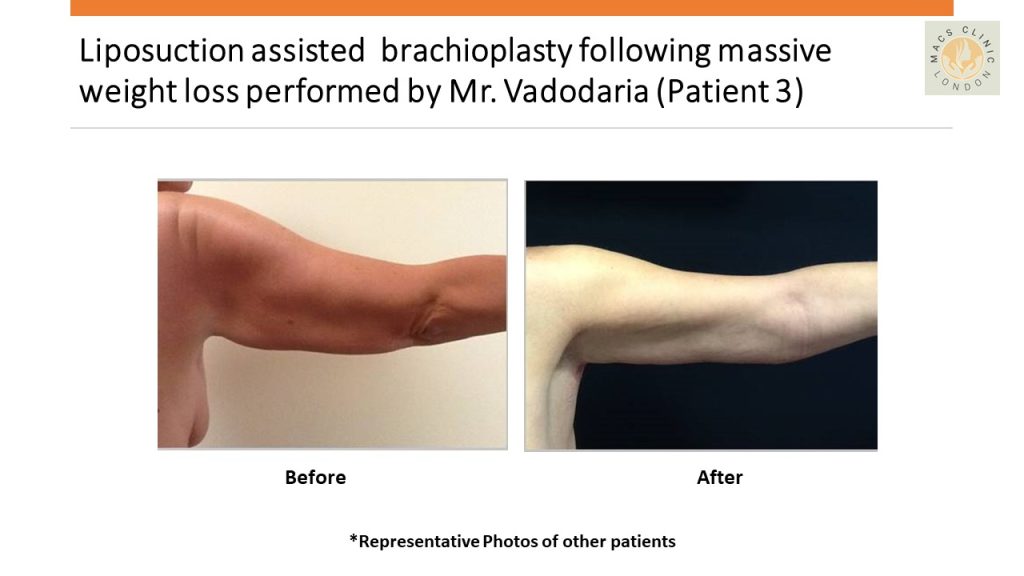
Your operation has been carefully planned to improve the contour of your upper arms by removing excess skin, reducing fatty tissue where appropriate, and creating a smoother, more youthful arm profile.
The final outcome depends not only upon the surgery itself but also upon meticulous post-operative care and your commitment to following these instructions.
Please read this booklet carefully and keep it available during your recovery.
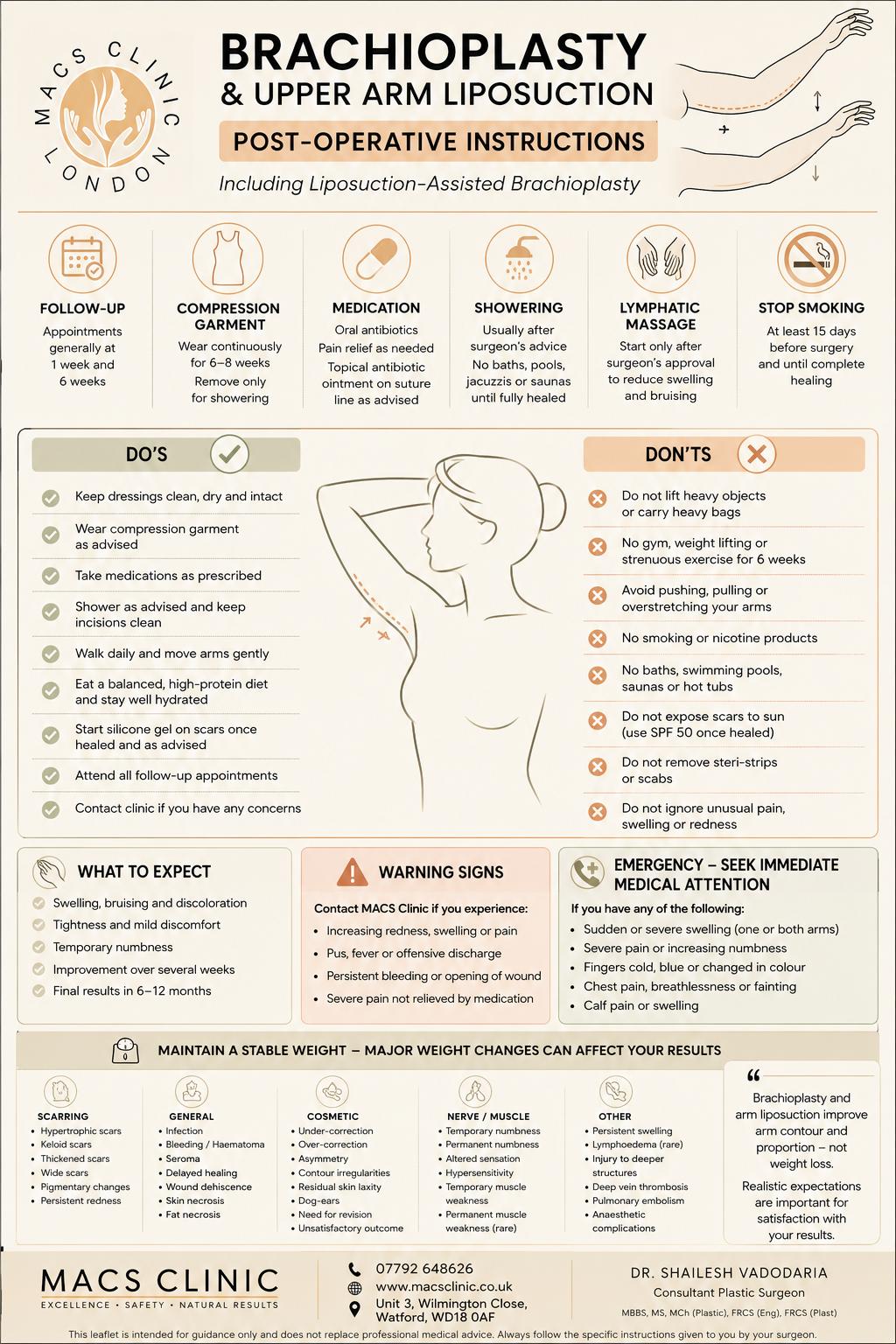
What to Expect
It is perfectly normal to experience:
Swelling
Bruising
Mild bleeding through the dressings
Tightness of the upper arms
Temporary numbness
Reduced sensation around the scars
Mild discomfort
Difficulty fully straightening the elbows initially
These symptoms usually improve gradually over the first several weeks.
Final results often continue to improve over 6–12 months.
Dressings
Immediately after surgery:
Your wounds will be covered with sterile dressings.
A bulky dressing may be applied initially.
Compression garments will then be fitted.
Please keep the dressings:
Clean
Dry
Intact
Do not remove dressings unless advised.
Compression Garment
Dr. Vadodaria strongly recommends wearing the compression garment continuously for approximately 6–8 weeks.
The garment helps to:
Reduce swelling
Improve skin retraction
Minimise fluid collections
Improve contour
Support healing
Remove only for showering unless advised otherwise.
Medications
At MACS Clinic, Dr. Vadodaria routinely recommends:
Oral antibiotics
Please complete the entire prescribed course.
Pain relief
Take analgesics only as required.
Avoid exceeding the recommended dose.
Topical antibiotic ointment
Following your surgeon’s instructions:
Apply a thin layer of antibiotic ointment over the incision after cleansing if advised.
Showering
Usually permitted after your surgeon advises.
When showering:
Allow clean water to run over the wounds.
Avoid scrubbing.
Pat dry gently.
Replace compression garments afterwards.
Avoid:
Baths
Swimming pools
Jacuzzis
Saunas
until wounds have completely healed.
Arm Movement
Gentle movement is encouraged.
Avoid prolonged immobilisation.
However, avoid:
lifting heavy objects
pushing
pulling
weight training
resistance exercises
tennis
golf
rowing
climbing
yoga positions requiring upper body strength
until cleared by your surgeon.
Exercise
Walking is encouraged from the day of surgery.
For approximately six weeks avoid:
Gym
Weight lifting
Heavy household work
Gardening
Heavy shopping bags
Vigorous sports
Resume exercise gradually following medical advice.
Smoking
Smoking significantly increases the risk of:
wound breakdown
infection
skin loss
delayed healing
poor scars
Dr. Vadodaria strongly advises:
Stop smoking at least 15 days before surgery and continue abstaining until complete wound healing has occurred.
This includes:
cigarettes
cigars
vaping containing nicotine
nicotine replacement unless specifically advised.
Nutrition
Maintain:
adequate hydration
high protein intake
fruit and vegetables
vitamins
Avoid excessive alcohol during the early recovery period.
Scar Care
Scars continue to mature for up to two years.
Once the wounds have completely healed and following your surgeon’s advice:
Begin:
Silicone gel
Silicone sheets
These help reduce:
hypertrophic scars
keloid formation
redness
scar thickening
Protect scars from sunlight using SPF 50 sunscreen for at least one year.
Lymphatic Massage
Once approved by your surgeon,
Deep lymphatic drainage massage may be commenced.
This may help reduce:
swelling
bruising
firmness
postoperative oedema
Massage should only be performed once healing is appropriate.
Follow-up
Routine appointments are generally arranged:
Approximately one week
Approximately six weeks
Additional reviews are arranged whenever clinically necessary.
Warning Signs
Please contact MACS Clinic immediately if you experience:
Increasing redness
Increasing swelling
Pus
Fever
Persistent bleeding
Opening of the wound
Severe pain not relieved by medication
Offensive discharge
Emergency Symptoms
Seek immediate medical attention by contacting:
MACS Clinic
NHS 111
your GP
local Urgent Treatment Centre
Accident & Emergency Department
if you develop:
Sudden swelling of one arm
Marked swelling of both arms
Severe pain
Increasing numbness
Fingers becoming cold or blue
Chest pain
Breathlessness
Collapse
Calf pain or swelling
Long-Term Expectations
Healing is gradual.
Residual swelling may persist for several months.
Scars usually continue improving over:
12–24 months.
Patience is essential.
Maintaining Your Result
Your long-term result depends upon maintaining:
stable body weight
healthy diet
regular exercise
avoidance of smoking
Major weight gain or significant weight loss may adversely affect the cosmetic outcome.
Possible Complications
Although most patients recover uneventfully, complications can occur.
These include:
General
Bleeding
Haematoma
Infection
Seroma
Delayed healing
Wound dehiscence
Skin necrosis
Fat necrosis
Deep vein thrombosis
Pulmonary embolism
Anaesthetic complications
Scarring
Hypertrophic scars
Keloid scars
Wide scars
Pigmentary changes
Thickened scars
Persistent redness
Cosmetic
Under-correction
Over-correction
Residual skin laxity
Asymmetry
Contour irregularities
Skin rippling
Residual fullness
Dog-ear deformities
Need for revision surgery
Unsatisfactory aesthetic outcome
Nerve-related
Temporary numbness
Permanent numbness
Altered sensation
Hypersensitivity
Rare motor nerve injury
Temporary muscle weakness
Permanent muscle weakness (rare)
Other
Persistent swelling
Lymphoedema (rare)
Injury to deeper structures
Delayed return to normal activities
Requirement for further surgery
Realistic Expectations
Brachioplasty and arm liposuction are body contouring procedures—not weight-loss procedures.
The aim is to improve arm shape and proportion rather than achieve perfection.
Minor asymmetries exist naturally in almost every individual.
Although every effort is made to obtain an excellent result, no surgeon can guarantee perfect symmetry or complete scar invisibility.
Most patients experience a significant improvement in arm contour, confidence, clothing fit, and quality of life.