Monday - Friday: 9.30 am to 6.00 pm,
Saturday - By Prior Appointment
Unit 3, Wilmington Cl, Watford WD18 0AF

Post-Operative Care Following Face Lift and Neck Lift Surgery

Posted on: 5 Jun 2026

A Guide for Patients of MACS Clinic, Watford

Dr. Shailesh Vadodaria, Consultant Plastic Surgeon

Facial rejuvenation surgery can produce highly rewarding and natural-looking results when combined with appropriate post-operative care. At MACS Clinic, Watford, many of our face lift procedures are performed under local anaesthesia with sedation, allowing patients to benefit from a comfortable treatment experience whilst avoiding many of the disadvantages associated with general anaesthesia.

Depending on individual requirements, a lower face lift and neck lift may be combined with:

  • Liposuction of the lower face and neck/chin area
    • Autologous fat transfer (fat grafting)
    • Chin contouring procedures
    • Skin resurfacing or other complementary facial rejuvenation treatments

This guide explains what to expect after surgery and how to optimise your recovery.

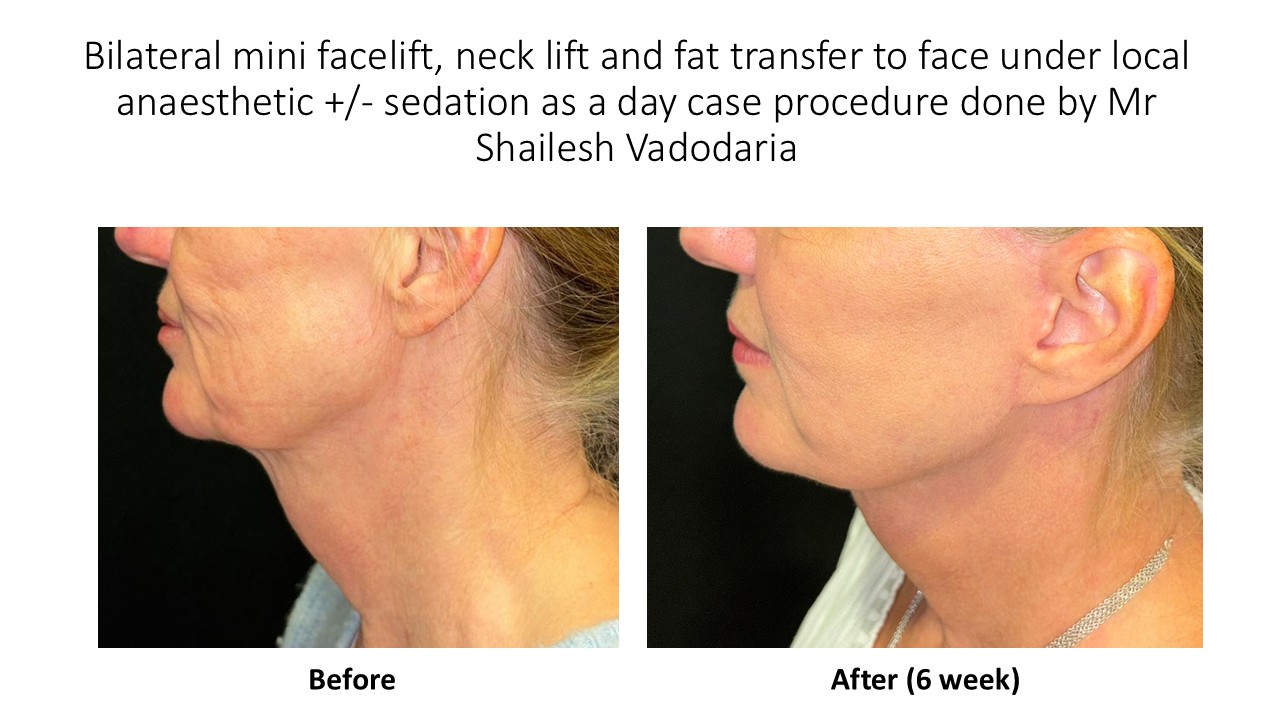
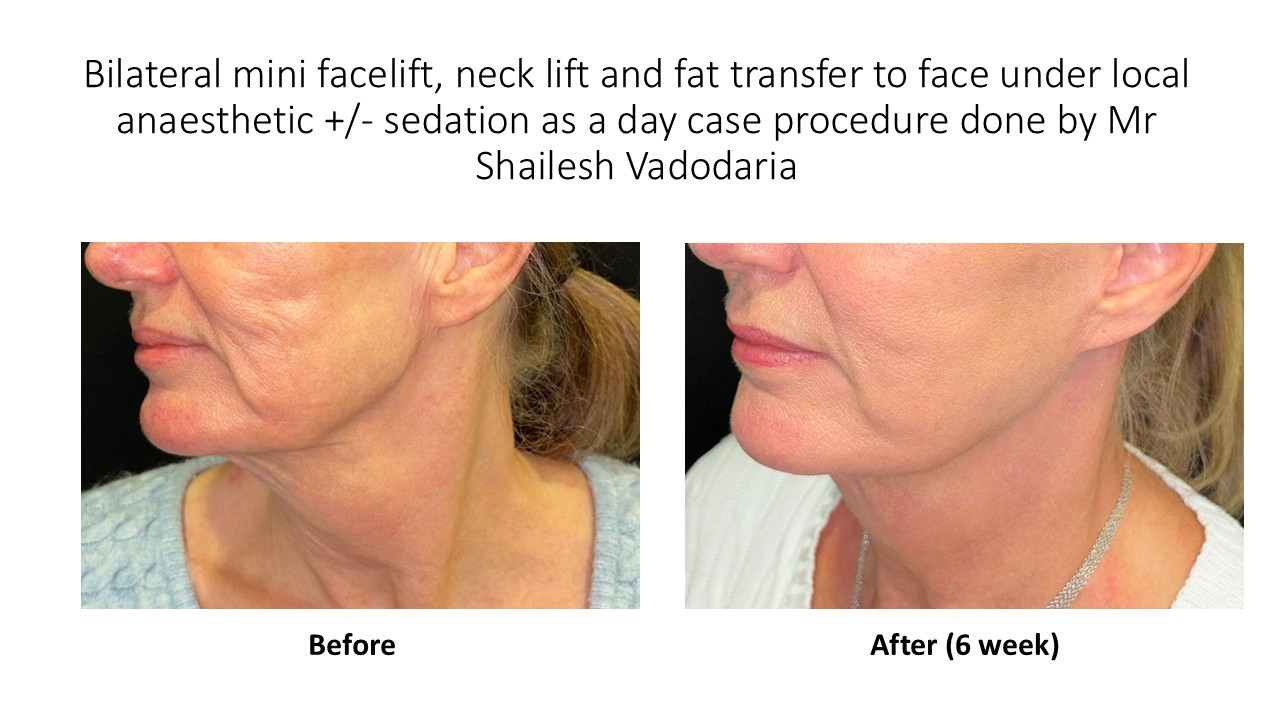
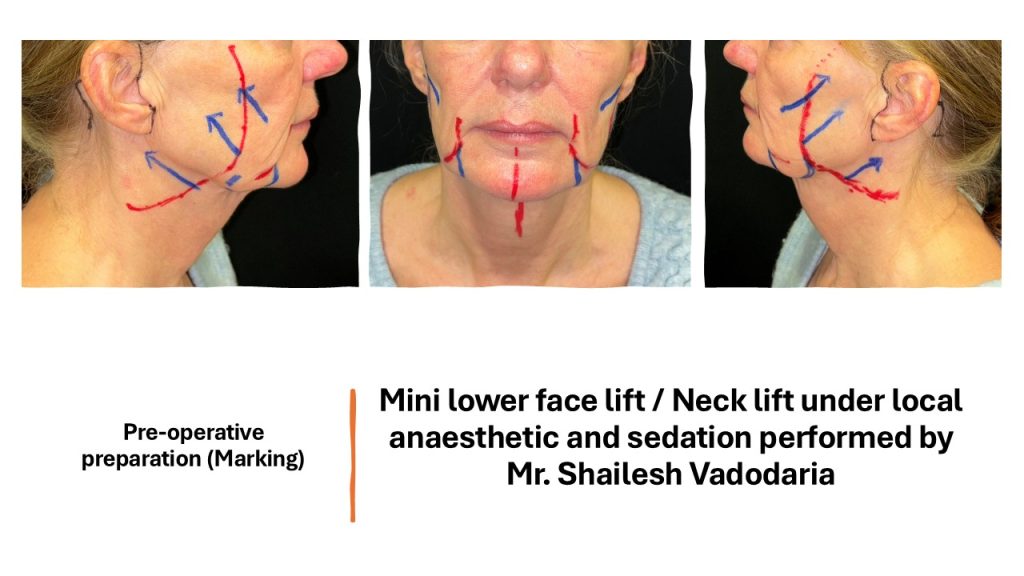
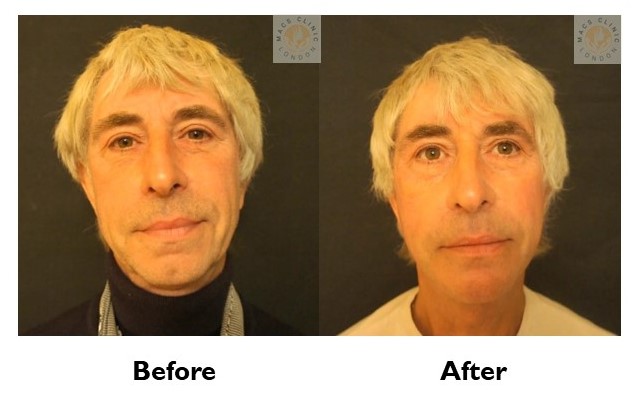
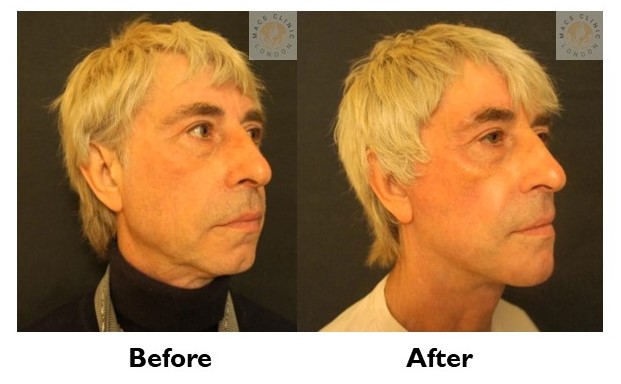
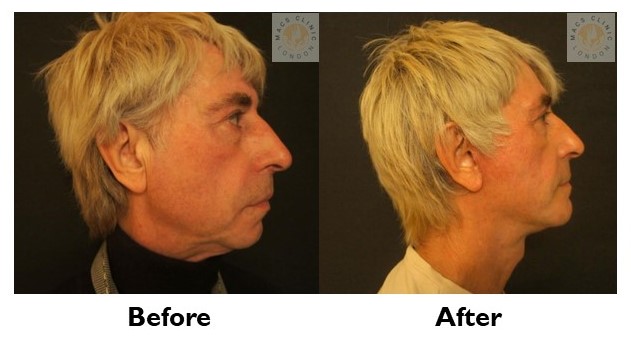
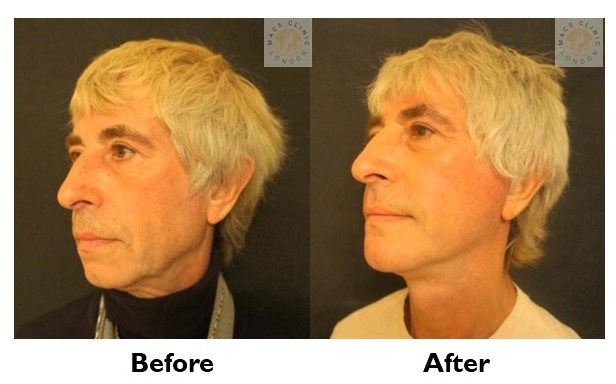
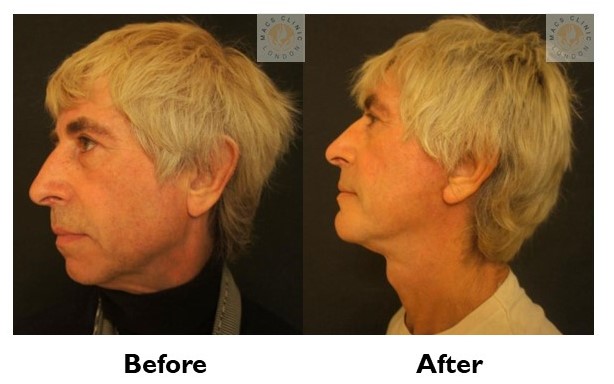
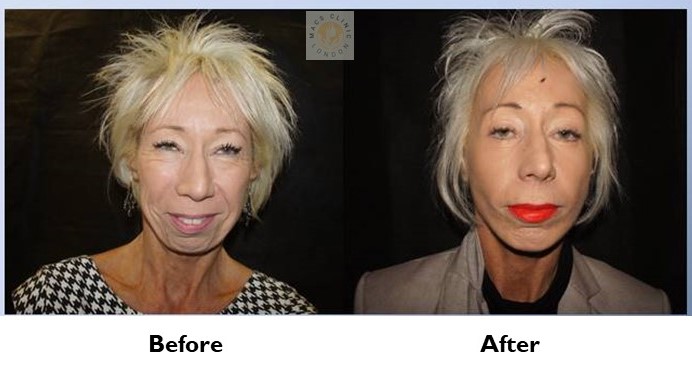
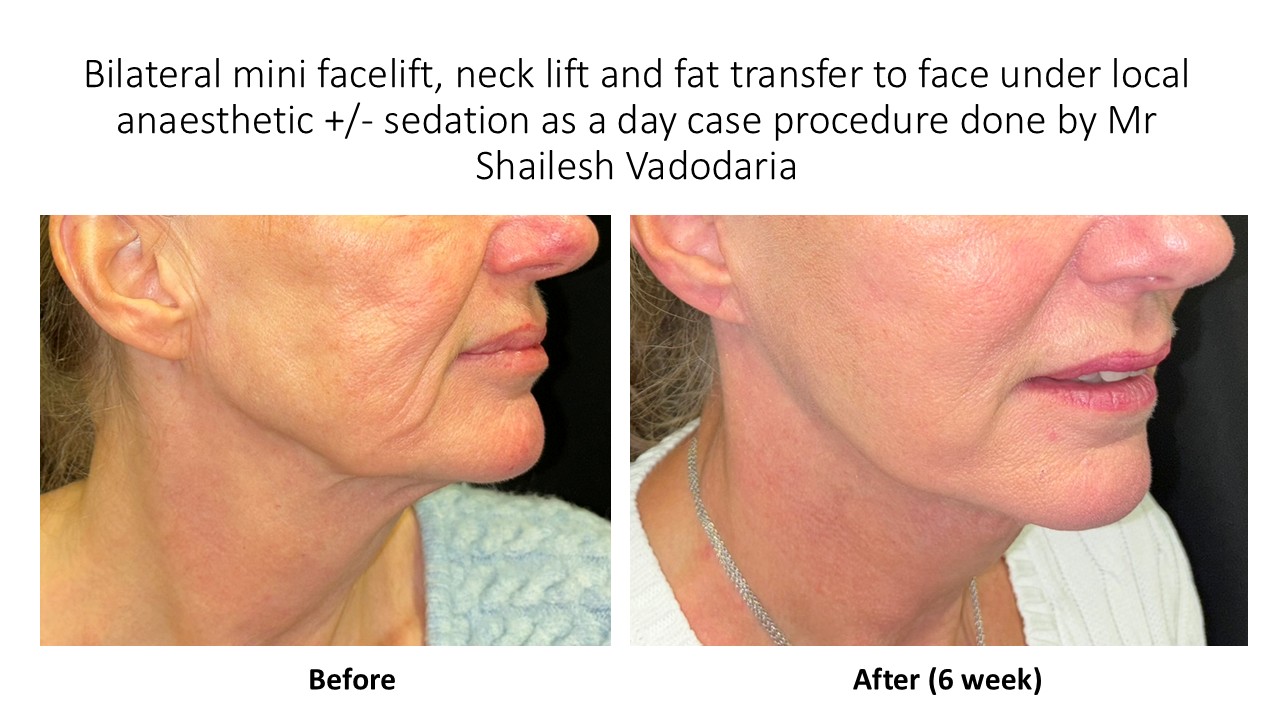
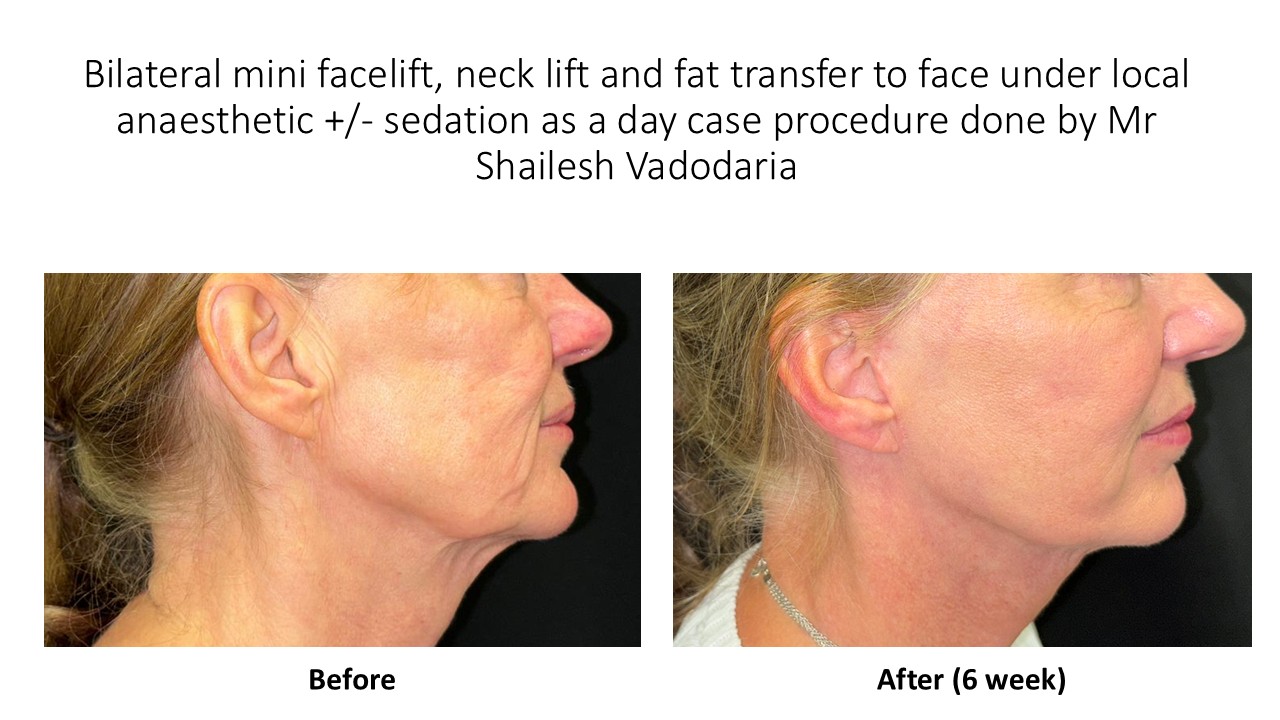
Mini facelift performed under local anaesthetics

Immediately After Surgery

Following your procedure, you will usually be discharged home on the same day under the supervision of our anaesthetist , nurse and/or consultant .

A supportive facial dressing or bandage is normally applied and is usually kept in place for approximately 24–72 hours, depending on the extent of surgery and individual healing characteristics.

During the first few days it is perfectly normal to experience:

  • Mild to moderate discomfort
    • Tightness around the face and neck
    • Swelling
    • Bruising and discolouration
    • Temporary numbness of the skin
    • Mild asymmetry caused by swelling

These findings are expected and generally improve progressively over the first few weeks.

Dressings, Sutures and Wound Care

At MACS Clinic, dissolvable sutures are commonly used.

This means that most patients do not require a separate appointment for formal suture removal.

Once the external dressing has been removed:

  • Wash your hair with shampoo as advised.
    • Shower normally using soap and water.
    • Gently clean the incision lines daily.
    • Avoid excessive rubbing or scrubbing of the wounds.

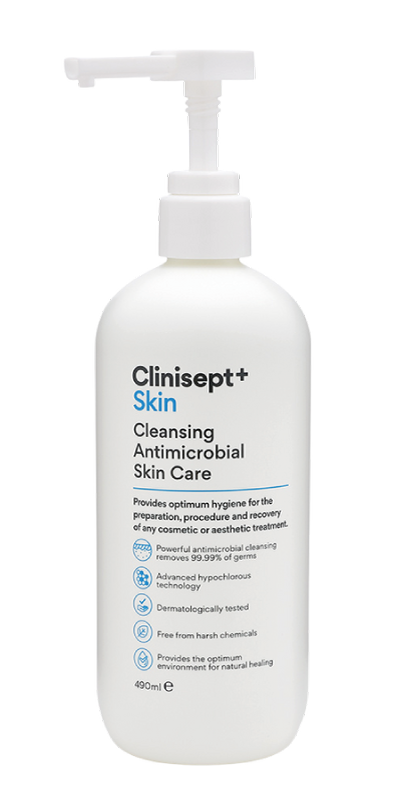
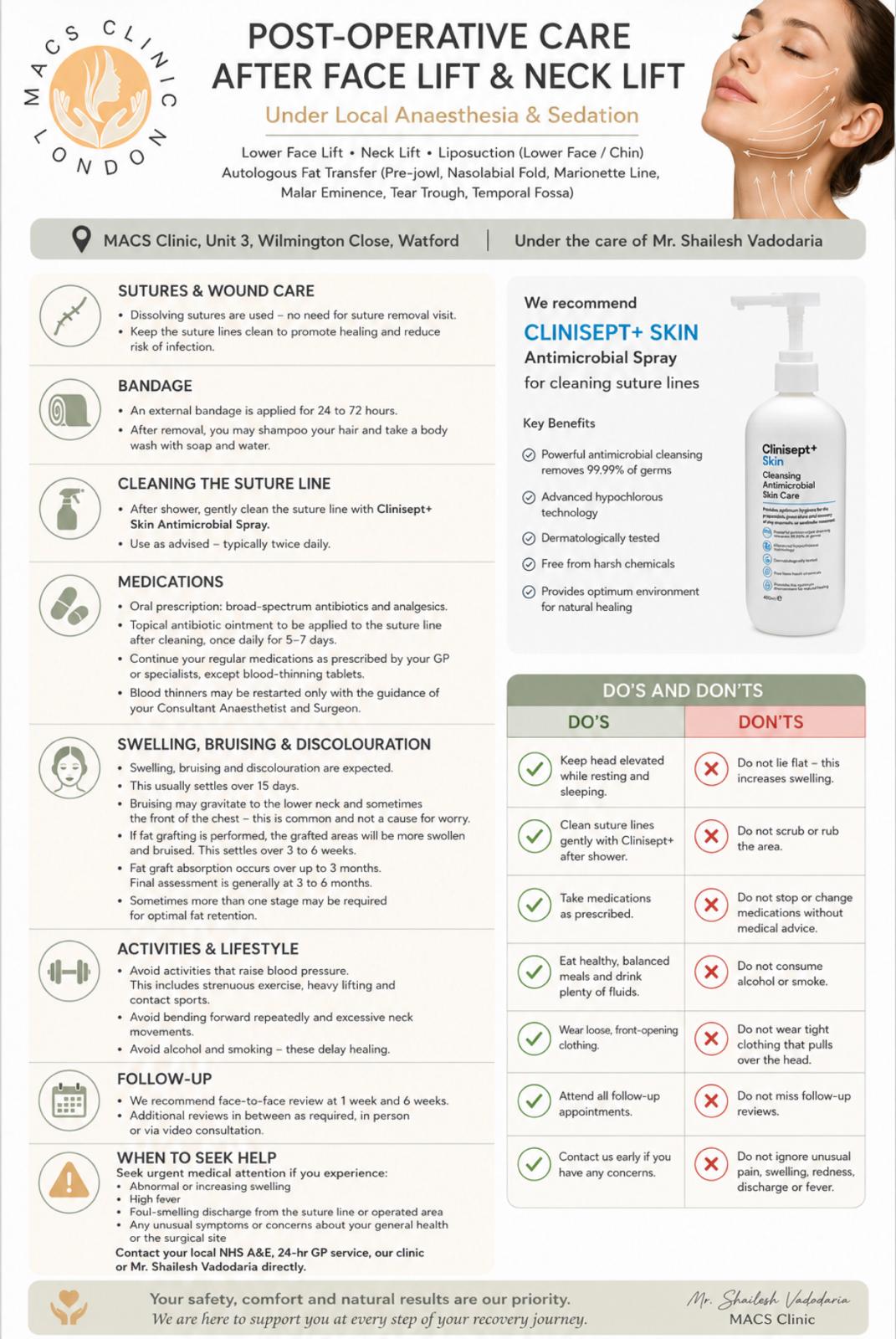
We recommend cleaning the incision lines using Clinisept® Skin Antimicrobial Spray, which helps maintain excellent wound hygiene whilst remaining gentle on healing tissues.

Following cleansing, apply the prescribed topical antibiotic ointment as instructed.

Maintaining a clean wound environment is one of the most important factors in reducing the risk of infection and promoting optimal scar maturation.

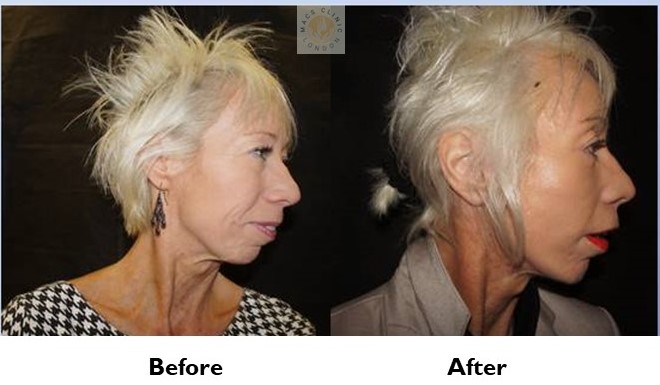
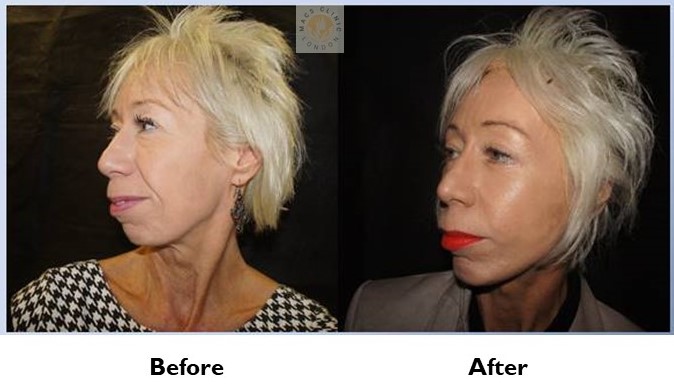
Facelift and chin augmentation performed by Mr. Shailesh Vadodaria

Medications

Patients are routinely prescribed:

  • Broad-spectrum antibiotics
    • Pain relief medication (analgesics)
    • Topical antibiotic ointment

Please take all medications exactly as prescribed.

Continue your usual medications unless specifically advised otherwise.

Patients taking blood-thinning medication must only restart these medicines after receiving approval from both their Consultant Anaesthetist and Consultant Surgeon.

Never restart anticoagulants or antiplatelet medication without specific medical advice.

Swelling and Bruising

Swelling and bruising are expected following face lift and neck lift surgery.

Most swelling settles significantly within approximately 10–15 days, although subtle swelling may continue to improve for several weeks.

Many patients become concerned when bruising appears to move downwards.

This is entirely normal.

Gravity frequently causes bruising and discolouration to descend from the face into:

  • The neck
    • The upper chest
    • The collarbone region

This does not usually indicate a complication and is simply part of the normal healing process.

Pressure Garments and Facial Support

In selected patients, Dr. Vadodaria may recommend a supportive facial or chin garment following surgery.

These garments help:

  • Reduce swelling
    • Provide gentle support to healing tissues
    • Improve comfort
    • Assist contour refinement in the neck and jawline region

If prescribed, please wear the garment exactly as instructed.

Do not modify the garment or discontinue its use without medical advice.

Fat Transfer (Fat Grafting)

Many face lift procedures are enhanced with autologous fat transfer.

Common treatment areas include:

  • Pre-jowl hollowing
    • Nasolabial folds
    • Marionette lines
    • Cheek (malar) region
    • Tear trough deformities
    • Temporal hollows

Patients should understand that fat-grafted areas frequently appear more swollen and bruised than areas treated by face lift surgery alone.

This is expected.

Most swelling improves over approximately 3–6 weeks.

A proportion of transferred fat will naturally be absorbed by the body during the first three months following surgery.

For this reason:

  • Final assessment should generally be delayed until 3–6 months after treatment.
    • Some patients may benefit from a secondary fat grafting procedure for additional volume enhancement if indicated.

Activity Restrictions

During the first few weeks following surgery, it is important to avoid activities that significantly increase blood pressure.

These include:

  • Heavy lifting
    • Weight training
    • Gym workouts
    • Contact sports
    • Running
    • Strenuous exercise

Excessive physical activity may increase swelling, bruising and the risk of post-operative bleeding.

Gentle walking is encouraged and may help reduce stiffness and improve circulation.

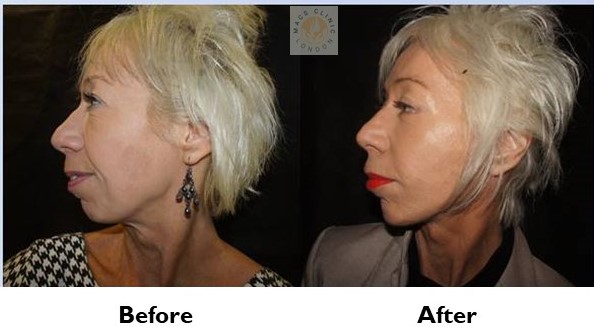
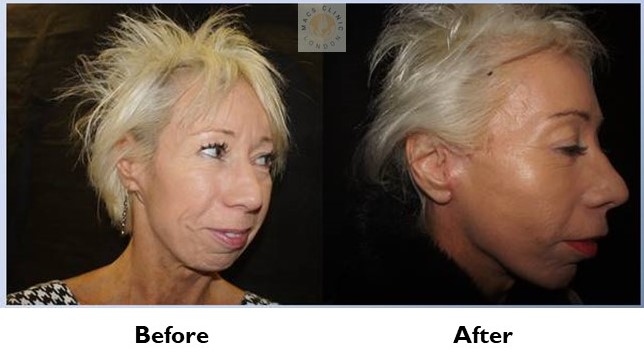
Facelift, chin implant, lower blepharoplasty and fat graft on face performed by Mr. Shailesh Vadodaria

Smoking and Nicotine Products

One of the Most Important Recovery Instructions

At MACS Clinic, we strongly advise patients to stop smoking before surgery and to remain smoke-free throughout the recovery period.

This includes:

  • Cigarettes
    • Cigars
    • Vaping products
    • Nicotine pouches
    • Nicotine replacement products unless specifically approved

Smoking causes blood vessel constriction and significantly reduces blood supply to healing tissues.

This increased the risk of:

  • Delayed wound healing
    • Infection
    • Skin loss
    • Poor scarring
    • Fat graft loss
    • Compromised aesthetic outcomes

Facial rejuvenation surgery and smoking are a particularly poor combination.

Patients who continue smoking place themselves at a significantly higher risk of complications and inferior results.

Sleeping Position

For the first two weeks:

  • Sleep with your head elevated on two or three pillows.
    • Avoid sleeping flat.
    • Avoid pressure on the operated areas whenever possible.

Elevation helps minimise swelling and improves comfort.

Follow-Up Appointments

Our routine follow-up schedule usually includes:

One Week

Face-to-face review whenever possible.

Six Weeks

Assessment of healing, scar maturation and contour.

Additional Reviews

Arranged whenever clinically indicated.

Where travel or personal circumstances prevent attendance, video consultations may be arranged.

When Should You Seek Urgent Medical Advice?

Although complications are uncommon, you should seek urgent medical attention if you develop:

  • Rapidly increasing swelling
    • Significant bleeding
    • High temperature or fever
    • Foul-smelling discharge
    • Increasing redness around the wounds
    • Severe pain not controlled by medication
    • Sudden asymmetry
    • Shortness of breath
    • Any concerning deterioration in your general health

If urgent medical attention is required, contact:

  • MACS Clinic
    • Dr. Shailesh Vadodaria
    • Your General Practitioner
    • NHS 111
    • Your local Accident & Emergency Department

Final Thoughts

A face lift and neck lift can improvr definition to the jawline, improve neck contour, and create a fresher and more youthful appearance. However, surgery is only one part of the journey.

Careful adherence to post-operative instructions, meticulous wound care, avoidance of smoking, appropriate use of prescribed medications, and attendance at follow-up appointments all play a vital role in achieving the safest recovery and the best possible long-term improve.

At MACS Clinic, our commitment extends beyond the operating theatre. We remain available to support our patients throughout every stage of their recovery journey.
Contact MACS Clinic

FREE VIDEO/FACE TO FACE CONSULTATION

WITH CONSULTANT PLASTIC SURGEON