Monday - Friday: 9.30 am to 6.00 pm, Saturday - By Prior AppointmentUnit 3, Wilmington Cl, Watford WD18 0AF
Home » News » Puffy Nipples in Men: Causes, Assessment, and Targeted Treatment
Puffy Nipples in Men: Causes, Assessment, and Targeted Treatment
Posted on: 10 Mar 2026
Introduction: What Do Patients Mean by “Puffy Nipples”?
“Puffy nipples” is a non-medical, umbrella term commonly used by men to describe a fullness, bulge, or projection within the nipple–areola complex.
Importantly, this description does not represent a single diagnosis. The underlying cause can vary significantly from one patient to another, and in many cases, more than one factor may be present.
From a clinical perspective, the key principle is this:
The treatment must be tailored to the cause — not the label.
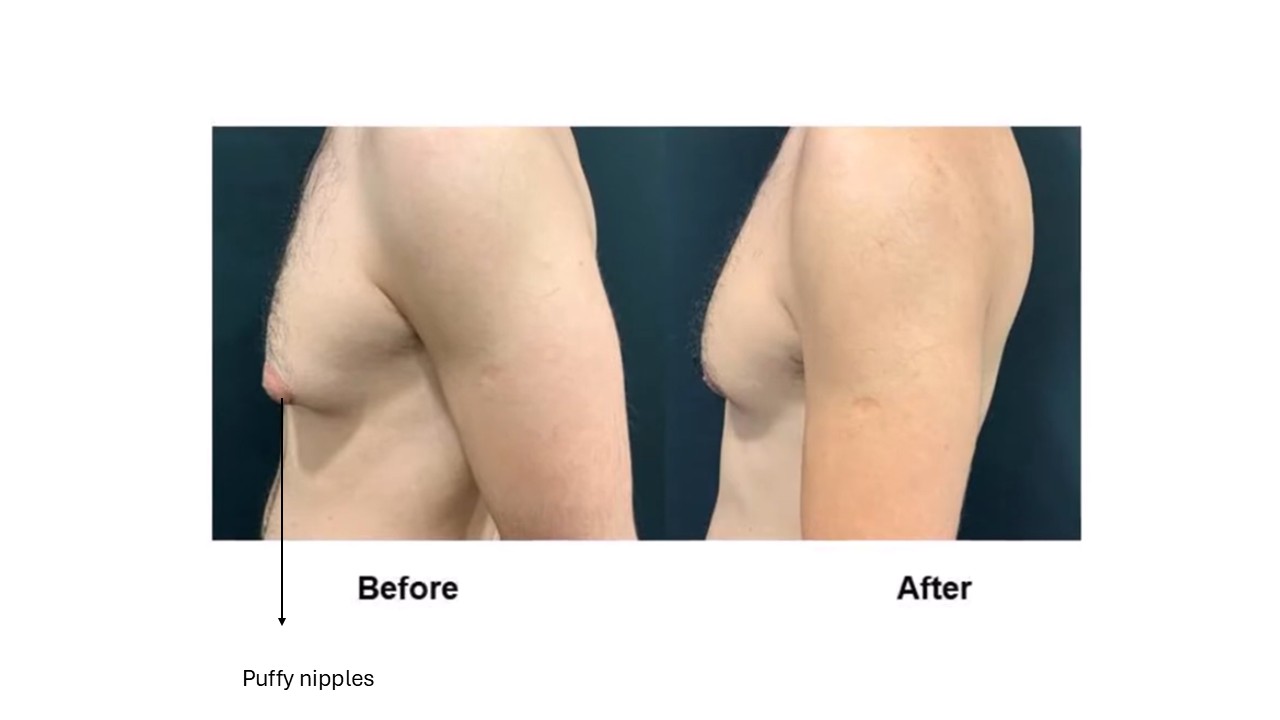
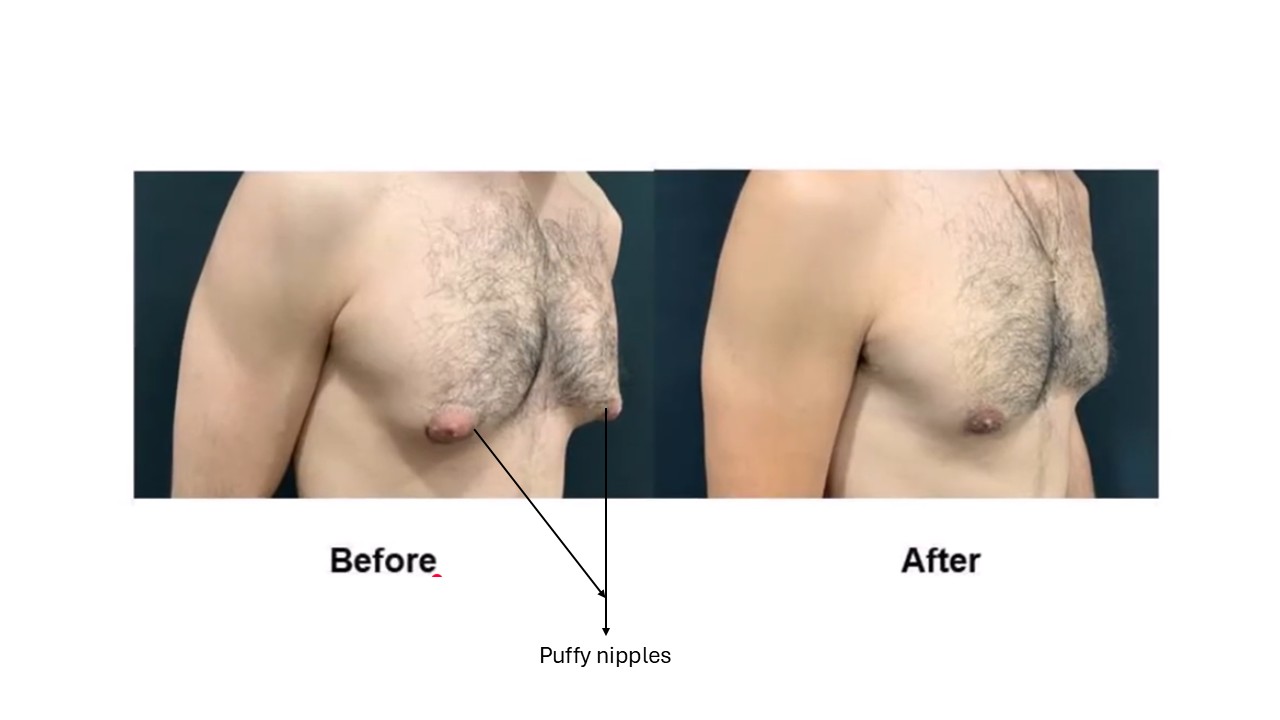
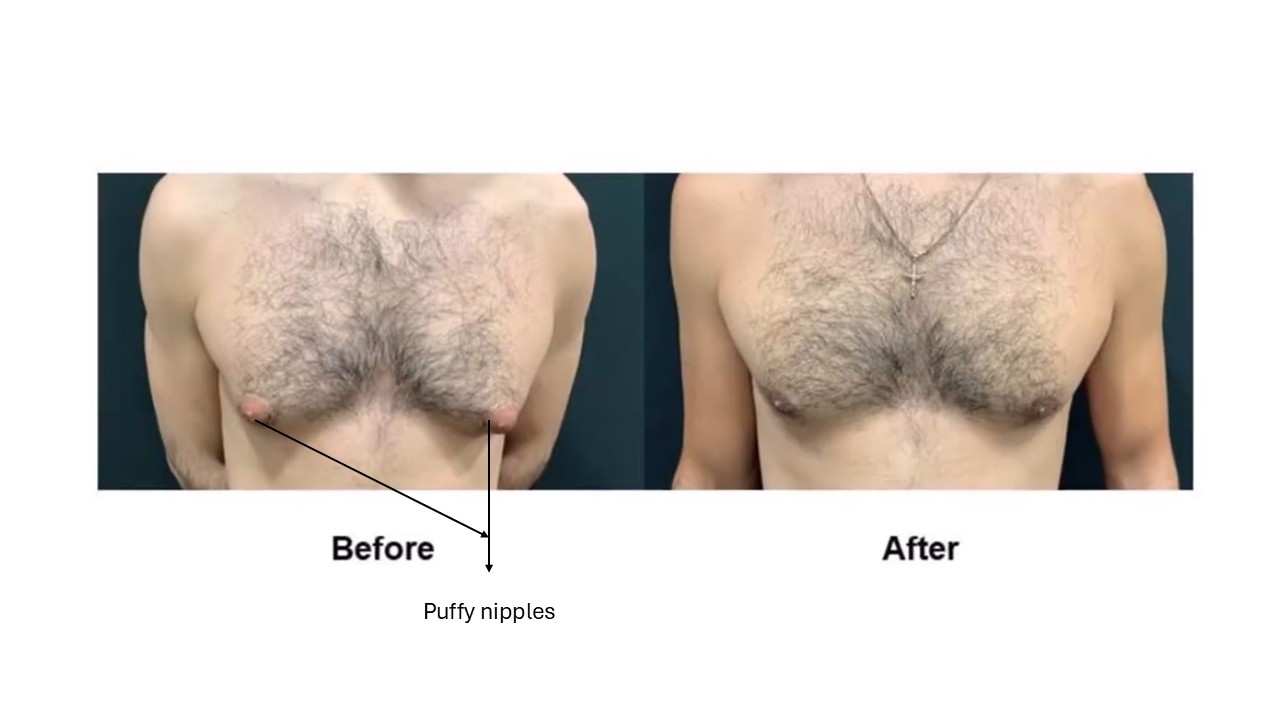
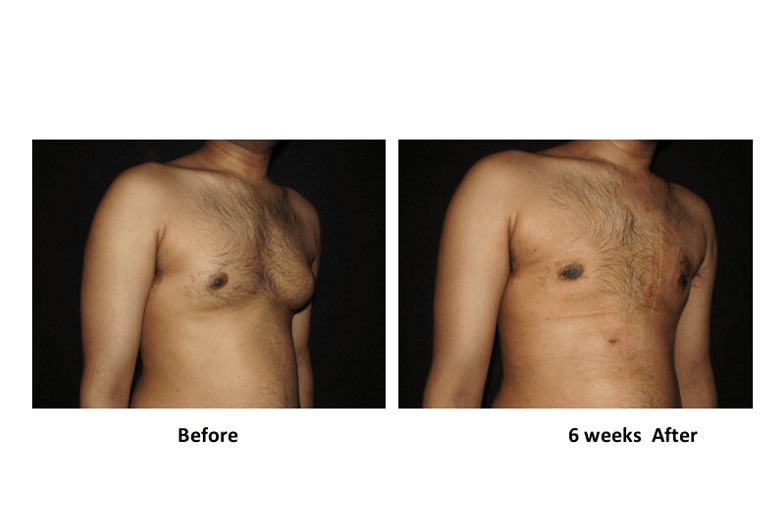
Correction of gynecomastia under local anaesthetics
Correction of gynecomastia under local anaesthetics
Correction of gynecomastia under local anaesthetics
Is Puffy Nipple a Medical Problem?
In the vast majority of cases, puffy nipples are:
Benign
Bilateral
Not harmful
Not associated with cancer or serious disease
Any significant pathology needs to be excluded by medical practitioners.
Common Causes of Puffy Nipples
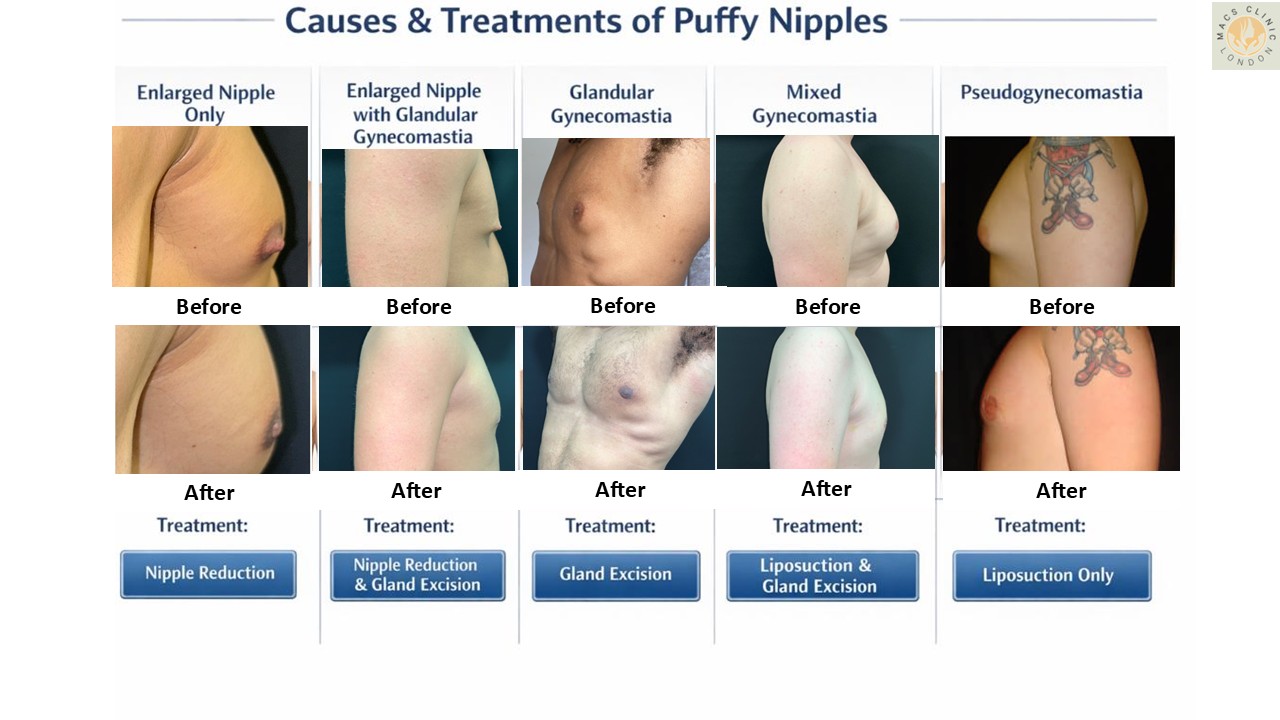
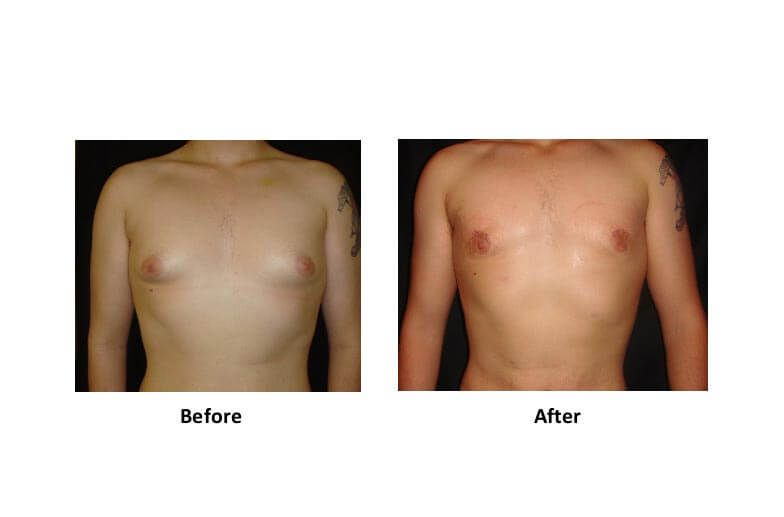
Glandular Gynecomastia
This is true gynecomastia caused by an overgrowth of breast gland tissue beneath the nipple–areola complex.
Clinical features:
Firm or rubbery tissue under the nipple
Increased nipple projection
Sometimes tender and painful
Often bilateral, occasionally asymmetric
They are therefore considered a non-essential cosmetic concern, provided rare underlying conditions have been excluded.
Causes:
Hormonal imbalance (often physiological), medications, anabolic steroids, or idiopathic (no identifiable cause).
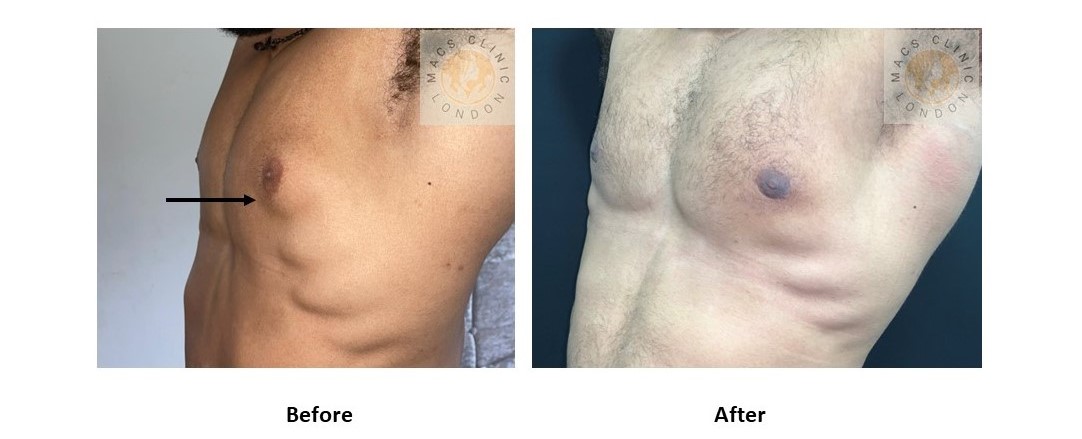
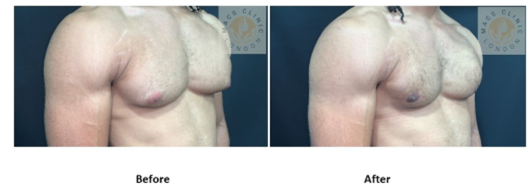
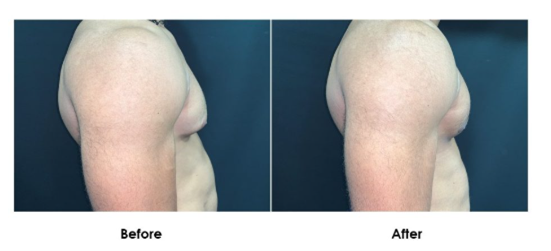
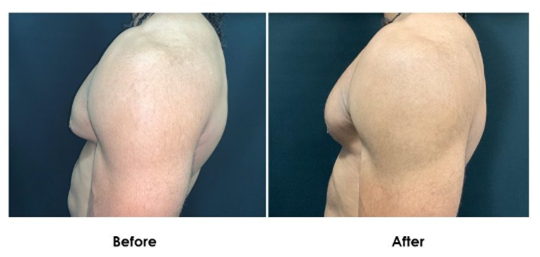
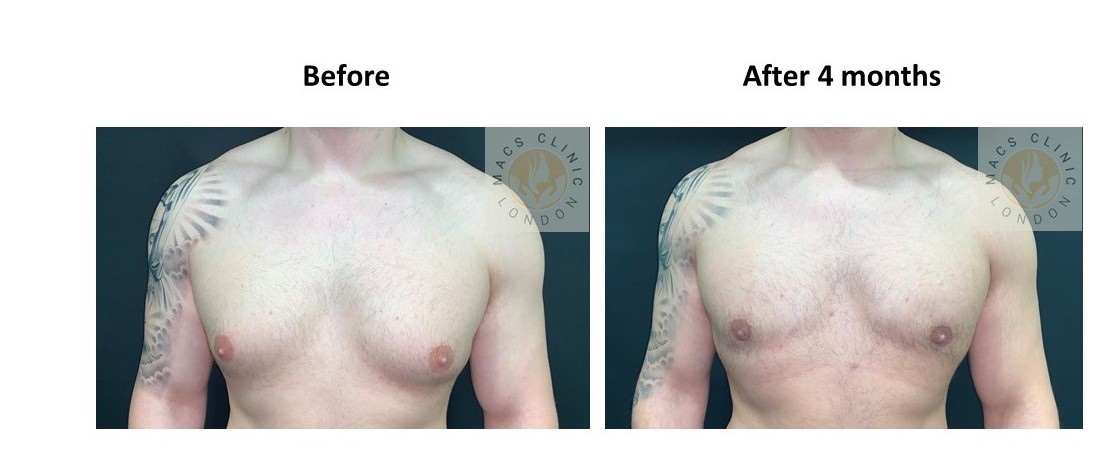
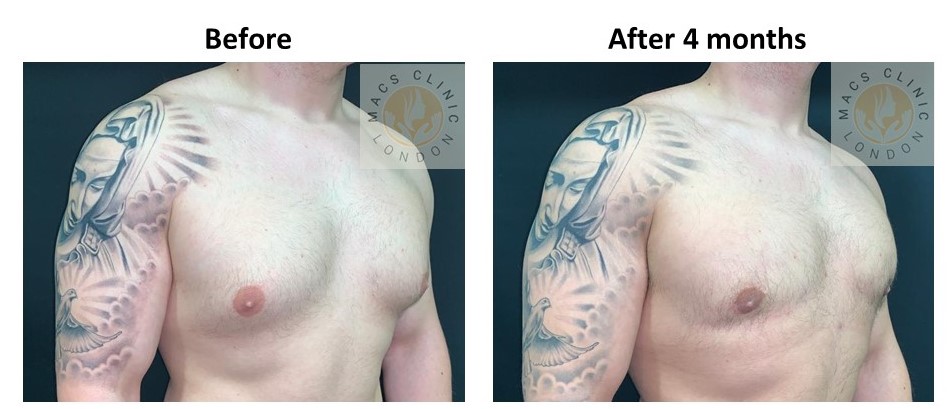
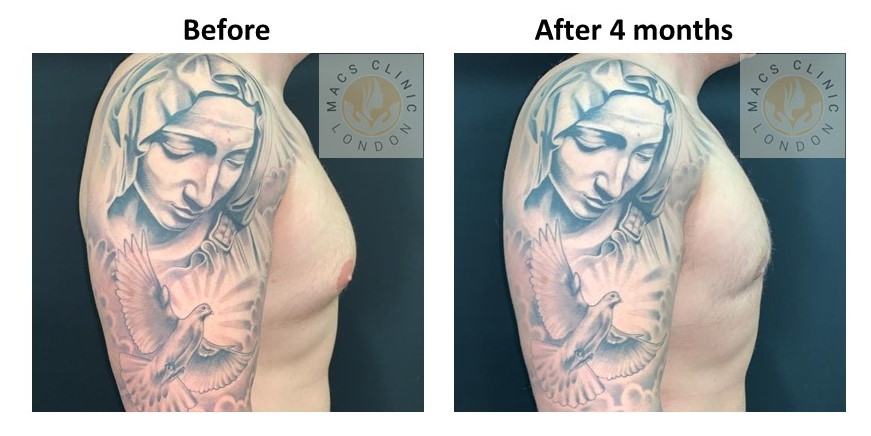
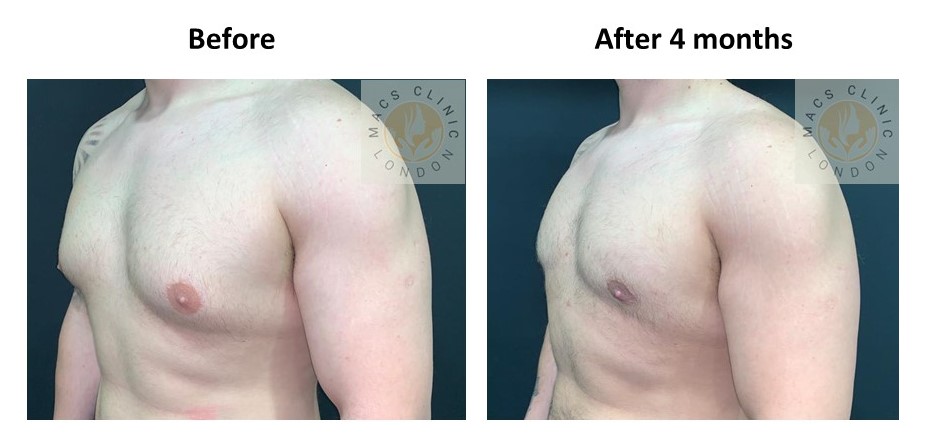
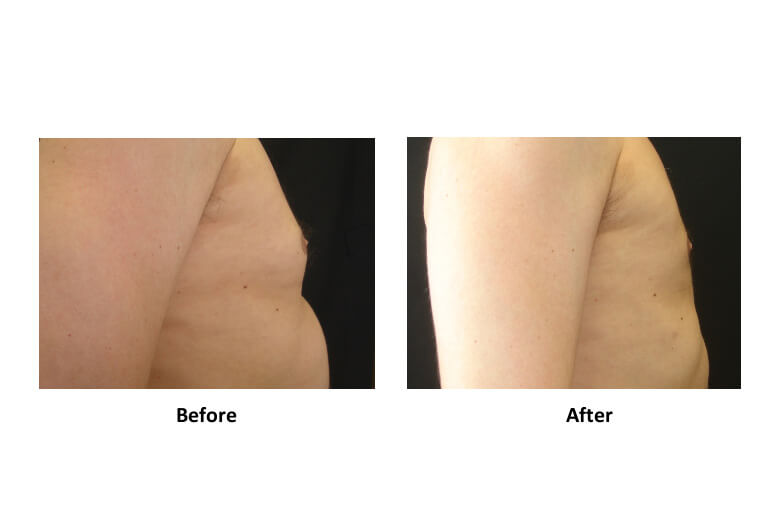
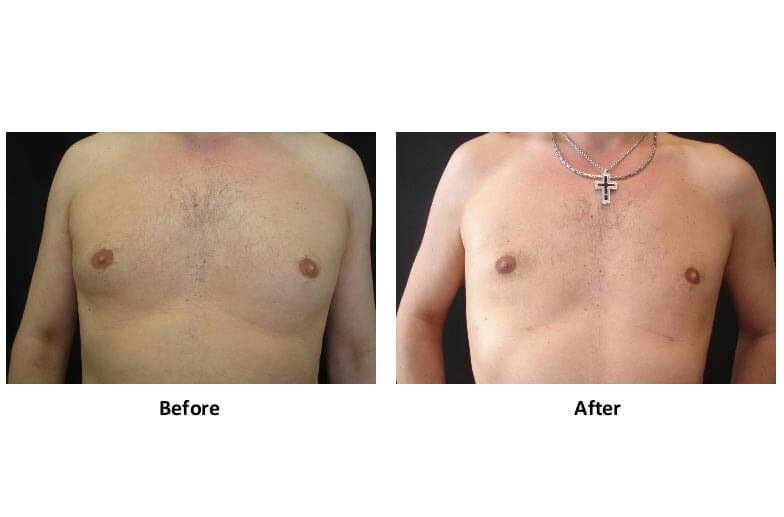
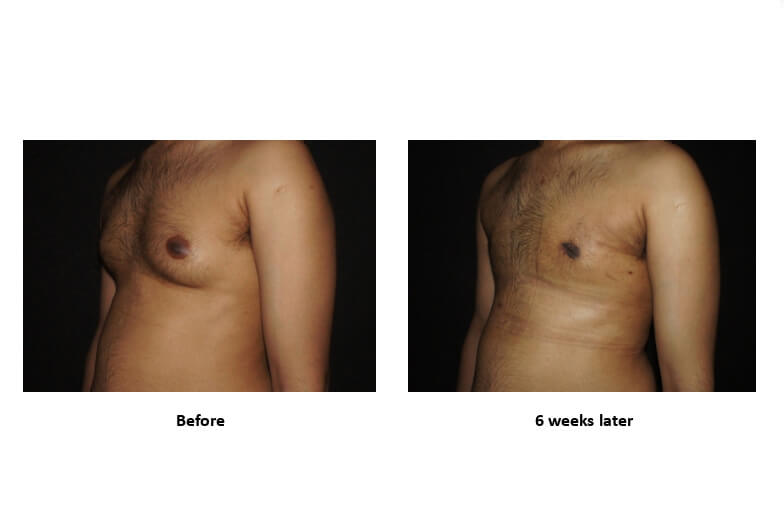
Steroid Induced Bilateral gynecomastia correction at MACS Clinic under local anaesthetics
Steroid induced Bilateral gynecomastia correction at MACS Clinic under local anaesthetics
Steroid induced Bilateral gynecomastia correction at MACS Clinic under local anaesthetics
Steroid induced Bilateral gynecomastia correction at MACS Clinic under local anaesthetics
2. Mixed Gynecomastia (Gland + Fat)
A combination of:
Glandular tissue
Surrounding fatty tissue
This is very common and often seen in men with normal or mildly elevated body fat.
Clinical features:
Puffy nipple with broader chest fullness
Soft fat with a firmer core beneath the nipple
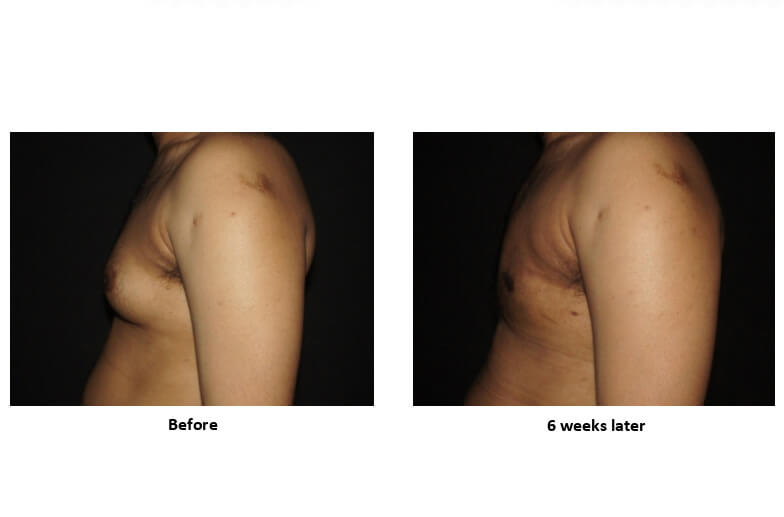
Liposuction assisted excision (removal) of bilateral gynecomastia under general anaesthetics
Liposuction assisted excision (removal) of bilateral gynecomastia under general anaesthetics
Liposuction assisted excision (removal) of bilateral gynecomastia under general anaesthetics
Liposuction assisted excision (removal) of bilateral gynecomastia under general anaesthetics
Pseudogynecomastia (Fat-Predominant) –
This is not true gynecomastia.
Cause:
Excess fatty tissue alone
No glandular enlargement
Clinical features:
Soft, compressible fullness
Puffy appearance improves when lying flat
Often associated with weight gain and obesity
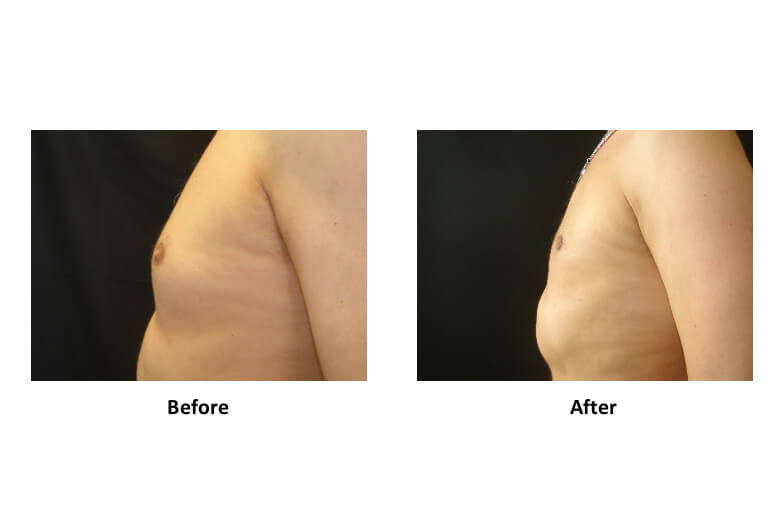
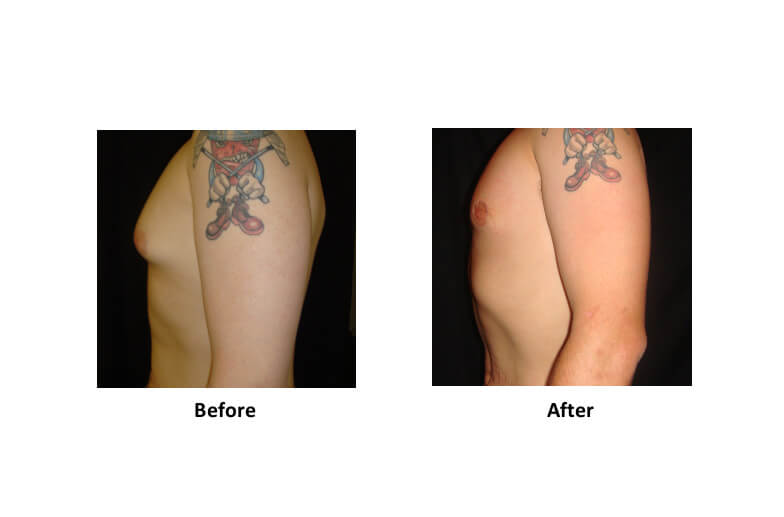
Correction of pseudo gynecomastia using liposuction only
Correction of pseudo gynecomastia using liposuction only
Correction of pseudo gynecomastia using liposuction only
Prominent Nipple Without Gynecomastia
Some men naturally have:
Increased nipple projection
No underlying gland or fat excess
This is a normal anatomical variation, not a disease.
nipple reduction surgery performed by Shailesh Vadodaria under local anaesthetic as a day case procedure
nipple reduction surgery performed by Shailesh Vadodaria under local anaesthetic as a day case procedure
nipple reduction surgery performed by Shailesh Vadodaria under local anaesthetic as a day case procedure
nipple reduction surgery performed by Shailesh Vadodaria under local anaesthetic as a day case procedure
Combination Patterns (Very Common)
Many patients have more than one contributing factor, such as:
Prominent nipple + glandular gynecomastia
Large areola + fat bulge
Nipple projection + mixed gynecomastia
This is where careful assessment becomes essential.
The Professional Dilemma with surgical implications
A frequent and important scenario in practice:
The patient consults for nipple prominence,
but the surgeon detects underlying gynecomastia that the patient has not noticed or complained about.
This raises an ethical responsibility:
It is advisable that the medical practitioner should refrain from medicalising or magnifying patient’s concerns and insecurities.
The medical practitioners should avoid creating New insecurities
The consultation must remain patient-centred, proportionate, and transparent
At MACS Clinic, this is addressed by:
Focusing first on the patient’s stated concern
Explaining findings factually and neutrally
Clearly documenting what is and is not being treated
Ensuring consent is specific, comprehensive
and realistic
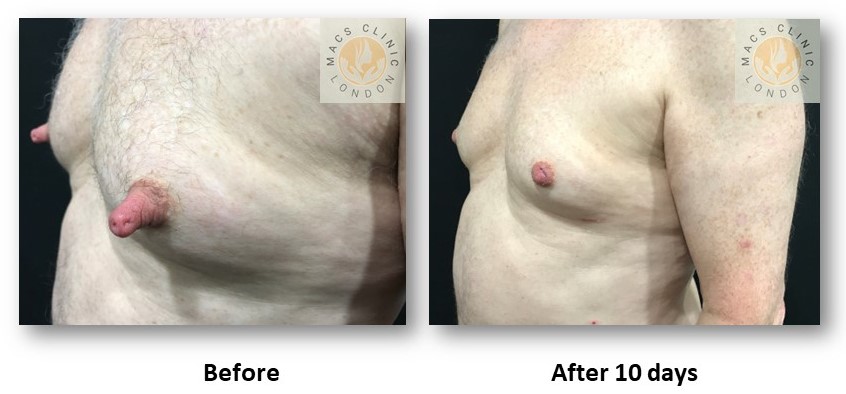
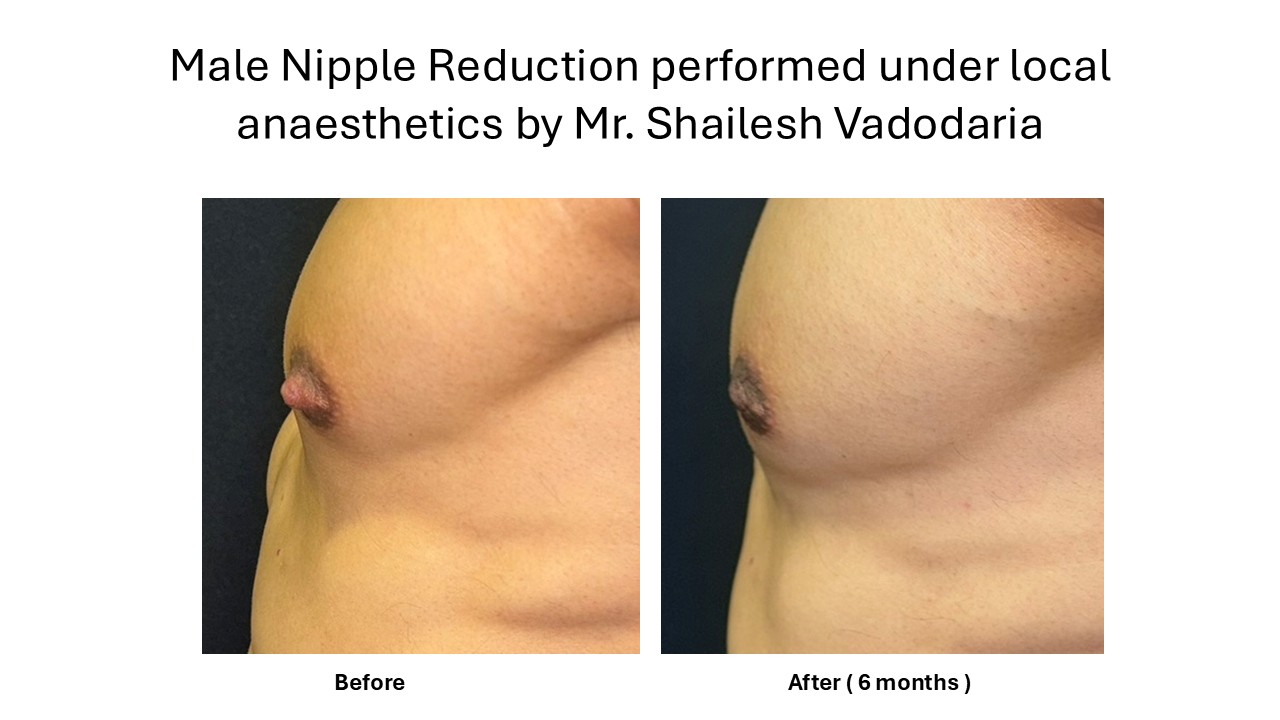
Male nipple reduction performed under local anaesthetics. This patient didn't wish to get gynecomastia operated.
Male nipple reduction performed under local anaesthetics. This patient didn't wish to get gynecomastia operated.
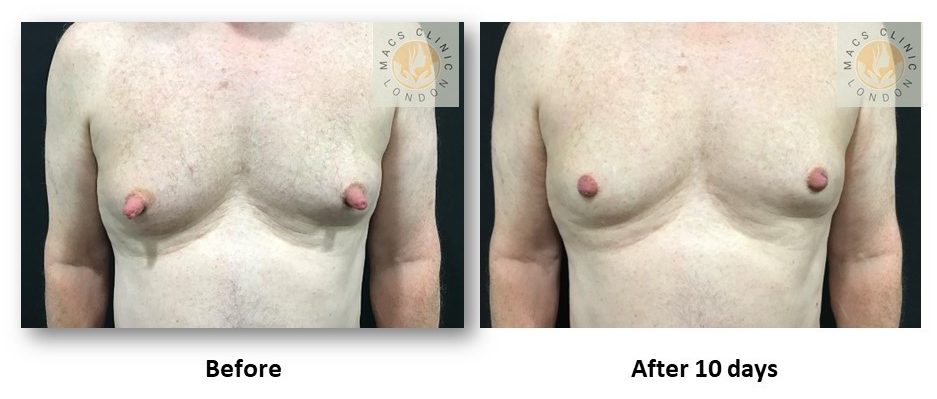
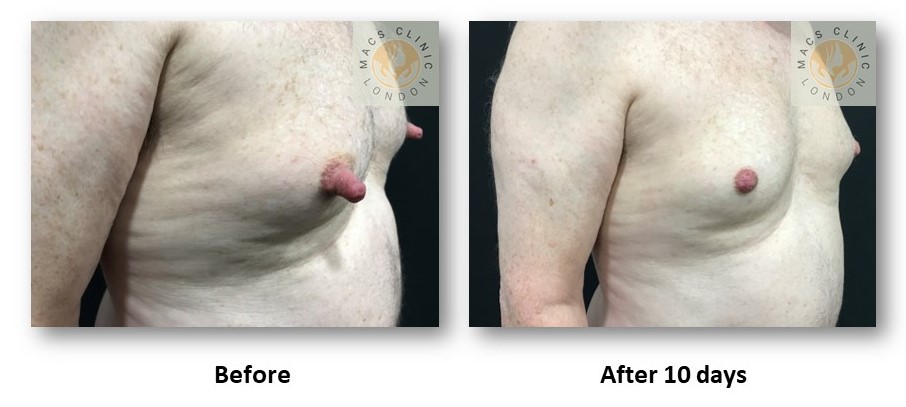
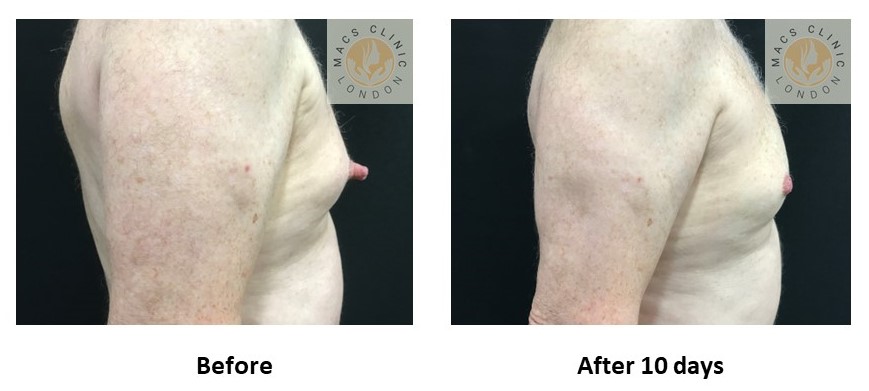
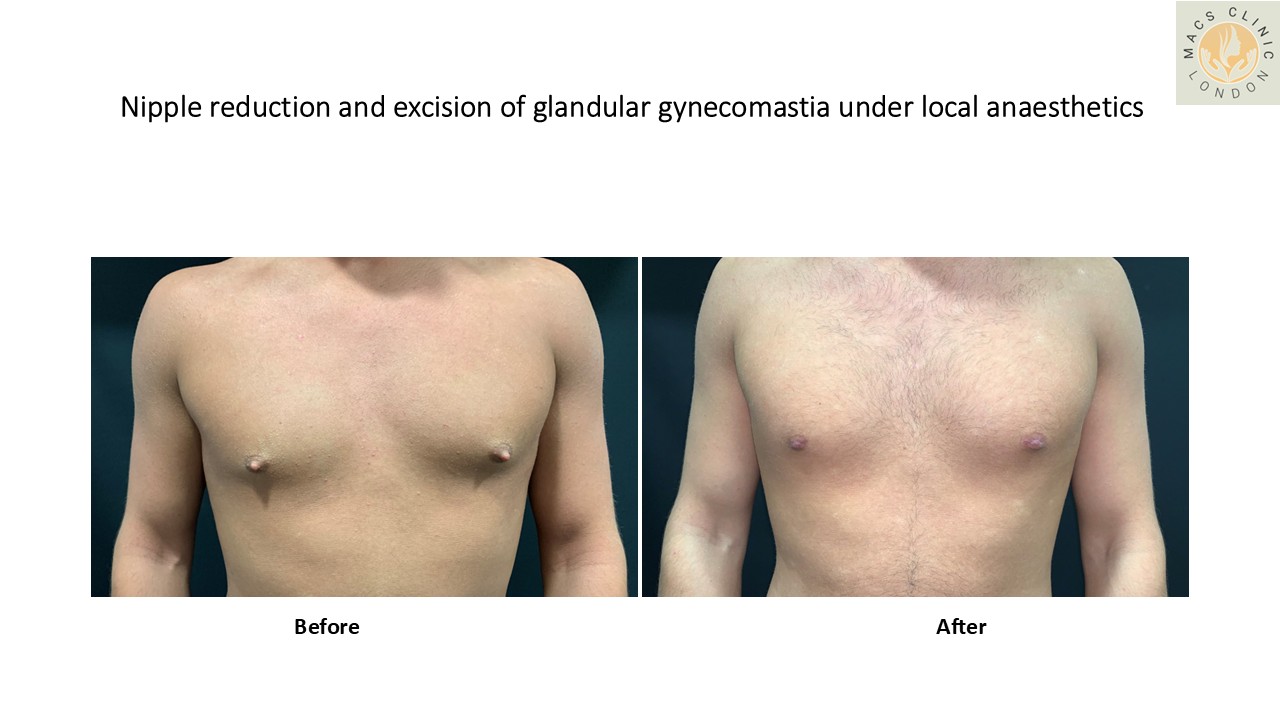
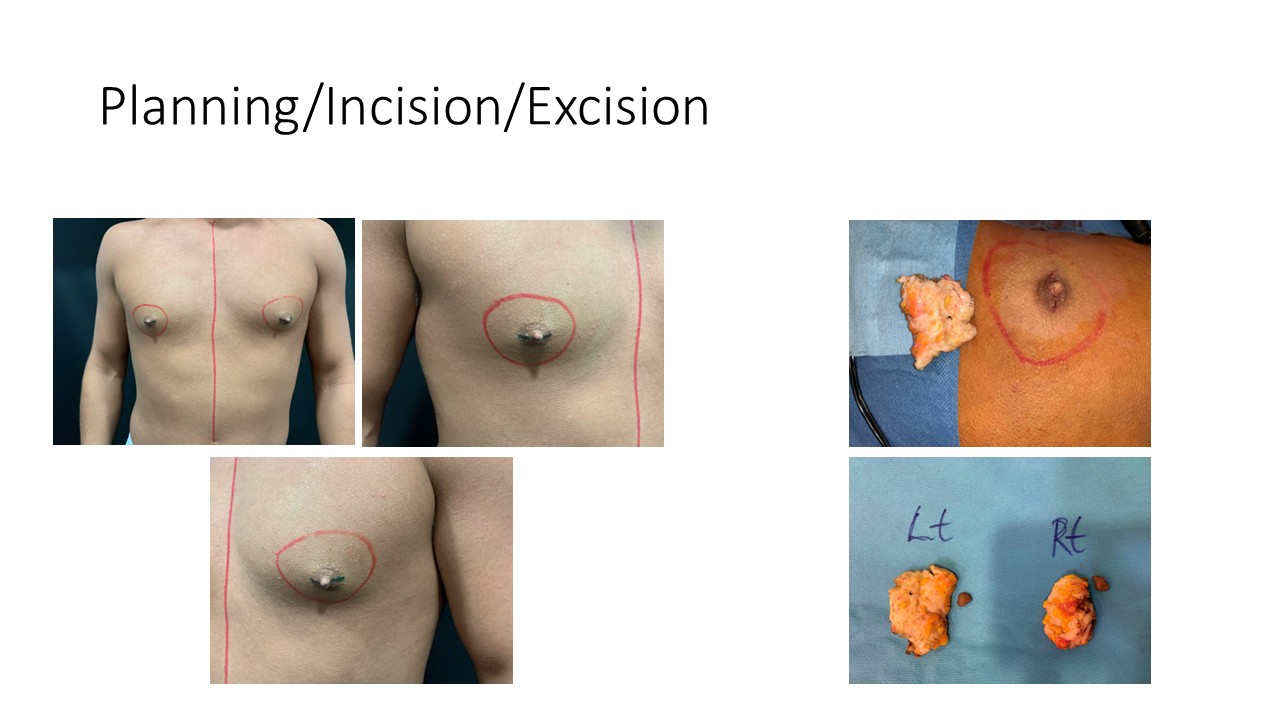
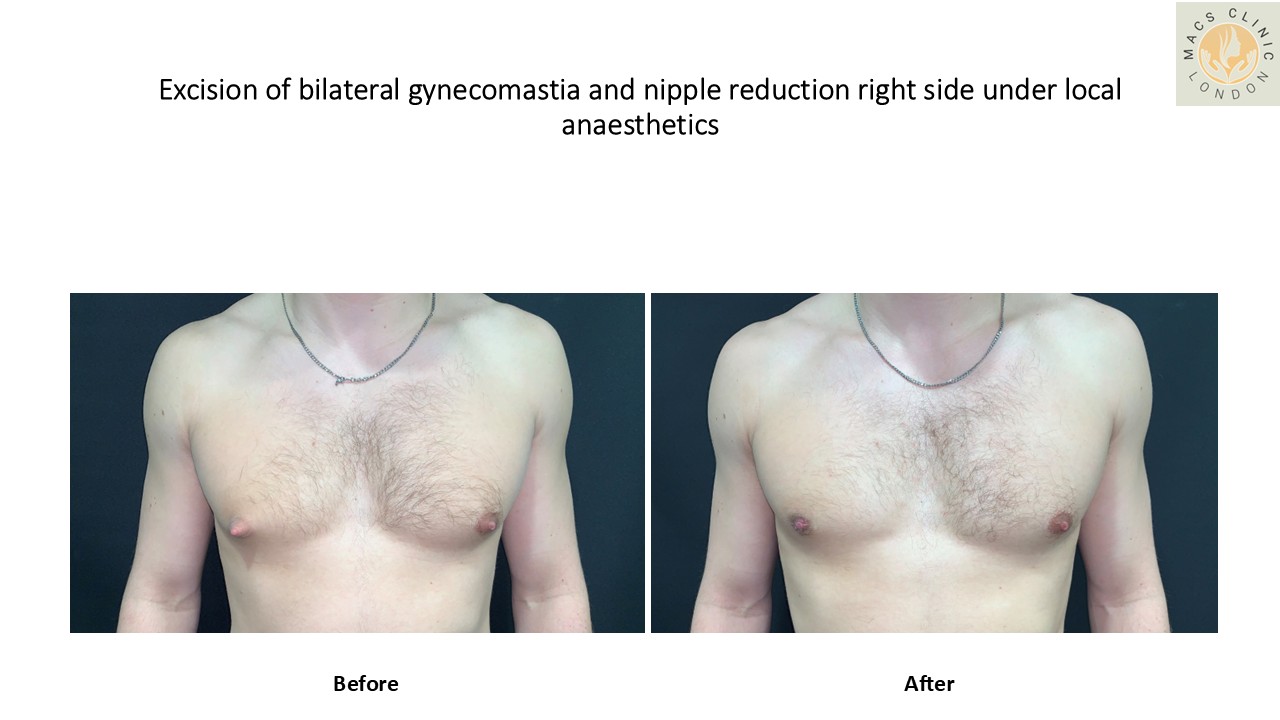
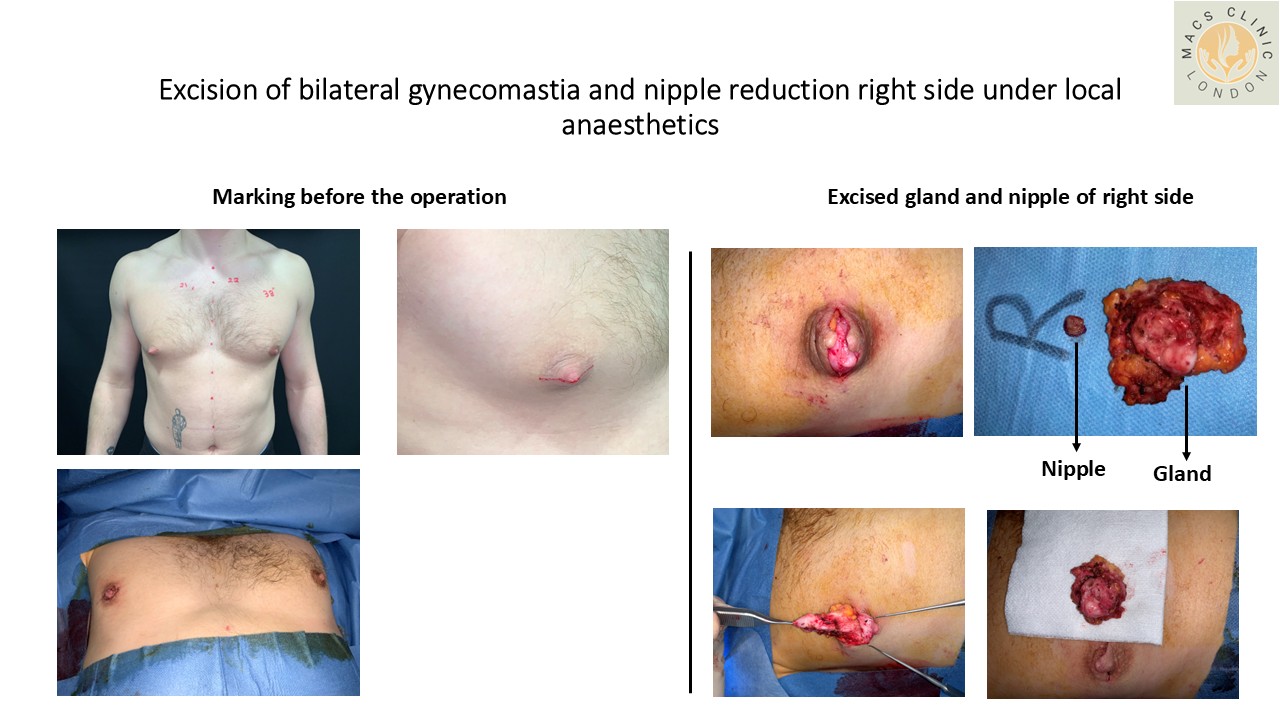
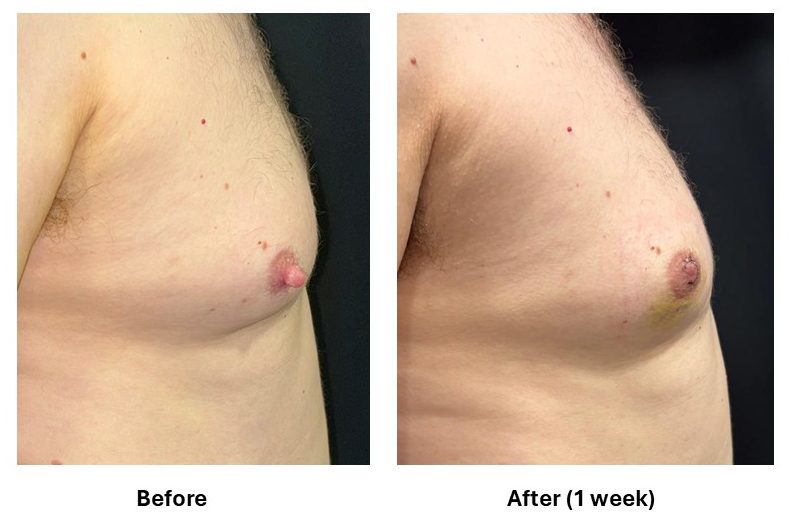
Patient 1: Male nipple correction and excision of gland under local anaesthetics
Patient 1: Male nipple correction and excision of gland under local anaesthetics
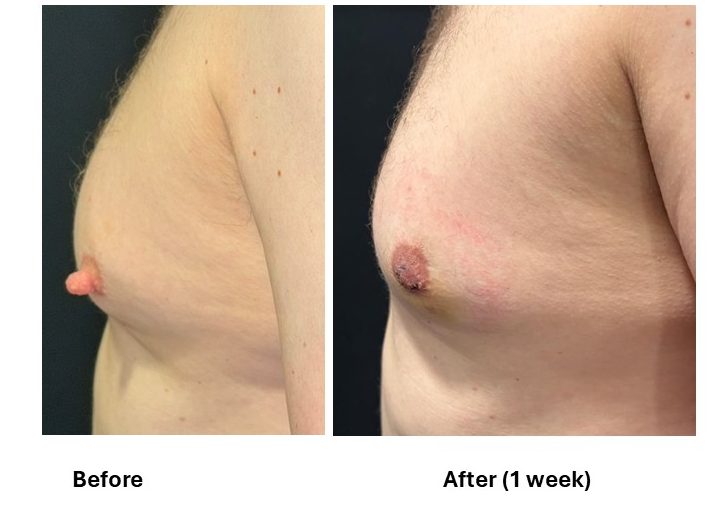
Patient 2: Male nipple correction and excision of gland under local anaesthetics
Patient 2: Male nipple correction and excision of gland under local anaesthetics
Investigations: When Are They Needed?
Investigations should be considered if:
Rapid or unilateral enlargement
Pain, discharge, or skin changes
Significant asymmetry
Relevant drug or endocrine history
Possible investigations:
Ultrasound/MRI scan
Hormonal blood tests
GP and endocrinology referral
Surgical Treatment Options – Targeted to the Cause
Nipple Reduction Surgery
Indicated when:
Primary issue is excess nipple projection
Minimal or no gland/fat excess
At MACS Clinic:
Performed under local anaesthesia as a day case procedure
Precise reduction using published, peer-reviewed techniques
Minimal scarring
⚠️ Important consent point:
This procedure addresses nipple height only, not underlying chest fullness unless specifically planned.
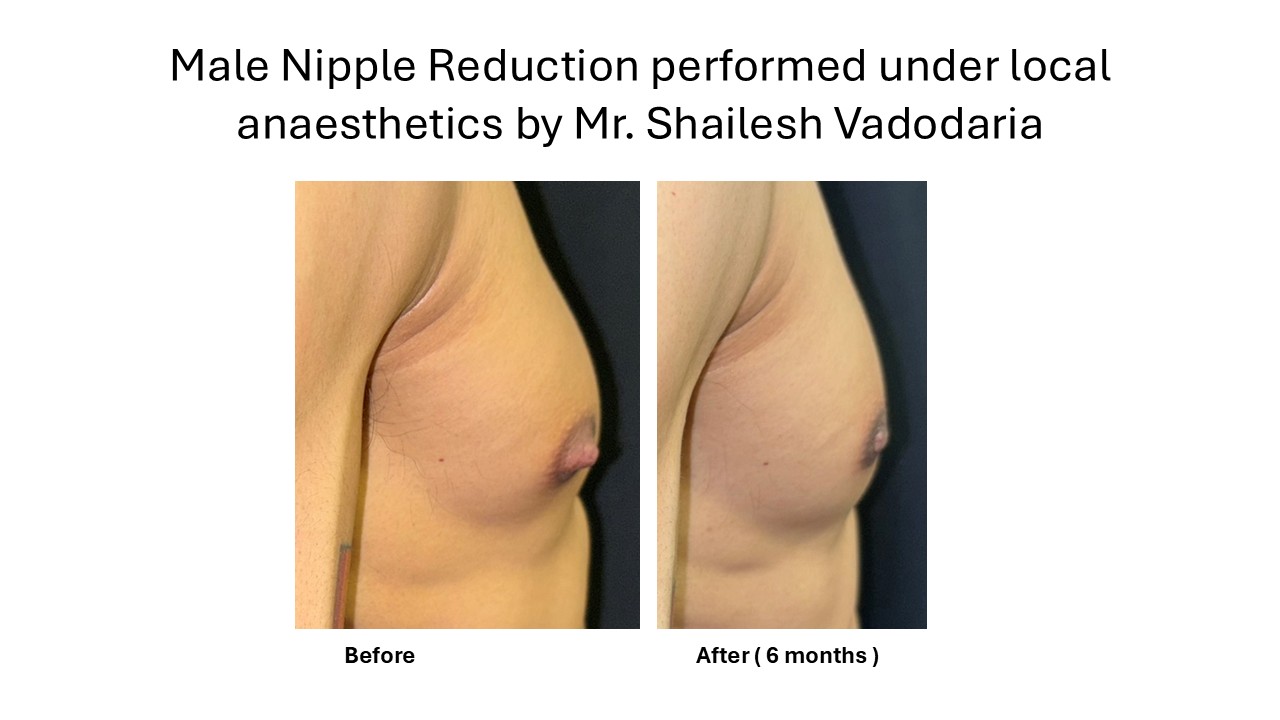
Male nipple reduction performed by Mr. Shailesh Vadodaria under local anaesthetics
Male nipple reduction performed by Mr. Shailesh Vadodaria under local anaesthetics
Liposuction-Assisted Gynecomastia Surgery
Indicated for:
Mixed gynecomastia
Technique:
Liposuction to contour fat
Targeted removal of fibrofatty through a cut within the nipple areola complex
Improves chest contour and nipple puffiness
Liposuction assisted open excision of asymmetrical gynecomastia
Liposuction assisted open excision of asymmetrical gynecomastia
Liposuction assisted open excision of asymmetrical gynecomastia
Liposuction Alone
Indicated for:
Pseudogynecomastia (fat-only)
Benefits:
No gland excision required
Less invasive
Puffy nipple often resolves as fat is reduced
Patients are advised to lose weight and develop chest wall muscle mass.
Key Messages for Patients
“Puffy nipples” is a descriptive term, not a diagnosis
There are multiple causes, often in combination
Treatment should be individualised and proportionate
Surgery is only required if patients are self-conscious
When surgery is chosen, it is cosmetic, optional, and carefully consented
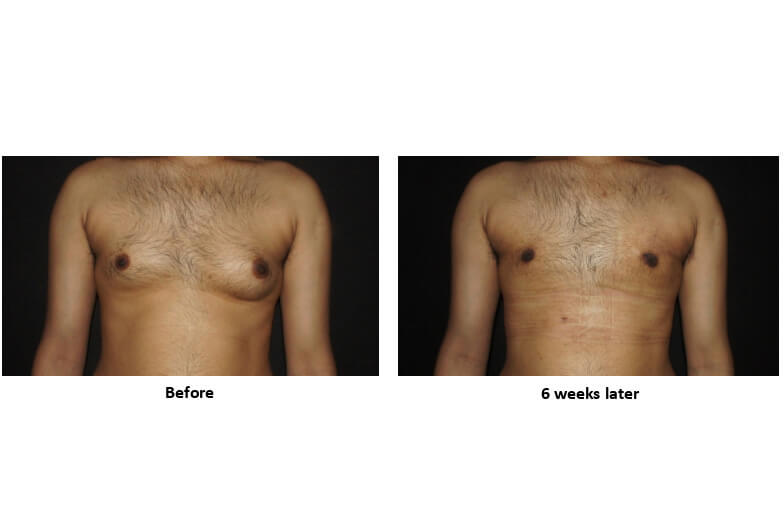
Correction of gynecomastia using liposuction only under local anaesthetics
Correction of gynecomastia using liposuction only under local anaesthetics
Summary
Puffy nipples in men are common, benign, and usually multifactorial.
A thoughtful and evidence-based approach ensures:
Accurate diagnosis
Targeted treatment
Our patients request for correction of puffy nipples for following reasons –
It affects their self-esteem
Not comfortable using tight and light t-shirts
Affects their confidence in using swimming pool, common changing room and compromises enjoying beach holidays
We have started seeing many more patients developing puffy nipples because of consumption of steroids/testosterone for body building.
At MACS Cosmetic Surgery, the guiding principle is simple:
Treat the concern the patient has come with —
and only extend treatment when it is appropriate, requested, and fully understood.