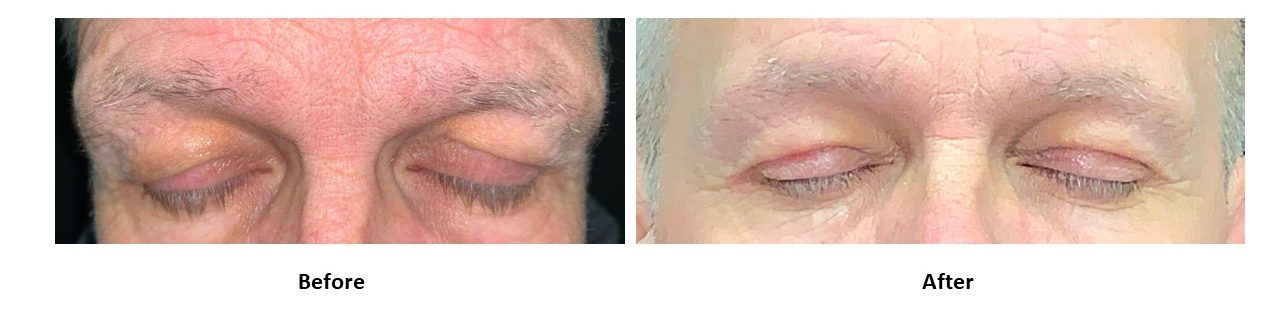
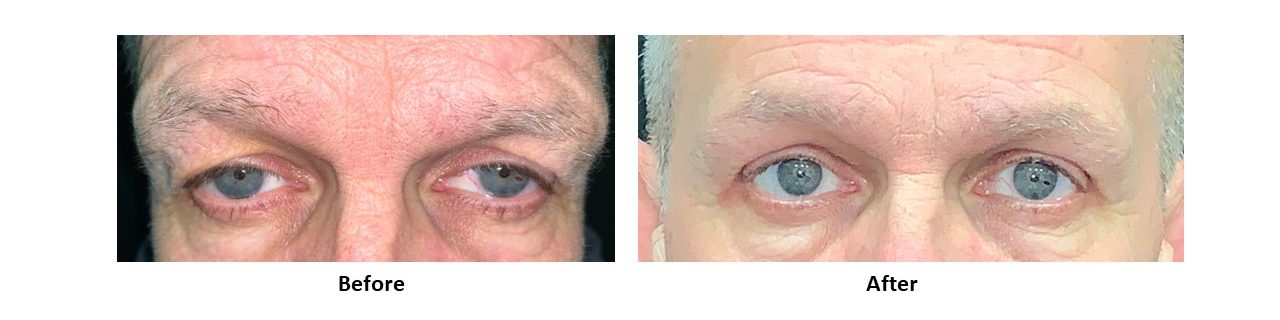
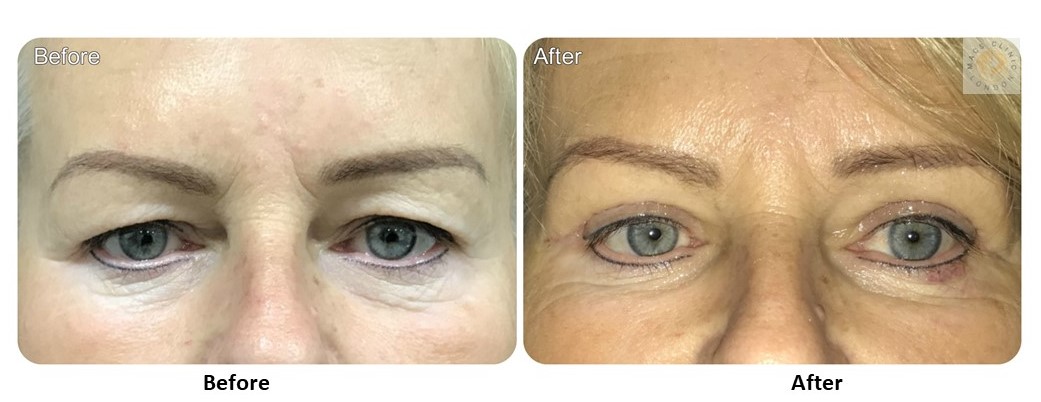
Upper eyelid surgery (blepharoplasty) is one of the most commonly performed facial rejuvenation procedures. Many patients who consider eyelid surgery are also familiar with Botox treatments for forehead wrinkles and frown lines.
A very common question patients ask is:
“If I have had Botox on my forehead, can I still have eyelid surgery?”
The short answer is yes — but the timing can sometimes matter.
Understanding how the forehead muscles, eyebrows, and eyelids work together helps explain why.
How the Forehead and Eyelids Work Together
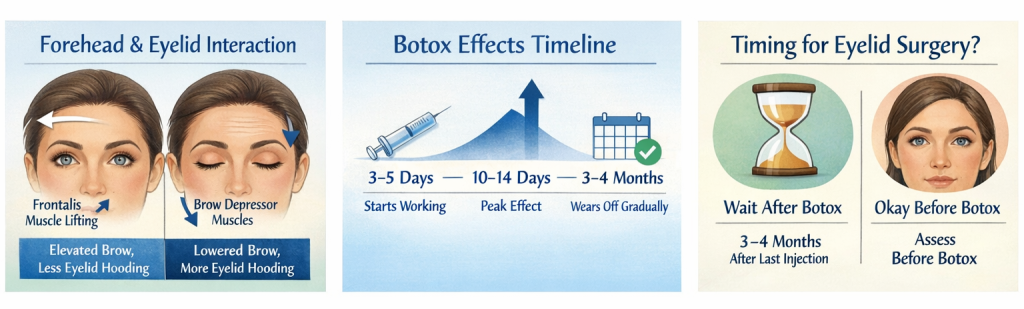
The forehead muscle (frontalis) helps lift the eyebrows and upper eyelids.
Many people, particularly those with heavy eyelids or drooping brows, unconsciously activate the forehead muscle to help open their eyes. This is called frontalis compensation.
Because of this interaction:
- The position of the eyebrow
- The amount of visible eyelid skin
- The appearance of eyelid heaviness
can change depending on how active the forehead muscles are.
This relationship is important when planning upper eyelid surgery.
What Does Botox Do to the Forehead?
Botulinum toxin (commonly known as Botox) temporarily relaxes muscles that cause wrinkles.
When Botox is injected into the forehead or frown lines, it reduces the activity of muscles responsible for:
- horizontal forehead lines
- frown lines between the eyebrows
- brow depressor muscles
The effects usually:
- begin within 3–5 days
- peak at 10–14 days
- last approximately 3–4 months
Because Botox changes muscle activity, it can temporarily alter the position of the eyebrows and eyelids.
Why Timing Can Matter Before Eyelid Surgery?
When planning upper eyelid surgery, surgeons carefully evaluate:
- eyebrow position
- eyelid skin excess
- muscle function
- symmetry between both eyes
If Botox has recently altered the forehead muscles, the brow position seen during consultation may not reflect the patient’s natural anatomy.
For example:
Scenario 1 – Botox Weakens the Forehead Muscle
If Botox reduces frontalis activity, the eyebrows may sit slightly lower than normal.
This may make the eyelids appear heavier than they actually are, potentially influencing surgical planning.
Scenario 2 – Botox Weakens Brow Depressor Muscles
In some cases Botox can create a temporary brow lift by weakening the muscles that pull the brow downward.
This may make eyelid skin appear less redundant, masking underlying brow droop.
Is Botox a Contraindication to Blepharoplasty?
No.
There is no rule that eyelid surgery cannot be performed if Botox is active. Many patients undergo surgery successfully even if they have had Botox treatments in the preceding months.
However, surgeons must interpret the eyelid–brow relationship carefully if Botox has recently been performed.
Some surgeons prefer to evaluate patients when the Botox effect has mostly worn off.
This often means waiting 3–4 months after the last injection, especially when:
- brow position appears borderline
- forehead compensation is strong
- brow droop may contribute to eyelid heaviness
- asymmetry between the brows is present
Waiting allows the surgeon to see the natural resting anatomy, which helps avoid over- or under-correction.
In Some Cases Botox May Even Help Planning
Interestingly, some surgeons deliberately use Botox before eyelid surgery to better understand eyelid function.
By temporarily relaxing certain muscles, surgeons can sometimes reveal hidden eyelid droop or brow ptosis that might otherwise be masked by muscle activity.
This approach is more specialised and not used in every case.
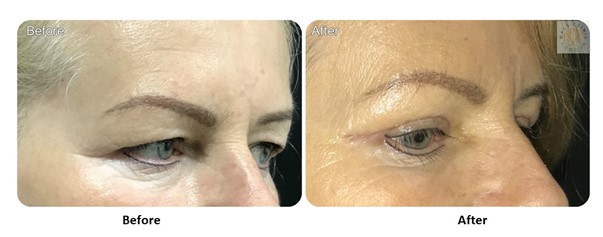
What Should Patients Do Before Consultation?
If you are considering eyelid surgery, it is important to tell your surgeon:
- when your last Botox treatment was performed
- which areas were injected (forehead, frown lines, crow’s feet)
- whether you noticed eyelid heaviness or brow drooping or brows were lifted afterwards
This information helps your surgeon make the safest and most accurate surgical plan.
Key Points for Patients
- Botox does not prevent you from having eyelid surgery.
- However, Botox may temporarily change brow position and eyelid appearance.
- Surgeons sometimes prefer to assess eyelids before Botox or after it has worn off.
- Honest discussion with your surgeon about recent treatments is important for optimal planning.
Expert Advice
The most important factor in eyelid surgery is careful individual assessment.
Every patient has a unique relationship between the eyebrows, forehead muscles, and eyelids. An experienced aesthetic plastic surgeon will evaluate these factors to determine the best timing for surgery.
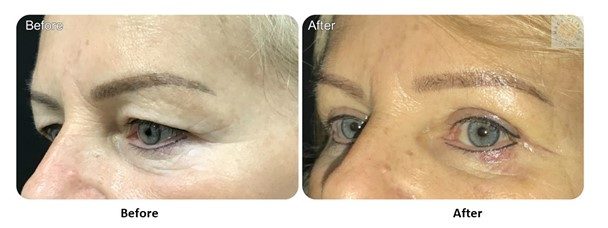
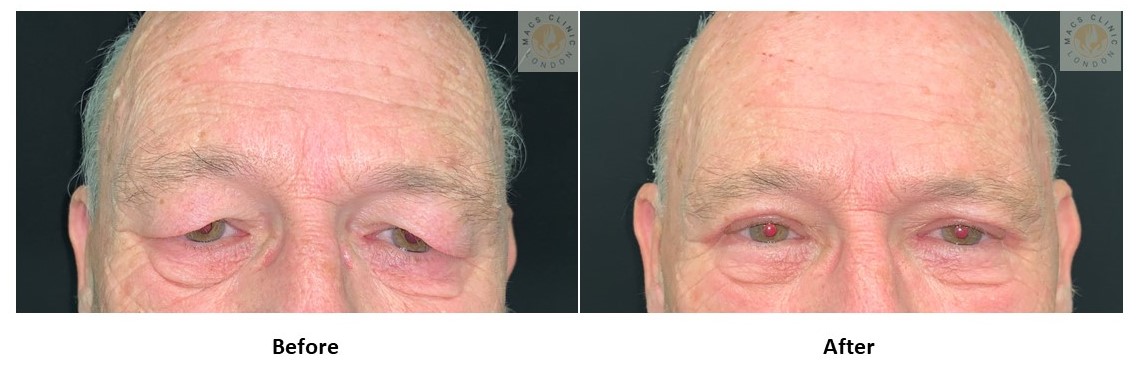
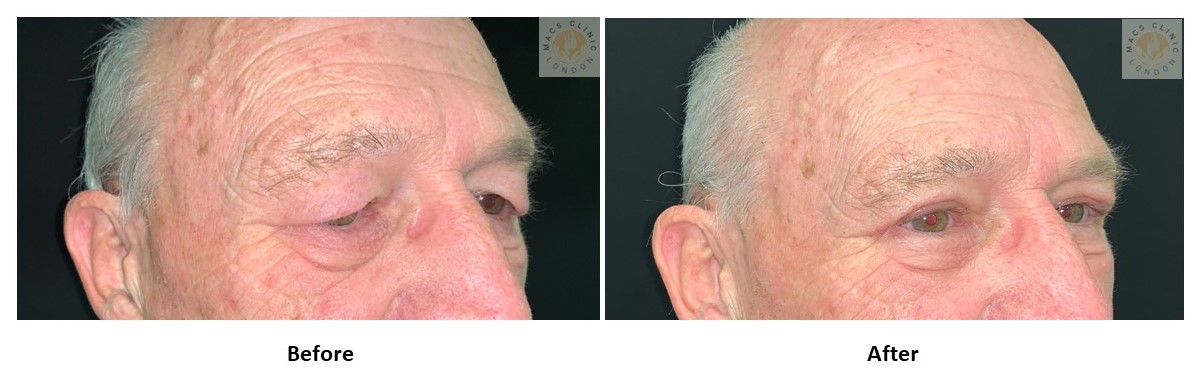
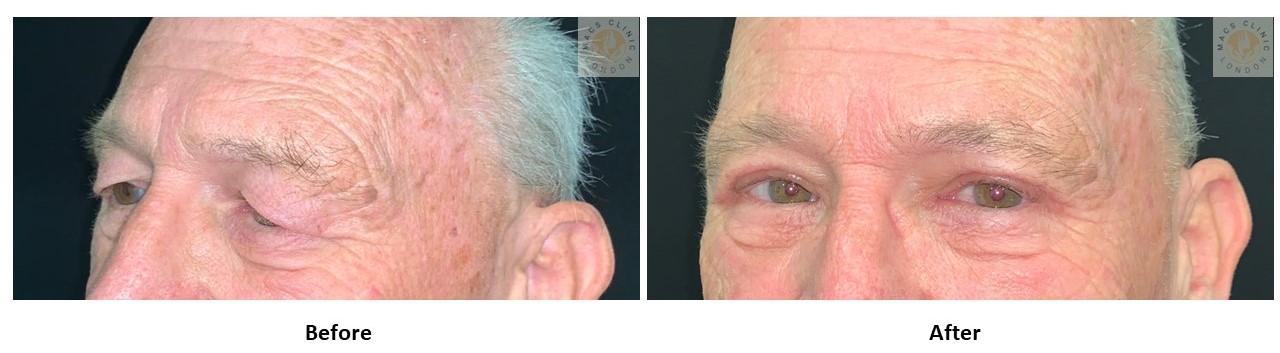
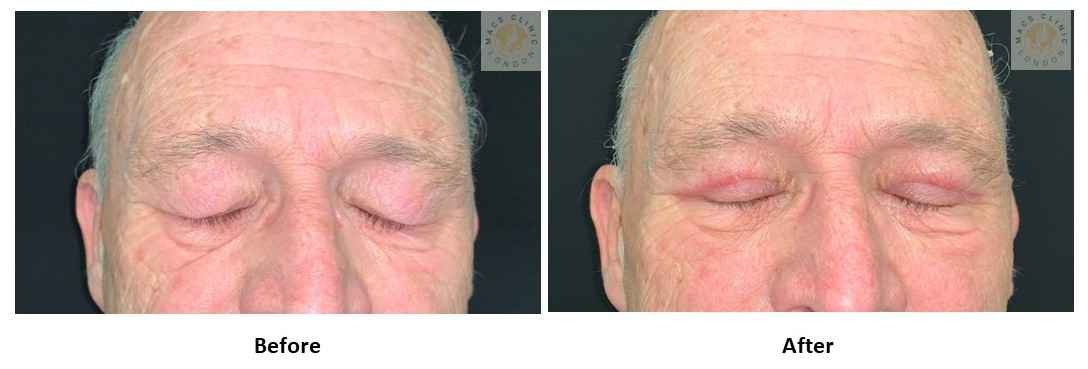
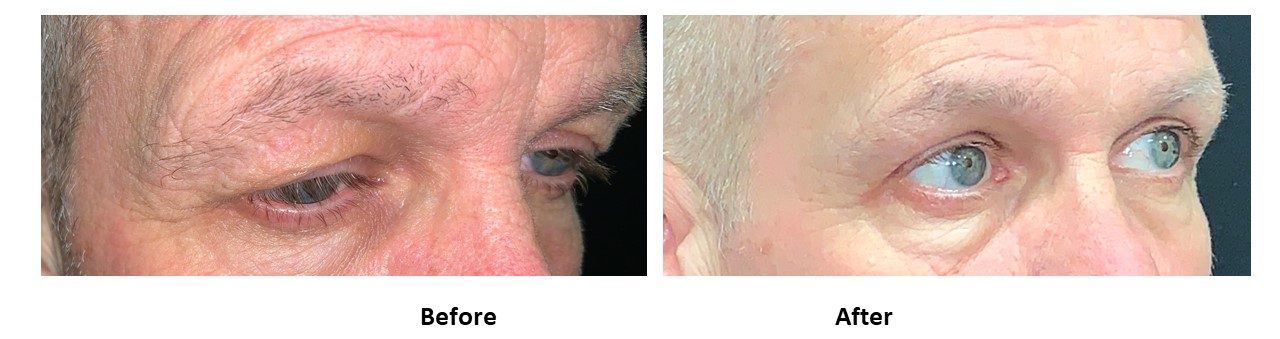
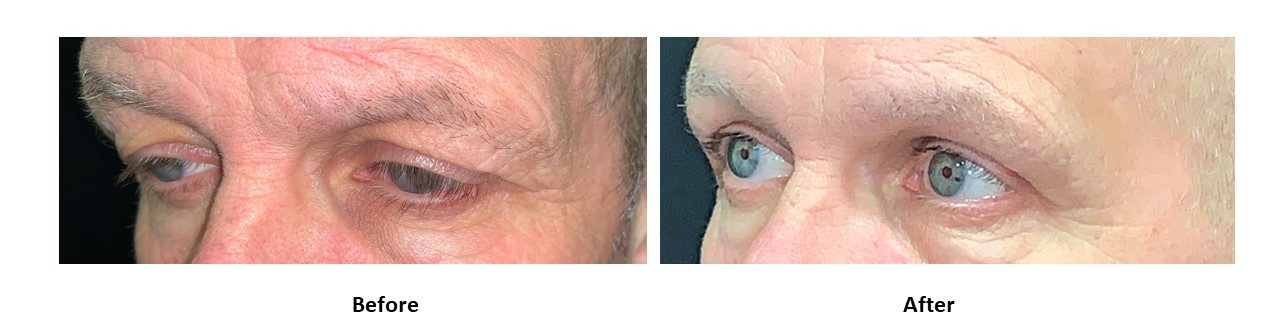
Before and After Photos
Video Testimonial
Contact MACS Clinic
- Phone: 020 7078 4378
- WhatsApp: 07792 648 726
- Email: enquiries@macsclinic.co.uk
- Website: www.macsclinic.co.uk
BOOK a FREE Video Consultation: https://calendly.com/macsclinic/free-video-consultation?month=2025-01